
Concrete Parking Lot Solutions in Akron, Ohio | Mattucci Con
Concrete Parking Lot Solutions: Design, Build, and Maintenance for Northeast Ohio
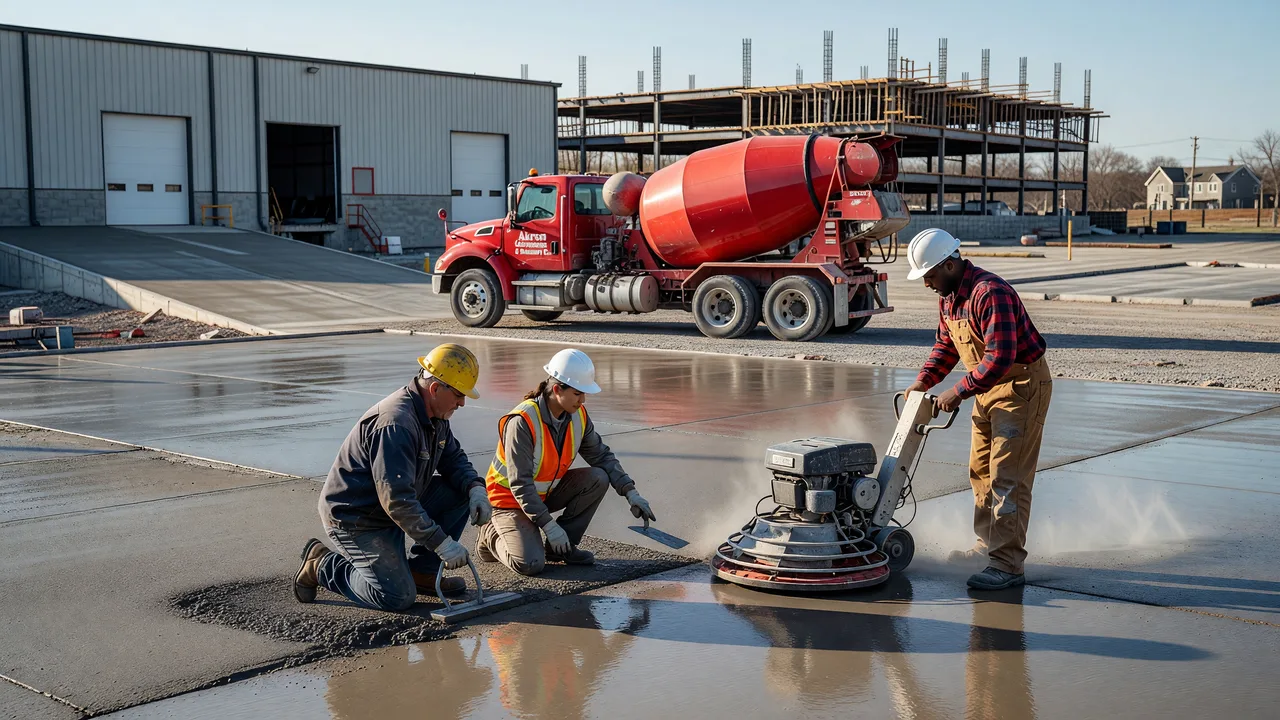
For commercial property owners across Akron and the broader Northeast Ohio corridor, a parking lot is far more than a paved surface — it is a critical piece of infrastructure that influences customer perception, tenant satisfaction, insurance liability, and long-term asset value. With Ohio’s freeze-thaw cycles regularly swinging temperatures between single digits and the 80s within a matter of weeks, the difference between a parking lot that lasts 8 years and one that lasts 20+ years comes down to engineering, materials selection, and craftsmanship.
At Mattucci Construction, we’ve spent decades delivering commercial-grade concrete parking lot solutions throughout Summit County, from retail centers along West Market Street to industrial parks in Copley and medical campuses near Akron General. This guide walks property owners, facility managers, and general contractors through the full lifecycle of a concrete parking lot — from initial design through decades of low-maintenance service.
Why Concrete Outperforms Asphalt in the Akron Climate
Northeast Ohio’s climate is among the most punishing in the country for pavement systems. Akron averages roughly 65 freeze-thaw cycles per year, along with 40+ inches of snowfall and heavy application of deicing salts. In this environment, the total cost of ownership calculation strongly favors concrete over asphalt for commercial parking lots.
- Service life: A properly constructed concrete parking lot lasts 30–40 years. Asphalt typically requires resurfacing every 8–12 years and full reconstruction at 15–20.
- Maintenance costs: Concrete requires minimal maintenance — occasional joint sealing and cleaning. Asphalt demands sealcoating every 2–3 years plus regular crack filling.
- Load capacity: Concrete’s rigid structure distributes point loads far better than flexible asphalt, making it the clear choice for loading docks, dumpster pads, delivery lanes, and truck-heavy sites.
- Heat island reduction: Light-colored concrete reflects roughly 4x more solar radiation than asphalt, reducing surface temperatures and cooling loads on adjacent buildings.
- Lighting efficiency: Concrete’s reflectivity can reduce required lighting fixtures by 20–30%, cutting both installation and long-term energy costs.
For high-traffic commercial sites in growth corridors like Montrose, Fairlawn, and Green — where downtime for repaving directly impacts revenue — concrete’s longevity typically produces a lower 25-year lifecycle cost despite a higher upfront investment.
AI-generated video
Engineering the Right Parking Lot: Design Considerations That Matter
A durable concrete parking lot begins long before the first truck pours. Proper design accounts for subgrade conditions, traffic loads, drainage patterns, joint layout, and code compliance. Cutting corners at the design stage is the single most common reason parking lots fail prematurely.
Subgrade and Base Preparation
Much of the clay-heavy soil throughout Summit and Portage counties is highly expansive, swelling when wet and shrinking when dry. Without proper subgrade preparation, this movement telegraphs directly into the slab as cracking and settlement. We typically specify:
- 6–8 inches of compacted, well-graded aggregate base (ODOT #304 or #411)
- Woven geotextile fabric over problematic subgrades to prevent fines migration
- Proof-rolling to identify and remediate soft spots before concrete placement
- Positive drainage away from all slab edges — minimum 1.5% slope
Slab Thickness and Reinforcement
Slab thickness is dictated by anticipated traffic. Standard passenger-vehicle parking areas typically require 5–6 inches of concrete, while drive lanes and dumpster pads warrant 7–8 inches. Truck routes and loading docks often demand 8–10 inches with reinforcing steel or dowel systems at joints. We specify 4,000+ PSI air-entrained concrete mixes with 6–8% air content — non-negotiable for freeze-thaw durability.
Jointing Strategy
Concrete will crack — the goal is to control where. Contraction joints should be sawcut within 4–12 hours of placement at spacings of 24–36 times slab thickness. Isolation joints must separate the slab from buildings, light poles, and other rigid elements. Poor jointing is the #1 aesthetic failure we’re called to repair on lots built by less experienced contractors.
ADA and Code Compliance
Every commercial parking lot in Ohio must meet ADA requirements: accessible stall count based on total spaces, maximum 2% cross-slope in accessible parking areas, proper access aisles, and compliant curb ramps with detectable warning surfaces. Non-compliance creates significant liability exposure. Our team ensures every lot we build meets or exceeds ADA, Ohio Building Code, and local Akron zoning requirements.
The Construction Process: What Property Owners Should Expect
Understanding the construction sequence helps property managers plan phasing, tenant communication, and site logistics. A typical mid-sized commercial parking lot (30,000–80,000 sq ft) follows this workflow:
- Site preparation and demolition (3–7 days): Removal of existing pavement, excavation to grade, and utility protection.
- Grading and base installation (2–5 days): Precise grading to design elevations, aggregate placement, and mechanical compaction to 95%+ Standard Proctor density.
- Formwork and reinforcement (2–4 days): Perimeter forms, dowel baskets at construction joints, and rebar placement where specified.
- Concrete placement (staged over multiple days): Typically poured in checkerboard patterns to control shrinkage. A skilled crew places 8,000–12,000 sq ft per day.
- Finishing and curing (7–14 days): Broom finish for slip resistance, curing compound application, and protected cure period. Traffic should be kept off new slabs for a minimum of 7 days for cars, 14 for trucks.
- Jointing, sealing, and striping (2–4 days): Sawcut joints, joint sealant, pavement markings, signage, and accessible-space identification.
Phasing is often essential for occupied commercial properties. We routinely execute half-lot phasing for shopping centers, medical offices, and industrial facilities across Akron so tenants maintain operations throughout construction. Explore our full range of commercial capabilities on our services page.
Maintenance: Protecting Your Investment for Decades
One of concrete’s greatest advantages is minimal maintenance — but minimal is not zero. A structured maintenance program will extend service life well beyond 20 years and protect the substantial capital investment your parking lot represents.
Annual Maintenance Checklist
- Joint inspection and resealing: Inspect all joints yearly; reseal every 3–5 years using self-leveling polyurethane or silicone sealants rated for freeze-thaw exposure.
- Crack repair: Address cracks wider than 1/8 inch promptly using appropriate epoxy or polyurea repair systems before water infiltration compromises the subbase.
- Surface cleaning: Power wash annually to remove chemical staining, oil spots, and salt residue that can degrade the surface over time.
- Sealer application (optional): Penetrating silane/siloxane sealers applied every 5–7 years reduce chloride penetration by up to 90% — a smart investment in salt-heavy environments.
- Drainage inspection: Verify catch basins, trench drains, and surface flow paths remain clear each spring and fall.
What to Avoid
Ammonium-based deicers (ammonium nitrate, ammonium sulfate) chemically attack concrete and should never be used. During the first winter after installation, use only sand for traction — chloride-based deicers should be avoided entirely on new concrete for at least one full winter cycle.
Common Failure Modes — and How to Prevent Them
When we’re called to evaluate failing parking lots across Northeast Ohio, we consistently see the same root causes. Awareness of these failure modes helps property owners recognize warning signs early and hold contractors accountable to proper standards.
- Scaling and spalling: Usually caused by insufficient air entrainment, over-finishing, premature deicer exposure, or inadequate curing. Prevention starts with a proper mix design and disciplined finishing crews.
- Random cracking: Almost always the result of joints cut too late, spaced too far apart, or missing entirely. Also linked to poor subgrade preparation.
- Settlement and heaving: Traces back to inadequate compaction, poor drainage, or expansive soils not properly stabilized.
- Joint failure: Sealant selection matters. Cheap sealants fail within 2–3 winters; quality products last 5–8 years.
- Curling and warping: Result of moisture and temperature differentials in the slab. Proper curing practices and thickness design minimize this.
Choosing the Right Contractor in the Akron–Cleveland Corridor
The concrete industry in Northeast Ohio has a wide range of skill levels — from crews that pour residential driveways to firms with the engineering depth to handle 200,000+ sq ft industrial lots. When vetting contractors for a commercial parking lot project, ask specifically about:
- Commercial project portfolio in the past 5 years — request site visits, not just photos
- ACI-certified finishers on the crew
- Mix design details and testing protocols (compressive strength, air content, slump)
- Warranty terms — reputable commercial contractors stand behind their work for 2+ years minimum
- Insurance coverage: general liability, workers’ comp, and umbrella policies appropriate to project scale
- Familiarity with local permitting processes in Akron, Cuyahoga Falls, Stow, Hudson, and surrounding jurisdictions
- Ability to phase work around occupied facilities
Local experience matters more than most owners realize. A contractor who has poured through 20 Northeast Ohio winters understands the difference between a mix design that survives our climate and one that cosmetically looks the same but fails within five years.
Frequently Asked Questions
How much does a concrete parking lot cost in the Akron area?
Commercial concrete parking lots in Northeast Ohio typically range from $7 to $12 per square foot depending on thickness, reinforcement, site conditions, drainage requirements, and demolition scope. Truck routes, loading docks, and heavily reinforced sections can run $12–$18 per square foot. While concrete’s upfront cost is 30–50% higher than asphalt, the 25-year lifecycle cost is generally lower due to dramatically reduced maintenance and replacement needs. We provide detailed, itemized proposals so owners can compare true costs accurately.
How long does it take to install a commercial concrete parking lot?
A typical 40,000–60,000 sq ft commercial parking lot takes 3–5 weeks from demolition to striping, depending on weather, phasing requirements, and site complexity. Phased projects on occupied sites can extend to 6–10 weeks to maintain tenant access. New concrete requires 7 days of curing before passenger vehicle traffic and 14 days before heavy trucks — this cure period should be factored into project scheduling.
Can concrete be poured in winter in Northeast Ohio?
Yes, but with important limitations. Cold-weather concreting per ACI 306 is possible down to about 20°F with proper protection: heated aggregates, accelerating admixtures, insulated blankets, and enclosed heated environments for extended cures. However, most commercial parking lot work in Akron is scheduled between April and November for optimal quality and cost efficiency. Winter pours add 15–25% to project costs and carry higher quality risks — we generally recommend scheduling accordingly.
What’s the difference between a residential driveway and a commercial parking lot in terms of construction?
The differences are substantial. Commercial lots require deeper base preparation (6–8 inches vs. 4 inches), higher-strength concrete (4,000+ PSI vs. 3,500 PSI), thicker slabs (5–8 inches vs. 4 inches), engineered jointing patterns, ADA compliance, stormwater management, professional striping, and code-compliant lighting and signage layouts. Commercial projects also involve permitting, engineered drawings, and often stormwater and zoning review through jurisdictions like the City of Akron or Summit County.
How do I know if my existing parking lot needs replacement or just repair?
A concrete lot with isolated cracking, minor spalling, and functional joints is usually a candidate for repair — joint sealing, partial-depth patching, and surface treatments can extend life 10+ years. Widespread cracking, significant settlement, failed subbase, ADA non-compliance, or structural deterioration indicates full replacement. We provide free evaluations for property owners across the Akron–Cleveland corridor and deliver honest recommendations, including phased repair strategies when full replacement isn’t budgeted. Contact us to schedule an assessment.
About Mattucci Construction
Mattucci Construction is a family-owned concrete and masonry contractor serving Akron, Cleveland, and the broader Northeast Ohio region. Our team specializes in commercial and industrial concrete work — parking lots, warehouse and manufacturing floors, loading docks, ADA-compliant flatwork, foundations, and structural slabs — as well as residential driveways, patios, and decorative stamped concrete. With decades of local experience navigating Ohio’s demanding climate and evolving building codes, we’ve built our reputation on engineered durability, disciplined project execution, and long-term client relationships. Every project we complete carries our name and stands as a portfolio piece for the next.
Ready to Discuss Your Parking Lot Project?
Whether you’re planning new construction, evaluating a deteriorating lot, or comparing bids from other contractors, our team is ready to help you make a confident, well-informed decision. We provide free on-site evaluations, transparent proposals, and engineering guidance backed by decades of Northeast Ohio experience.
Contact Mattucci Construction today to schedule your consultation, or explore our full range of commercial and residential concrete services.
Request an Estimate
Share your project details and we’ll send a free estimate.
☎ Call 330-992-2617
Request My Free Estimate
Frequently asked questions
How much does concrete parking lot solutions in Akron cost?
How long does concrete parking lot solutions take?
Do you serve Akron?
What should I do first?
Request an Estimate
Share your project details and we’ll send a free estimate.
☎ Call 330-992-2617