
Top 10 Concrete Maintenance Tips Cleveland | Mattucci Constr
Top 10 Concrete Maintenance Tips for Cleveland Property Managers
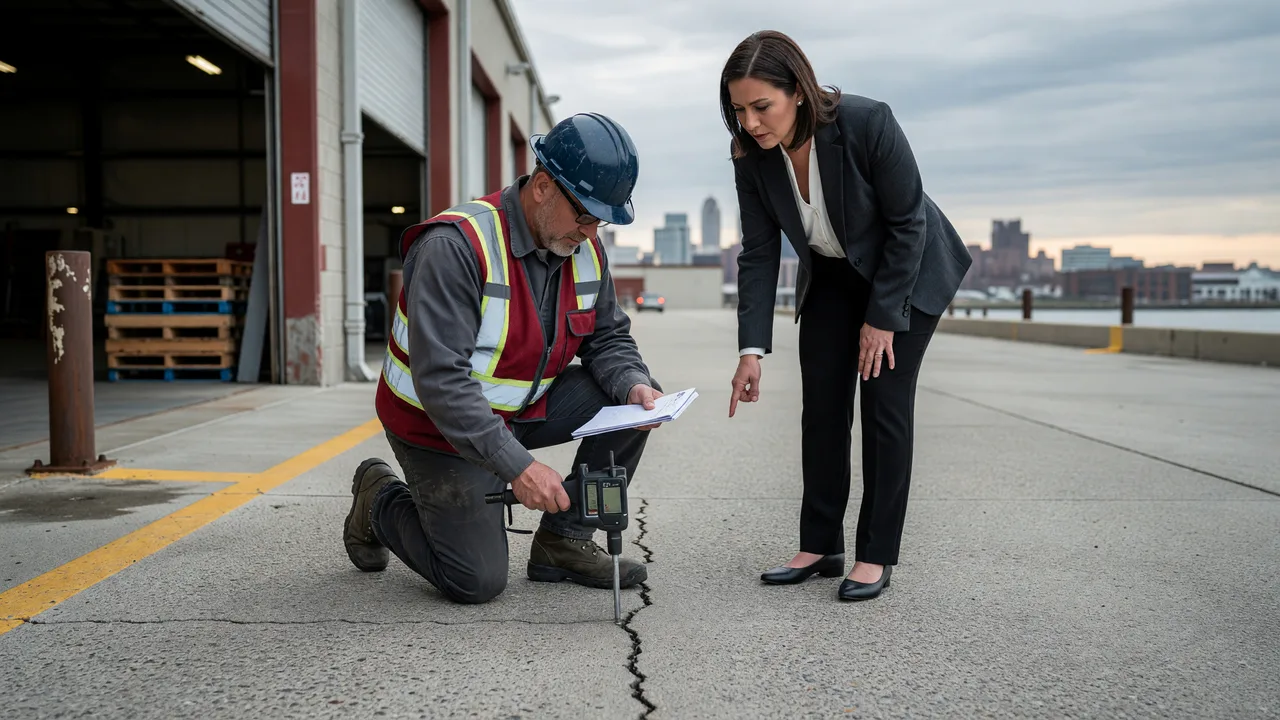
Managing commercial property in Northeast Ohio comes with a unique set of challenges — and few are as costly or persistent as concrete deterioration. Between Lake Erie’s lake-effect precipitation, aggressive road salts on I-90 and I-480, and the roughly 60 to 80 freeze-thaw cycles Cleveland endures each year, concrete surfaces face a relentless assault. For property managers overseeing office parks in Independence, warehouses in the Flats, retail centers in Beachwood, or multifamily properties in Ohio City, proactive concrete maintenance isn’t optional — it’s essential to preserving asset value and minimizing liability.
At Mattucci Construction, we’ve spent decades installing, restoring, and maintaining commercial concrete and masonry throughout the Akron–Cleveland corridor. The following concrete maintenance tips for Cleveland properties are drawn directly from that field experience and represent the practices that consistently extend service life, reduce emergency repair costs, and protect tenants and visitors.
Why Concrete Maintenance Matters More in Cleveland Than Almost Anywhere Else
Cleveland sits in one of the harshest freeze-thaw climates in the continental United States. According to NOAA climate data, the region averages more than 60 days per year with temperatures crossing the 32°F threshold — the exact condition that drives water expansion inside concrete pores. Combined with heavy municipal salt use (Cuyahoga County spreads over 60,000 tons of road salt in a typical winter), the chemical and mechanical stress on parking lots, sidewalks, loading docks, and structural slabs is enormous.
Deferred concrete maintenance carries real financial consequences. Industry data from the American Concrete Institute suggests every $1 spent on preventive concrete maintenance saves $4 to $5 in future repair or replacement costs. For a 100,000-square-foot commercial parking lot, that can mean the difference between a $15,000 sealing project and a $250,000 tear-out and repour five years later.
Video by
K
The Top 10 Concrete Maintenance Tips Every Cleveland Property Manager Should Follow
1. Seal Concrete Every 2 to 3 Years
Penetrating silane or siloxane sealers are the single most cost-effective defense against freeze-thaw damage and chloride intrusion. On high-traffic surfaces like parking lots in University Circle or loading docks along Brookpark Road, resealing every 24 to 36 months is critical. A quality sealer reduces water absorption by up to 95% and blocks the deicing salts that cause internal spalling.
2. Address Cracks Within 30 Days of Discovery
A hairline crack in October becomes a 3/8-inch fissure by March. Water enters, freezes, expands roughly 9% in volume, and pries the concrete apart. Route and seal cracks larger than 1/16 inch with a polyurethane or polyurea sealant before winter. Structural cracks — those wider than 1/4 inch or showing vertical displacement — warrant immediate professional assessment.
3. Use the Right Deicer (and Never Use the Wrong One)
Rock salt (sodium chloride) is cheap but chemically aggressive on concrete, especially surfaces less than one year old. Calcium chloride and magnesium chloride are less damaging in moderate quantities but still corrosive at high concentrations. Ammonium-based deicers should never be used — they chemically attack concrete. For newer pours, use sand or calcium magnesium acetate (CMA) exclusively during the first winter.
4. Keep Drainage Systems Clear
Standing water is concrete’s enemy. Inspect trench drains, catch basins, and area drains quarterly. In older Cleveland properties — think warehouse districts in Slavic Village or the Clark-Fulton neighborhood — subsurface drainage is often undersized or clogged with sediment. Pooling water at slab edges accelerates undermining, joint failure, and slab settlement.
5. Inspect Control and Expansion Joints Annually
Joint sealants have a service life of 5 to 10 years. When they fail, water and debris enter, causing joint spalling and slab curling. Walk your property each spring and re-caulk any joints where the sealant has hardened, cracked, or pulled away from the substrate. This is especially important on ADA-compliant walkways where uneven joints create trip hazards and liability exposure.
6. Manage Heavy Loads and Point Impacts
Concrete is strong in compression but weak in tension and impact. Dumpster corners, loading dock leveler plates, forklift wheel paths, and snowplow blade drops are the top sources of surface damage on commercial properties. Install steel angle-iron edge protection at dock faces, use rubber dumpster pads, and require plow contractors to keep blades slightly elevated on all concrete surfaces.
7. Power Wash Annually — But Do It Correctly
Oil, grease, rust, and organic staining trap moisture and degrade sealers. An annual power wash at 3,000 PSI with a concrete-safe degreaser removes contaminants before they penetrate. Avoid pressures above 3,500 PSI on decorative, stamped, or older concrete — you’ll etch the surface and expose aggregate.
8. Repair Spalling and Scaling Before It Spreads
Spalling (flaking or chipping of the surface) and scaling (widespread surface loss) are early warning signs of deeper deterioration. Small spalls can be repaired with polymer-modified overlays or partial-depth patches. Left untreated, they expose rebar to chlorides, triggering corrosion that will eventually require full-depth reconstruction — often at 8 to 10 times the cost of early intervention.
9. Protect New Concrete Through Its First Winter
Concrete continues to cure and gain strength for 28 days minimum, and remains vulnerable to salt damage for its first full year. If you’ve had new flatwork installed at your Cleveland property between September and November, avoid all deicing chemicals during the first winter, use sand for traction, and apply a cure-and-seal product before the first freeze.
10. Schedule a Professional Annual Assessment
The most valuable maintenance step is an annual walkthrough with a qualified concrete and masonry contractor. Trained eyes catch subtle warning signs — early alkali-silica reaction, joint depression, subgrade voids, rebar corrosion staining — that untrained observers miss. A one-hour inspection can prevent five- and six-figure repair bills.
Seasonal Maintenance Calendar for Northeast Ohio Properties
Spring (March–May): Full property inspection, crack routing and sealing, joint re-caulking, drainage cleanout, and power washing. This is the highest-value maintenance window in Cleveland’s calendar.
Summer (June–August): Sealer application (concrete must be dry and above 50°F), patch repairs, and any planned overlay or resurfacing work. Long daylight hours and low humidity make this the ideal construction season.
Fall (September–November): Pre-winter inspection, final crack sealing, joint sealant repairs, drainage verification, and stockpiling of appropriate deicing materials. Complete all outdoor work before the first hard freeze, typically mid-November in Cuyahoga County.
Winter (December–February): Monitor for salt damage, avoid mechanical impacts from plows, and document any damage for spring repair planning.
Warning Signs That Require Immediate Professional Attention
- Cracks wider than 1/4 inch or showing vertical displacement
- Rust-colored staining bleeding through the surface (indicates rebar corrosion)
- Hollow-sounding areas when tapped (indicates delamination)
- Settled or sunken slabs, especially near foundations or dock aprons
- Efflorescence combined with active water intrusion
- Any structural crack in a foundation, retaining wall, or load-bearing slab
- ADA-noncompliant elevation changes (over 1/4 inch vertical or 1/2 inch beveled)
These conditions escalate quickly in Cleveland’s climate and often signal problems below the visible surface. If you’re seeing any of them on your property, our team can perform a diagnostic assessment. Contact Mattucci Construction to schedule.
Choosing the Right Concrete Contractor in Cleveland
Not all concrete contractors are equipped to handle commercial maintenance and restoration. When evaluating partners for your property portfolio, look for:
- ACI-certified technicians on staff or under supervision
- Documented experience with commercial-grade repair systems — not just residential flatwork
- Full insurance including general liability of at least $2 million and workers’ compensation
- Local references from Cleveland-area properties of similar scale
- Transparent scoping with clear delineation of repair versus replacement recommendations
- Understanding of Cleveland code, ADA compliance, and Cuyahoga County permitting
Explore our full range of commercial concrete and masonry services to see how we support property managers across Northeast Ohio.
Frequently Asked Questions
How often should commercial concrete be sealed in Cleveland?
For most commercial applications in Cleveland, we recommend resealing every 2 to 3 years. High-traffic surfaces like parking lot entrances, loading docks, and dumpster pads may need annual sealer touch-ups. The exact interval depends on traffic volume, salt exposure, and the type of sealer originally applied. A penetrating silane/siloxane sealer generally outlasts a topical acrylic in Cleveland’s freeze-thaw environment.
What causes concrete to spall or flake in Northeast Ohio?
Surface spalling in Cleveland almost always traces to one of three causes: freeze-thaw cycling combined with water saturation, chloride ingress from deicing salts, or poor original finishing (over-troweling that traps bleed water near the surface). New concrete placed too late in the season and exposed to salt during its first winter is especially vulnerable. Prevention is far cheaper than repair — sealers, proper deicer selection, and drainage management are your best defenses.
Can concrete be repaired in winter, or do we have to wait until spring?
Most concrete repairs require ambient and substrate temperatures above 40°F for proper curing, which limits winter work in Cleveland. However, emergency structural repairs can be performed year-round using rapid-set polymer materials, heated enclosures, and insulated blankets. For non-emergency work, we typically recommend scheduling repairs between April and October when conditions support long-term performance.
What’s the difference between concrete resurfacing and full replacement?
Resurfacing applies a polymer-modified overlay (typically 1/4 to 1 inch thick) over structurally sound existing concrete, restoring appearance and surface integrity at roughly 30 to 50% of replacement cost. It’s appropriate when the underlying slab is stable and cracks are minor. Full replacement is required when the slab has structural cracking, subgrade failure, significant settlement, or widespread delamination. A professional assessment is the only reliable way to determine which approach is right for your property.
Are Mattucci Construction’s services available throughout Greater Cleveland?
Yes. We serve the entire Akron–Cleveland corridor, including Cuyahoga, Summit, Lorain, Lake, Geauga, and Medina counties. Our commercial project portfolio spans downtown Cleveland, the Flats, University Circle, Beachwood, Independence, Solon, Westlake, Strongsville, Akron, and surrounding communities. Whether you manage a single property or a regional portfolio, we can scale to your needs.
About Mattucci Construction
Mattucci Construction is a family-owned concrete and masonry contractor serving commercial property owners, facility managers, developers, and general contractors throughout Northeast Ohio. Our team specializes in commercial parking lots, warehouse and industrial floors, loading docks, ADA-compliant flatwork, foundations, and structural slabs — as well as high-end residential driveways, patios, and stamped concrete. With decades of hands-on experience in Cleveland’s demanding climate, we’ve built our reputation on durable installations, meticulous restoration work, and long-term partnerships with the region’s leading property management firms.
Ready to Protect Your Cleveland Property?
Whether you need a full property assessment, targeted repairs before winter, or a long-term maintenance partnership across a commercial portfolio, Mattucci Construction is ready to help. Explore our services or contact our team to schedule a site visit. Protect your assets, reduce liability, and extend the life of every concrete surface on your property — starting today.
Request an Estimate
Share your project details and we’ll send a free estimate.
☎ Call 330-992-2617
Request My Free Estimate
Ready to Get Started?
Mattucci Construction provides expert Concrete & Masonry Contractor in Cleveland and surrounding areas.
Contact Us Today
Call 330-992-2617
Frequently asked questions
How much does our service in Cleveland cost?
Mattucci Construction offers transparent pricing and a free initial consultation. Final cost depends on your specific situation — contact us for a no-obligation quote.
How long does our service take?
Timelines vary by case, but Mattucci Construction provides a clear estimate up front and same-day scheduling where possible.
Do you serve Cleveland?
Yes — Mattucci Construction actively serves Cleveland and surrounding communities.
What should I do first?
Reach out to Mattucci Construction for a free consultation; we’ll review your situation and outline the best next step.
Contact Mattucci Construction
Frequently asked questions
How much does concrete maintenance tips Cleveland in Cleveland cost?
How long does concrete maintenance tips Cleveland take?
Do you serve Cleveland?
What should I do first?
Request an Estimate
Share your project details and we’ll send a free estimate.
☎ Call 330-992-2617