
Ready-Mix Delivered Concrete vs Volumetric/On-Site Batched Concrete OH
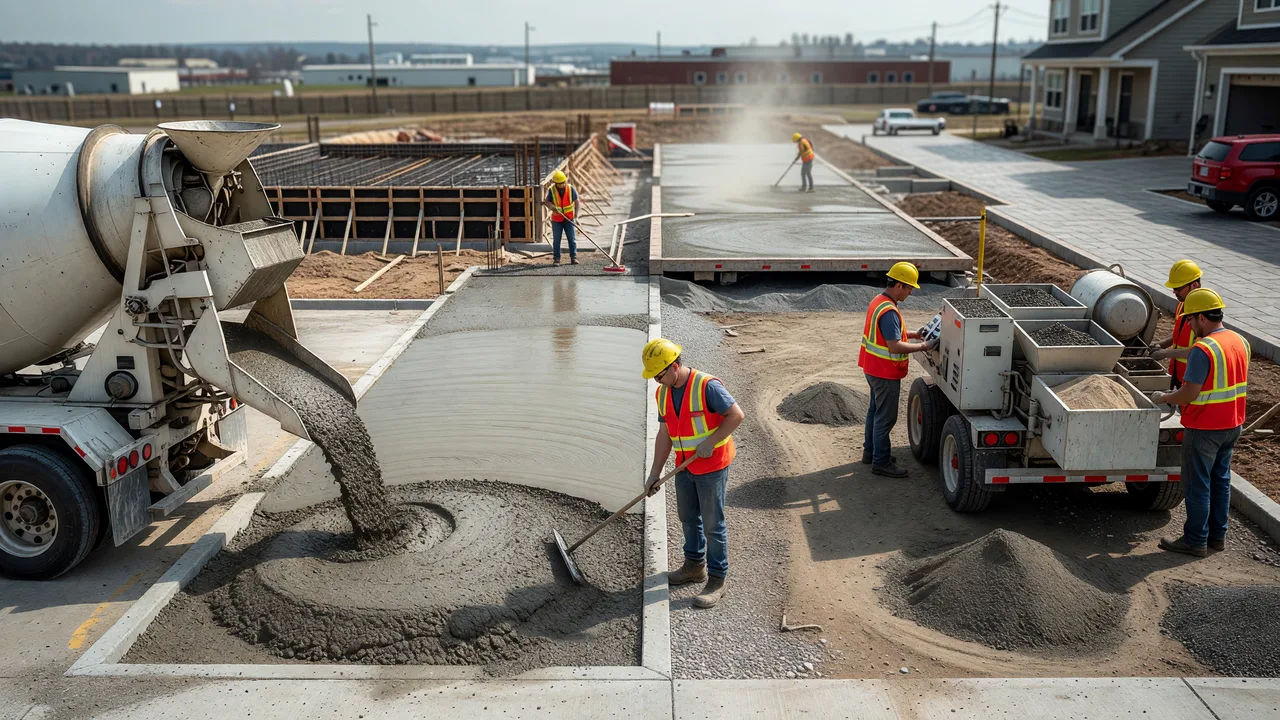
A practical buyer’s guide for owners, facility managers, developers, and general contractors evaluating which concrete supply method fits commercial performance, scheduling, and risk requirements.
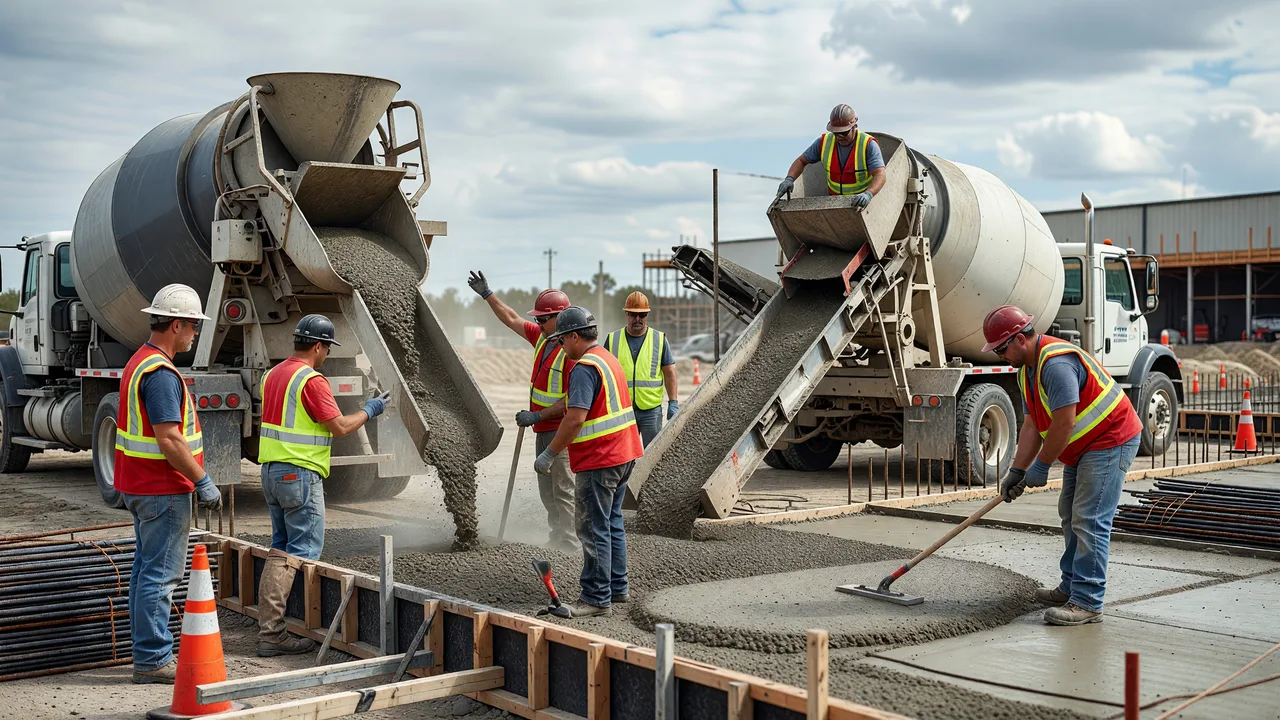
For most commercial slabs, parking lots, loading docks, foundations, and ADA flatwork, ready-mix delivered concrete is typically preferred when mix consistency, production speed, and established batch-plant quality control matter most. Volumetric or on-site batched concrete can be useful for variable quantities, remote access, or phased pours, but it requires tighter field. Call 330-992-2617 to discuss your needs and next steps.
Direct answer: which is better for commercial work?
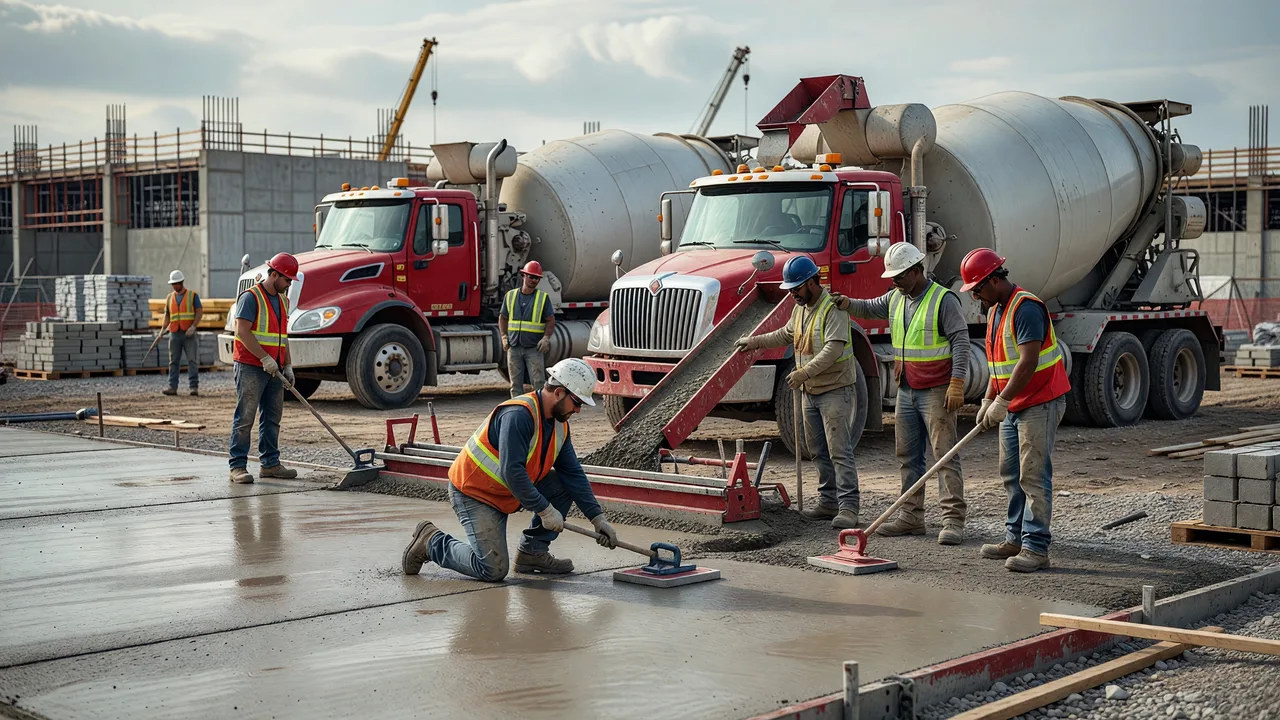 Photo by AI Generated (Grok Imagine)
The right choice in Ready-Mix Delivered Concrete vs Volumetric/On-Site Batched Concrete OH depends on the job’s tolerance for variation, access, quantity certainty, and schedule pressure. In most commercial applications, ready-mix delivered concrete is the safer default because it arrives from a central batch plant under controlled production conditions and supports faster placement on larger pours. Volumetric or on-site batched concrete is often more flexible when quantities are uncertain or the pour must be adjusted in real time.
For buyers responsible for parking lots, warehouse floors, loading docks, ADA flatwork, foundations, or structural slabs, the key question is not which method sounds newer. The real question is which method reduces operational risk, avoids rework, and gives the placement crew the most consistent material for the application.
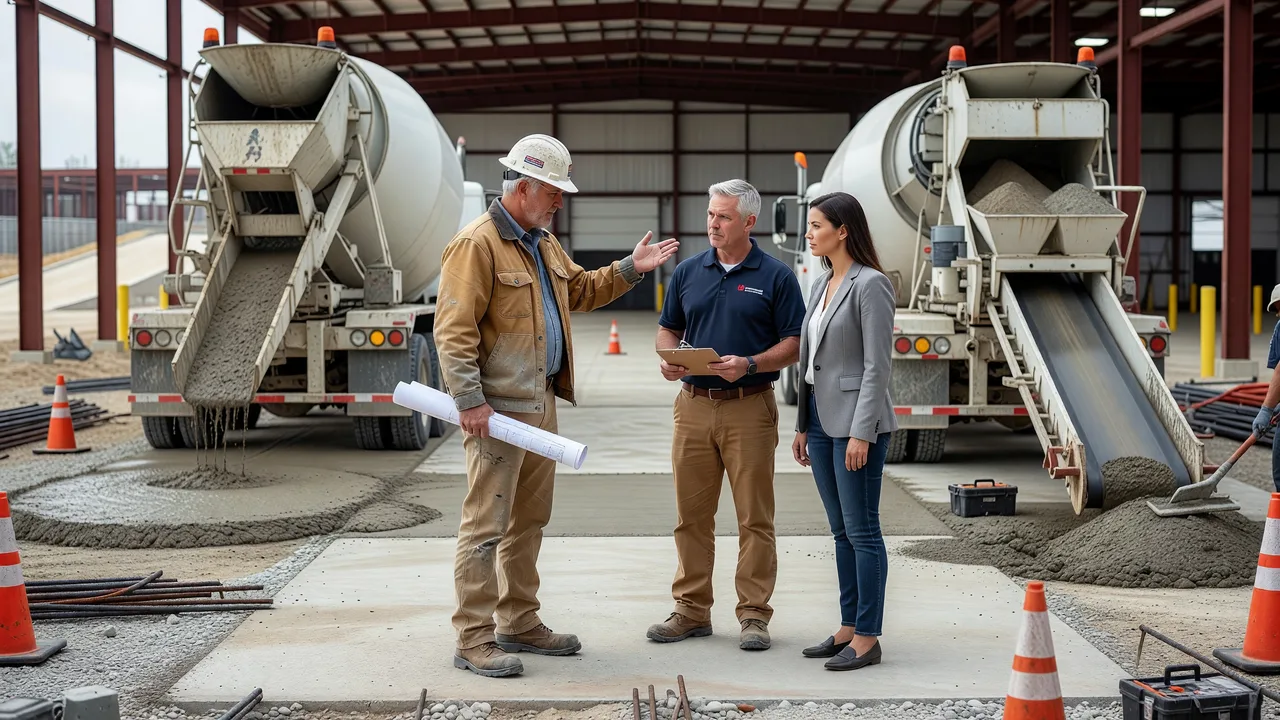
What ready-mix delivered concrete and volumetric/on-site batched concrete actually mean
Ready-mix delivered concrete is proportioned and mixed at a central batch plant, then transported to the site in a mixer truck. The plant controls the batching process, and the field team coordinates arrival times, discharge sequence, placement, finishing, jointing, and curing. This method is common on commercial work because it aligns well with high-volume placements and repeatable mix production.
Volumetric or on-site batched concrete is produced at the project site, typically from separate material compartments that combine during dispensing. The major advantage is flexibility: the operator can produce only the quantity needed and continue batching as conditions change. That can reduce waste on jobs where final volume is hard to predict.
Neither method is universally better. A buyer comparing Ready-Mix Delivered Concrete vs Volumetric/On-Site Batched Concrete contractor options should focus on quality control, crew coordination, placement rate, weather exposure during the pour, and whether the finished slab or pavement is built for long-term service conditions rather than one-day convenience.
Ready-Mix Delivered Concrete vs Volumetric/On-Site Batched Concrete OH: side-by-side comparison
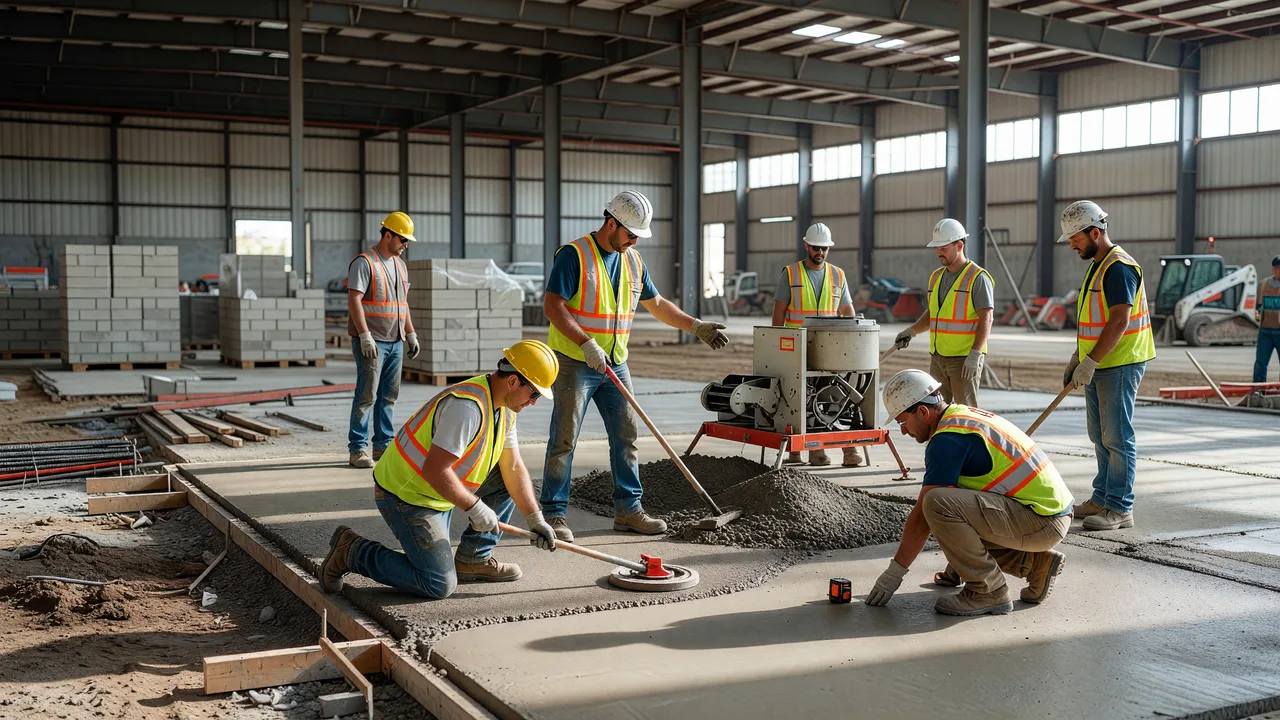 Photo by AI Generated (Grok Imagine)
The table below outlines the practical differences buyers usually care about most: consistency, waste, scheduling, placement speed, and suitability for commercial surfaces that must pass inspection and hold up under traffic, loading, and freeze-thaw exposure.
| Factor | Ready-Mix Delivered Concrete | Volumetric/On-Site Batched Concrete |
|---|---|---|
| Production location | Central batch plant | Produced at the jobsite |
| Best fit | Larger commercial pours, repeatable mix demand, tighter production scheduling | Variable quantities, staged placements, remote or hard-to-predict jobs |
| Mix consistency | Typically strong due to plant-controlled batching | Can be good, but depends heavily on field calibration and operator control |
| Placement speed | Usually faster on high-volume placements with coordinated truck sequencing | Can be slower on large placements because mixing occurs on site |
| Quantity flexibility | Less flexible once ordered; overage or shortages require coordination | High flexibility; can produce what is needed as the job develops |
| Waste risk | Can create waste if quantities are overestimated | Often reduces waste on uncertain-volume jobs |
| Traffic/logistics dependency | Depends on truck delivery timing and route conditions | Less dependent on multiple truck arrivals once equipment is on site |
| Large slab suitability | Often preferred for slabs, paving, docks, and foundations needing continuous placement | Can work, but production rate must match finishing and placement demands |
| Field adjustment potential | More limited after dispatch | Greater flexibility during the pour |
| Buyer concern to watch | Coordination of order accuracy, timing, and site access | Consistency from start to finish and adequate production rate |
How commercial buyers should evaluate the choice
Commercial concrete procurement is less about novelty and more about consequences. A property owner or GC dealing with a warehouse floor, loading dock, or parking lot is not simply buying wet concrete. They are buying a sequence of outcomes: proper placement, drainage, flatness where required, joint performance, weather timing, and a finished surface that does not become a maintenance problem after one winter or one season of truck traffic.
That is why Ready-Mix Delivered Concrete vs Volumetric/On-Site Batched Concrete OH should be evaluated through four filters: consistency, production rate, quantity certainty, and site constraints. If those four variables are handled correctly, the material choice supports the work. If they are handled poorly, either method can underperform.
- Consistency: Important for structural slabs, warehouse floors, foundations, and any placement where predictable performance matters.
- Production rate: Critical for larger pours where the crew must place and finish concrete continuously without cold joints or rushed finishing.
- Quantity certainty: Relevant when demolition reveals unknown depths, irregular subgrades, or changing repair extents.
- Site constraints: Access, laydown area, truck movement, tenant operations, and delivery windows all influence the better option.
Mattucci Construction’s commercial focus matters here because the evaluation should be made from the standpoint of long-term service performance. Their self-perform crews handle high-consequence work such as parking lots, warehouse and industrial floors, loading docks, ADA sidewalks and flatwork, foundations and footers, tilt-up concrete construction, concrete repair and restoration, retaining walls, tenant build-outs, and commercial masonry. That perspective is different from a contractor whose website is built mostly around decorative residential flatwork.
When ready-mix delivered concrete is usually the stronger choice
Ready-mix delivered concrete is usually the stronger choice when the project needs sustained production volume and dependable batching uniformity. Large parking lot placements, warehouse and industrial floors, structural slabs, foundations, and loading docks often benefit from coordinated truck sequencing because the crew can maintain momentum from placement through finishing and jointing.
It is also commonly preferred when inspection, internal quality procedures, and documentation expectations are higher. For owners and facility managers, this matters because the concrete is part of a broader risk chain: drainage errors, thickness issues, finishing defects, and premature distress can all lead to shutdowns, patching, trip hazards, or failed turnover expectations.
If the project team already has the quantities dialed in, site access planned, and the placement window defined, ready-mix delivered concrete often supports better schedule predictability than piecing decisions together in the field.
When volumetric or on-site batched concrete makes sense
Volumetric or on-site batched concrete makes sense when quantity uncertainty is high or the project benefits from producing concrete incrementally. Repair work, isolated placements, phased pours, remote access conditions, or jobs where demolition may change final volume can be good candidates.
The main benefit is reduced waste and real-time flexibility. If the crew uncovers more repair than expected or site conditions force sequence changes, on-site batching can keep the project moving without the same risk of ordering too much or too little material. That flexibility can be attractive on restoration or specialty access work.
However, buyers should not confuse flexibility with automatic superiority. On large commercial placements, the question becomes whether field production can keep up with the required placement pace and whether the operation will remain consistent from the first yard to the last.
Performance issues that matter more than the supply method itself
Many owners ask for the best Ready-Mix Delivered Concrete vs Volumetric/On-Site Batched Concrete null option, but the stronger question is: what conditions usually cause failure? In commercial concrete, premature distress often comes from poor subgrade preparation, water management mistakes, inadequate joint planning, finishing done at the wrong time, and weak schedule coordination between delivery and placement. The supply method matters, but workmanship and planning often matter more.
For example, a parking lot that ponds water, a loading dock slab that spalls under wheel impact, or an ADA sidewalk that misses slope tolerances will create expensive follow-up work regardless of how the concrete was supplied. The field crew’s ability to control elevation, reinforcement placement, edge conditions, and curing practices has direct impact on service life.
This is one reason commercial buyers look beyond a generic Ready-Mix Delivered Concrete vs Volumetric/On-Site Batched Concrete professional null OH search. They need a contractor that understands operational consequences, not just someone who can get concrete to the site. Mattucci Construction’s value proposition is accountability: self-performed work, no subcontractor roulette, bonded and insured status, and OSHA-compliant crews. For a buyer managing liability and schedule exposure, those are procurement-level considerations, not marketing extras.
Cost: which option is more affordable?
Buyers frequently ask for the affordable Ready-Mix Delivered Concrete vs Volumetric/On-Site Batched Concrete null choice, but concrete cost is not a single-line comparison. Total installed cost depends on quantity, access, waste tolerance, labor efficiency, site time, and the consequences of schedule disruption. The least expensive material supply method on paper may become the more expensive project if it slows placement, increases finishing labor, or creates inconsistency that leads to repairs.
Ready-mix delivered concrete can be cost-efficient on larger, well-defined pours because batching is centralized and production volume is high. Volumetric or on-site batched concrete can become more economical when quantities are uncertain and avoiding wasted material is a major objective. The practical answer is that affordability depends on fit.
Commercial buyers should request a Ready-Mix Delivered Concrete vs Volumetric/On-Site Batched Concrete estimate that evaluates more than the concrete itself. Ask for assumptions about quantity, site access, pour sequence, crew size, finishing window, subgrade readiness, and whether tenant operations or delivery traffic will limit production. That is where true project cost is decided.
For budget planning, the same principle applies to related scopes such as ADA sidewalks, parking lots, and repair work. The market often searches broad questions such as how much does ADA sidewalk cost or how much does parking lot cost. Those questions cannot be answered credibly without thickness, demolition extent, drainage corrections, reinforcement, access, and finish requirements. A trustworthy contractor will explain the variables instead of giving a universal number that does not survive real field conditions.
Schedule, weather, and operational disruption
On commercial sites, scheduling is often the deciding factor in Ready-Mix Delivered Concrete vs Volumetric/On-Site Batched Concrete OH. The material has to arrive or be produced in a way that matches the crew’s actual placement and finishing capacity. If the sequence outruns the finishers, quality suffers. If supply falls behind, the crew can end up fighting set times, cold joints, and operational delays.
Ready-mix delivered concrete usually performs well where truck access is manageable and the work benefits from continuous delivery. Volumetric/on-site batched concrete can help when phasing is tight or access makes repeated truck movements difficult. Either way, weather windows, subgrade readiness, and crew coordination need to be established before the first load is discharged.
For occupied properties, operational disruption may matter as much as the concrete itself. Facility and property managers often need truck routing, pedestrian control, loading access, and tenant communication managed carefully. A contractor used to commercial environments will plan around those constraints instead of treating them as afterthoughts.
How to choose a provider for this type of work
If you are comparing top Ready-Mix Delivered Concrete vs Volumetric/On-Site Batched Concrete null providers or searching Ready-Mix Delivered Concrete vs Volumetric/On-Site Batched Concrete near me, the most useful screening questions are operational, not promotional.
- Who actually performs the work? Mattucci Construction self-performs rather than selling the project and handing it off to unknown subs.
- Is the contractor bonded and insured? Commercial buyers should verify this early, especially for owner-side procurement and GC prequalification.
- Are crews OSHA-compliant? Safety administration is not optional on active commercial sites.
- Does the contractor routinely handle commercial failure points? Parking lots, warehouse floors, loading docks, foundations, ADA flatwork, and structural slabs require different field judgment than decorative-only work.
- Can they explain why one supply method fits the placement better? A credible provider should connect the recommendation to production rate, consistency, site logistics, and quantity certainty.
Mattucci Construction has been in business for more than 20 years and remains family-owned, with an approximate 4.8 average Google rating from 19 reviews. Those facts do not replace project planning, but they are relevant trust indicators for buyers who want one accountable crew and clear responsibility from start to finish.
Buyers looking for services Ready-Mix Delivered Concrete vs Volumetric/On-Site Batched Concrete null should also ask whether the same contractor can execute the connected work surrounding the pour. That includes demolition, grading coordination, forms, reinforcement, ADA tie-ins, loading dock geometry, repair transitions, masonry interfaces, and site restoration. Fragmented responsibility is where many avoidable disputes begin.
Practical recommendations before you request a consultation or quote
A strong Ready-Mix Delivered Concrete vs Volumetric/On-Site Batched Concrete consultation starts with good project information. Owners and GCs can improve quote accuracy and reduce change-order risk by gathering the right inputs before the conversation.
- Define the use case: Parking lot, industrial floor, loading dock, foundation, sidewalk, structural slab, or repair all have different performance priorities.
- Confirm quantity confidence: If takeoffs are firm, ready-mix may be efficient. If field conditions are uncertain, discuss whether on-site batching improves control.
- Document access and operating constraints: Include gate widths, truck routes, overhead obstructions, tenant traffic, and work-hour restrictions.
- Clarify tolerance and inspection requirements: ADA surfaces, dock areas, and warehouse slabs may have stricter performance expectations than standard flatwork.
- Ask about sequencing: Continuous large pours and phased placements are managed differently.
- Discuss repair history: If you keep patching the same area, the problem may be base failure, drainage, or loading—not just surface concrete.
If you are evaluating Ready-Mix Delivered Concrete vs Volumetric/On-Site Batched Concrete services null OH, these preparation steps will produce a more useful recommendation than simply asking which option is best in the abstract.
Buyers may also ask about Ready-Mix Delivered Concrete vs Volumetric/On-Site Batched Concrete warranty or Ready-Mix Delivered Concrete vs Volumetric/On-Site Batched Concrete financing. Warranty and payment structures are company-specific and project-specific, so the right approach is to review those terms directly during the quote process rather than assuming a universal market standard.
Frequently Asked Questions About Ready-Mix Delivered Concrete vs Volumetric/On-Site Batched Concrete
How much does ready-mix delivered concrete vs volumetric/on-site batched concrete cost?
How much does ready-mix delivered concrete vs volumetric/on-site batched concrete cost?
There is no credible national flat price because cost depends on quantity, access, placement rate, waste tolerance, labor efficiency, and site conditions. Ready-mix delivered concrete is often cost-effective on larger, clearly defined pours. Volumetric/on-site batched concrete can be cost-efficient when quantities are uncertain and waste reduction matters. For commercial work, the meaningful comparison is total installed cost, not just material price per yard.
What is the best ready-mix delivered concrete vs volumetric/on-site batched concrete company?
What is the best ready-mix delivered concrete vs volumetric/on-site batched concrete company?
The best provider is the one that can justify the supply method based on your actual application and then self-execute the work competently. For commercial buyers, priorities should include accountability, experience with high-consequence surfaces, bonded and insured status, and OSHA-compliant crews. Mattucci Construction stands out for self-performing commercial concrete and masonry work, with more than 20 years in business, family ownership, and an approximate 4.8 Google rating from 19 reviews.
How do I choose a ready-mix delivered concrete vs volumetric/on-site batched concrete provider?
How do I choose a ready-mix delivered concrete vs volumetric/on-site batched concrete provider?
Start by asking who will actually be on the job, whether the company self-performs, and what types of commercial surfaces they routinely build. Then ask how they would evaluate consistency, placement rate, quantity uncertainty, access, and weather exposure for your project. A reliable provider will explain the reasoning plainly instead of pushing one method for every job.
What should I look for in ready-mix delivered concrete vs volumetric/on-site batched concrete services?
What should I look for in ready-mix delivered concrete vs volumetric/on-site batched concrete services?
Look for a contractor that understands the finished asset, not just concrete supply. On commercial jobs, that means attention to subgrade, reinforcement, drainage, jointing, ADA compliance where applicable, finish requirements, access planning, and curing. The right service partner should be able to connect the chosen supply method to those execution details.
How long does ready-mix delivered concrete vs volumetric/on-site batched concrete take?
How long does ready-mix delivered concrete vs volumetric/on-site batched concrete take?
Duration depends on the size of the pour, site readiness, access, crew size, weather, and curing requirements. Ready-mix delivered concrete can support faster large-volume placement when truck sequencing is coordinated well. Volumetric/on-site batched concrete can be efficient for smaller or variable-quantity work, but on larger placements the on-site production rate must be evaluated carefully.
Is ready-mix delivered concrete vs volumetric/on-site batched concrete worth the investment?
Is ready-mix delivered concrete vs volumetric/on-site batched concrete worth the investment?
Yes, if the selected method matches the project’s actual constraints and performance requirements. The wrong choice can create waste, delays, or inconsistency. The right choice can improve schedule control, reduce rework, and support longer service life. On commercial assets, the investment decision should be tied to durability, inspection outcomes, operational uptime, and lifecycle maintenance exposure.
Is ready-mix better for parking lots and warehouse floors?
Is ready-mix better for parking lots and warehouse floors?
Often, yes. Parking lots and warehouse floors commonly benefit from the volume, pace, and batching consistency associated with ready-mix delivered concrete, especially when the quantities are known and the crew needs continuous placement. However, every project should still be evaluated for access, phasing, and quantity certainty before deciding.
Does volumetric concrete reduce waste?
Does volumetric concrete reduce waste?
It often can. Because volumetric/on-site batched concrete is produced as needed, it may reduce leftover material on jobs where the final quantity is hard to predict. That can be useful on repair scopes, staged placements, or projects with uncertain excavation or demolition conditions.
What matters more: the concrete supply method or the contractor installing it?
What matters more: the concrete supply method or the contractor installing it?
Both matter, but workmanship and planning often have the greater long-term effect. Subgrade preparation, drainage, reinforcement placement, joint layout, finishing timing, and curing all influence service life. A strong contractor will choose the supply method that supports those execution requirements rather than treating supply as a standalone decision.
Need a commercial concrete recommendation grounded in field realities?
If you are comparing ready-mix delivered concrete and volumetric/on-site batched concrete for a parking lot, warehouse floor, loading dock, ADA flatwork, foundation, structural slab, or repair project, Mattucci Construction can review the scope from a commercial performance standpoint. The company is family-owned, self-performs its work, and brings bonded, insured, OSHA-compliant crews to concrete and masonry projects where accountability matters.To discuss your project, use the quote-request form at https://mattucciconstruction.net and call the office number listed on the website to coordinate next steps.