
Broom Finish vs Polished Concrete for Commercial Floors OH
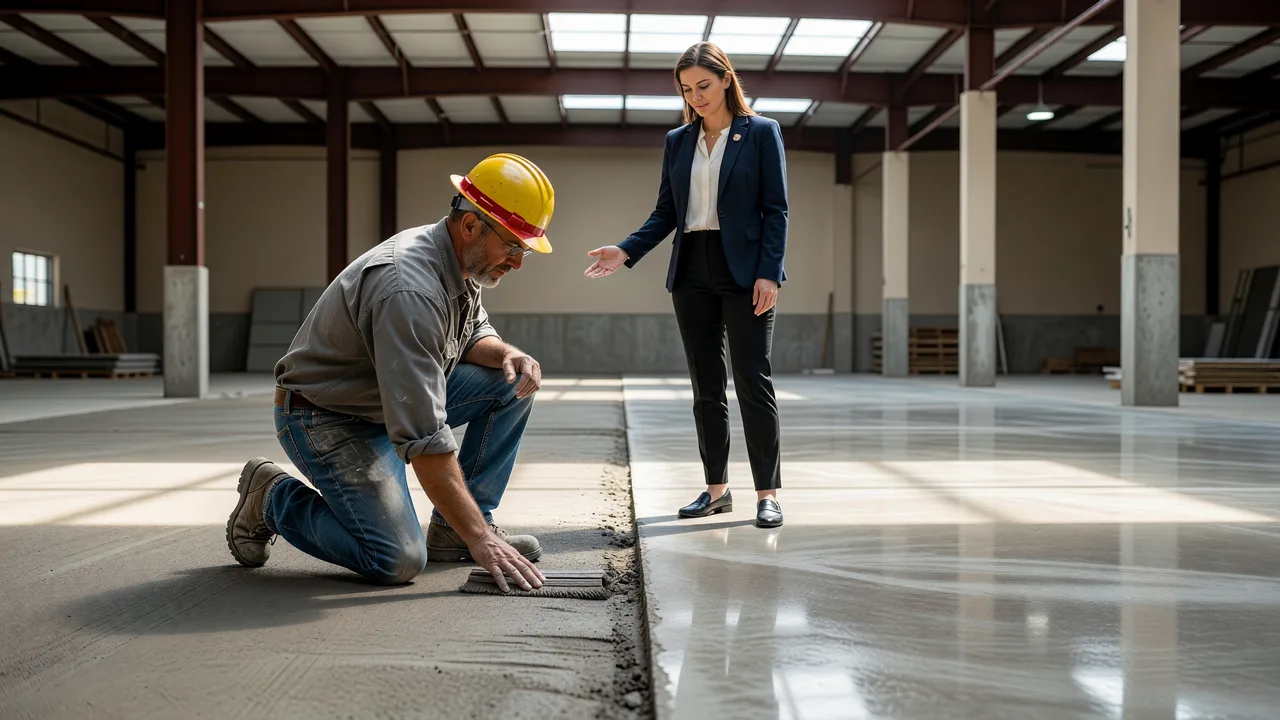
A practical guide for owners, facility managers, developers, and general contractors comparing traction, maintenance, durability, lifecycle fit, and where each concrete finish performs best in commercial use.
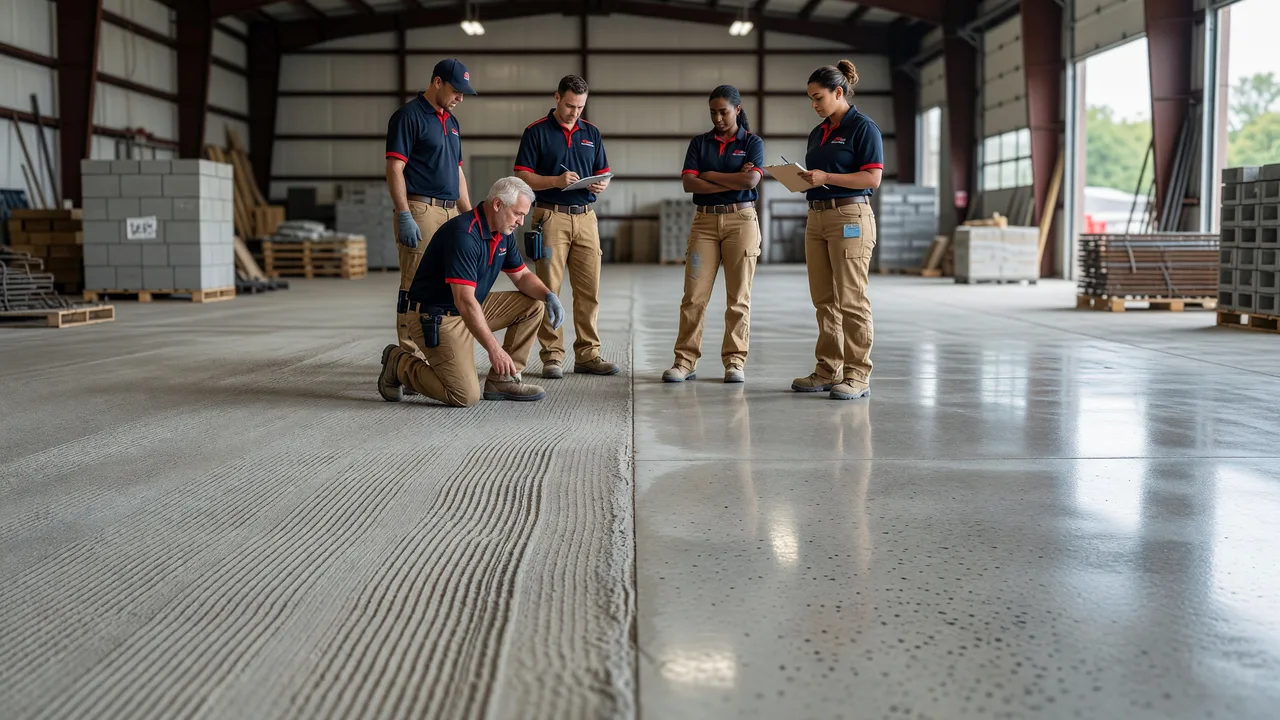
For most commercial floors, broom finish is better for exterior traction, wet areas, ramps, and utility surfaces, while polished concrete is better for interior spaces that need dust reduction, easier cleaning, and a refined appearance. The right choice depends on slip resistance, maintenance, traffic type, drainage exposure, and whether the. Call (330) 992-2617 to discuss your needs and next steps.
Direct answer: which is better for commercial floors?
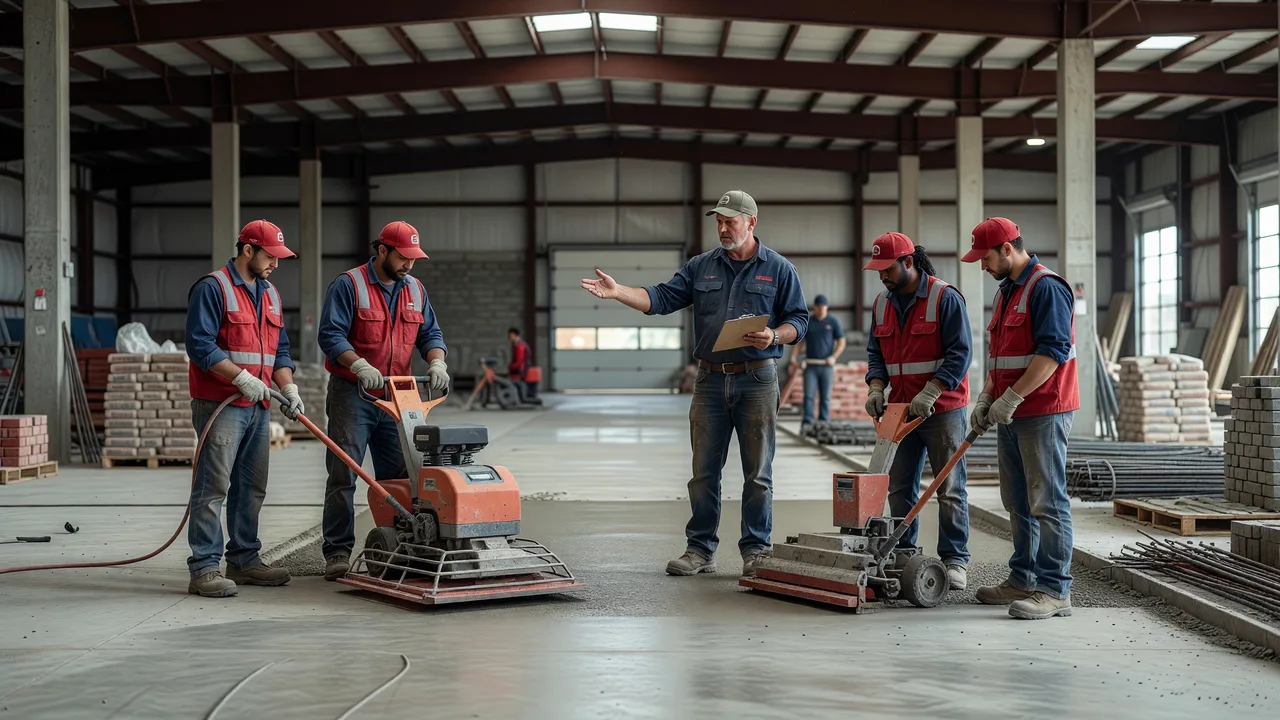 Photo by AI Generated (Grok Imagine)
Broom Finish vs Polished Concrete for Commercial Floors OH is not a one-size-fits-all decision. In commercial settings, broom finish is usually the better choice for exterior slabs, loading areas, sidewalks, and any surface where traction in wet or freeze-thaw conditions matters most. Polished concrete is typically the better choice for interior floors where owners want easier cleaning, reduced dusting, strong light reflectivity, and a more finished appearance under regular foot traffic or light-to-moderate equipment use.
If the floor must manage rain, snow, washdown, or ADA slip concerns, broom finish usually wins. If the floor is inside a warehouse, tenant build-out, lobby, or industrial space where maintenance efficiency and appearance matter, polished concrete often delivers better long-term value. The correct specification depends on use case, not trend.
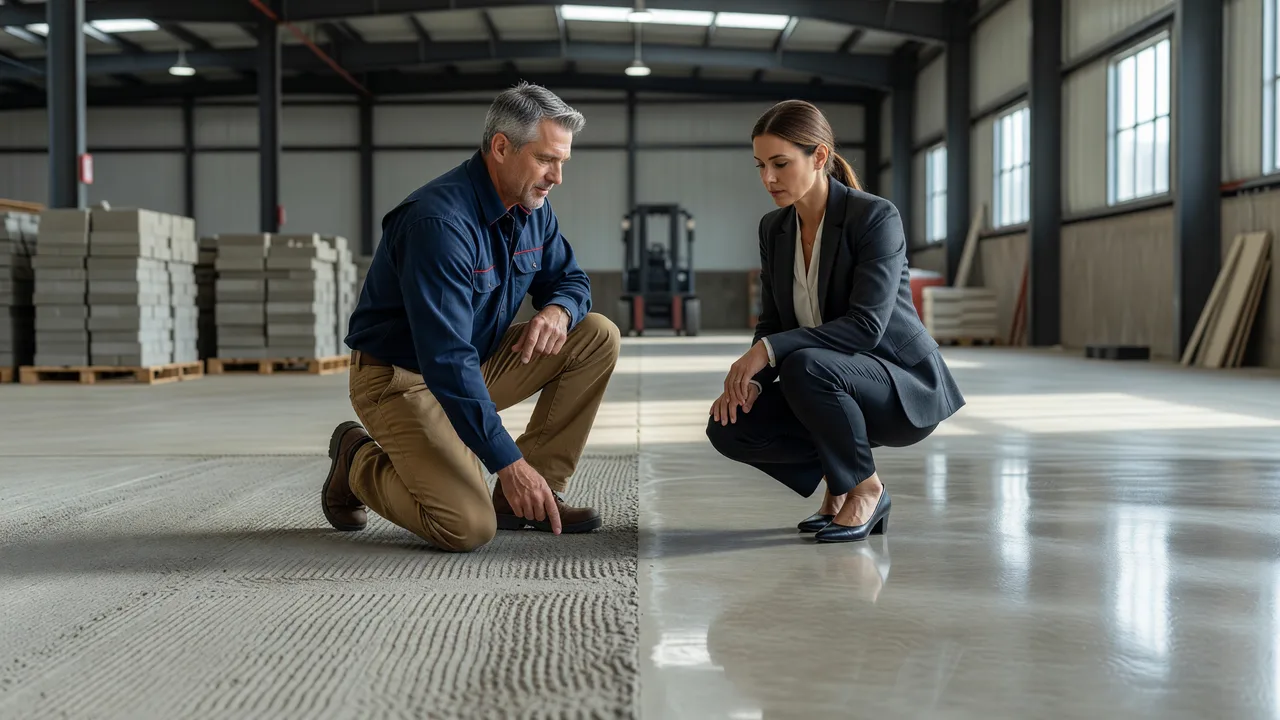
How to evaluate Broom Finish vs Polished Concrete for Commercial Floors OH
Commercial buyers should evaluate concrete finishes the same way they evaluate any other building system: by failure points, not by brochure language. The real questions are whether the surface will stay safe under traffic, whether it supports operations, whether maintenance staff can keep it clean without constant workarounds, and whether the slab and finish are appropriate for the environment.
When comparing Broom Finish vs Polished Concrete for Commercial Floors OH, five variables matter most: interior or exterior exposure, slip resistance requirements, cleaning demands, traffic type, and expected lifecycle maintenance. A finish that works well in a distribution corridor may be wrong for a truck apron. A finish that looks efficient in a showroom may create unnecessary traction risk at a loading dock entrance.
For facility managers and developers, this is also a risk-management decision. A poor finish choice can contribute to slip incidents, standing water, accelerated wear patterns, visual inconsistency, tenant complaints, or repeat repairs. That is why finish selection should be tied directly to use, drainage, joint planning, and the slab’s structural role rather than treated as a purely aesthetic upgrade.
- Broom finish creates surface texture by drawing a broom across fresh concrete to improve traction.
- Polished concrete is mechanically ground, honed, and polished after curing to create a dense, smooth, low-dusting surface with a refined sheen level.
- Commercial fit depends on whether safety texture or maintenance efficiency is the dominant priority.
What broom finish does well in commercial applications
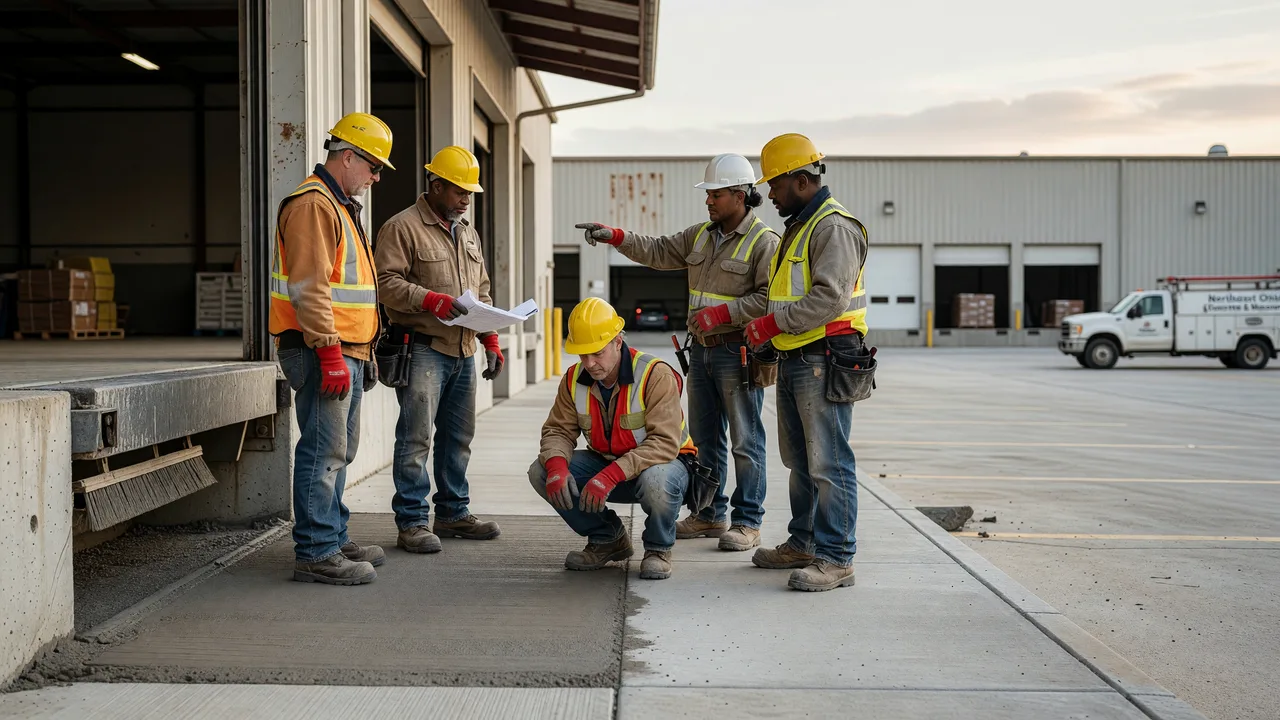 Photo by AI Generated (Grok Imagine)
Broom finish is a workhorse specification. It is practical, familiar to inspectors, and well suited to commercial environments where traction matters more than visual reflectivity. For parking lots, site concrete, exterior walkways, ADA flatwork, service yards, ramps, and loading dock aprons, a broom texture helps shoes and tires maintain grip when the surface is wet or exposed to seasonal conditions.
That is especially relevant in regions with repeated freeze-thaw cycling, snow, deicing, and runoff. Even on a national-scope guide page, the lesson holds: exterior commercial concrete should be selected for actual exposure conditions, not for a cleaner-looking finish that belongs indoors. Owners who choose the wrong finish outside often end up solving for slip concerns later with coatings, mats, or repeated operational workarounds.
Broom finish is also straightforward from an operations standpoint. It does not require the same polishing sequence, gloss management, or appearance expectations as an architectural interior slab. It is generally more forgiving on utility surfaces, less appearance-sensitive after patching or phased placements, and easier to align with standard commercial sitework scopes.
Best uses for broom finish
Broom finish is commonly the right answer for:
- ADA sidewalks and access routes where dependable traction matters
- Parking lot walkways and pedestrian paths
- Loading docks, ramps, and exterior service entries
- Exterior slabs around warehouse and industrial buildings
- Utility pads, service corridors, and washdown-prone zones
It is not usually selected because it is decorative. It is selected because it performs a basic commercial function reliably: it helps people and equipment move across the slab more safely in real conditions.
Limitations of broom finish
The same texture that improves traction can also hold dirt, residue, and fine debris more than a polished surface. That makes broom finish less ideal for interior spaces where dust control, easy mopping, or a more finished tenant-facing look is important. On warehouse interiors, food-adjacent spaces, or occupied commercial interiors, some operators find the textured profile less efficient to clean over time.
Broom finish also does not deliver the brightness or architectural presentation that many owners want in customer-facing interiors. If the floor is part of the visual experience of the building, polished concrete may align better with the program.
What polished concrete does well in commercial applications
Polished concrete is generally an interior floor strategy. Through mechanical grinding and polishing, the surface becomes denser, smoother, and easier to maintain than unfinished slab surfaces. In many commercial environments, that translates into less dusting, easier scrubbing, improved light reflectivity, and a cleaner overall appearance for staff, tenants, and visitors.
For warehouse and industrial floors, polished concrete can support a cleaner operating environment than a basic unfinished slab, particularly where forklifts, foot traffic, or material movement generate fine dust. For tenant build-outs and finished interior commercial spaces, it can provide a durable exposed-floor solution without the ongoing replacement cycle of some applied floor coverings.
When buyers compare Broom Finish vs Polished Concrete for Commercial Floors OH, polished concrete stands out when the space is inside, dry, traffic is predictable, and maintenance crews value a floor that can be cleaned more efficiently with the right equipment and procedures.
Best uses for polished concrete
Polished concrete is often a strong fit for:
- Warehouse interiors and industrial floors
- Tenant build-out spaces
- Interior retail or commercial occupancy areas
- Lobbies, corridors, and open commercial interiors
- Facilities that want easier routine cleaning and a more finished appearance
It can also be a practical choice where owners want to avoid layering additional finish materials over a structurally sound slab.
Limitations of polished concrete
Polished concrete is not the automatic answer for every commercial slab. Exterior use is generally limited because wet conditions can change traction performance, and freeze-thaw exposure introduces a different risk profile than interior use. It is also not the preferred solution where a heavily textured walking surface is required by the operating conditions.
Polished concrete requires the slab itself to be suitable for polishing. If the substrate has significant defects, inconsistent placement, severe contamination, or repair conditions, the path to an acceptable polished result may be more involved. In short, polished concrete can be excellent, but only when the slab and use case support it.
Broom Finish vs Polished Concrete for Commercial Floors OH: side-by-side comparison
The table below gives commercial buyers a practical comparison. It is designed for decision-making, not showroom marketing.
| Criteria | Broom Finish | Polished Concrete |
|---|---|---|
| Typical location | Exterior slabs, sidewalks, ramps, loading areas, site concrete | Interior warehouse floors, tenant spaces, commercial interiors |
| Slip resistance | Higher surface traction, especially in wet conditions | Depends on polish level, maintenance, contaminants, and conditions; generally better suited to dry interiors |
| Cleaning | Texture can hold dirt and debris more than smooth interior finishes | Easier to dust mop and scrub in many interior settings |
| Appearance | Functional, utility-oriented finish | Refined, brighter, more finished appearance |
| Exterior performance | Strong fit for weather exposure | Usually not preferred for exposed exterior commercial slabs |
| Interior maintenance | Serviceable but less efficient than polished in many occupancies | Often more maintenance-efficient indoors |
| Best for ADA/site work | Commonly appropriate when traction is a primary concern | Usually not the first choice for exterior ADA routes |
| Best for warehouse interiors | Possible, but not usually preferred when dust control and cleaning matter | Often a strong choice, depending on slab condition and operational use |
| Lifecycle fit | Built for practical outdoor service | Built for durable indoor use and visual consistency |
For owners searching terms like best Broom Finish vs Polished Concrete for Commercial Floors null, Broom Finish vs Polished Concrete for Commercial Floors best null OH, top Broom Finish vs Polished Concrete for Commercial Floors null, or Broom Finish vs Polished Concrete for Commercial Floors top null OH, the honest answer is that the “best” finish is the one that matches the slab’s environment and traffic. In commercial construction, the wrong finish chosen for the wrong environment is never a top choice, even if it looks attractive in photos.
Cost considerations: initial price vs lifecycle cost
One of the most common buyer questions is cost. The exact answer varies by slab condition, square footage, joint layout, edge work, access, schedule, and whether the concrete is new placement or an existing slab being upgraded. Because those variables drive the scope, this guide should not invent national pricing ranges that may mislead procurement teams.
What can be said reliably is this: broom finish is typically less process-intensive on the front end than a polished concrete system, while polished concrete may support lower ongoing maintenance effort in the right interior environment. In other words, broom finish often costs less to execute initially, but polished concrete may deliver lifecycle value if it reduces dust management, improves cleanability, and eliminates the need for some alternative floor coverings.
For searchers asking How much does broom finish vs polished concrete for commercial floors cost in null?, the practical answer is that cost should be evaluated in two buckets: installation scope and operating cost. A cheaper finish that creates daily cleanup problems or traction-related complaints can become the more expensive decision over time.
Owners also search phrases like affordable Broom Finish vs Polished Concrete for Commercial Floors null and Broom Finish vs Polished Concrete for Commercial Floors affordable null OH. “Affordable” in commercial concrete should mean fit-for-purpose and durable, not just low bid. If the slab is in a high-consequence area such as a loading dock approach, ADA route, or warehouse floor, the economical decision is usually the one that reduces callbacks, downtime, and corrective work.
How traffic, moisture, and inspections affect the finish decision
Traffic type changes everything. Foot traffic, pallet jacks, forklifts, delivery routes, carts, and occasional washdown all interact with the surface differently. A polished interior slab may perform well under organized warehouse traffic and routine cleaning. That same finish would not usually be the prudent choice at an exposed exterior dock where water and seasonal conditions are part of daily use.
Moisture is just as important. Exterior commercial concrete is rarely dry for long. Rain, snow, deicing, and drainage issues all raise the value of texture. That is why broom finish remains the standard answer for many site and access surfaces. Inside the building envelope, where conditions are controlled, polished concrete has more room to deliver its maintenance and appearance advantages.
Inspection and compliance also matter. Property owners and facility managers do not want a slab that creates an ADA concern, standing water issue, or avoidable slip hazard. The right finish has to work with slope, drainage, and the real use of the area. Finish selection is only one part of performance, but it is a visible and important one.
Practical recommendations by commercial use case
If you are deciding between these finishes, start with the function of the slab rather than the appearance of the finish.
- Parking lots and site concrete: choose broom finish in most cases. These surfaces are exposed, utilitarian, and traction-sensitive.
- ADA sidewalks and flatwork: broom finish is commonly the safer and more practical specification because texture supports pedestrian traction.
- Loading docks and ramps: broom finish is generally the better fit because vehicles, pedestrians, weather, and runoff all argue for texture.
- Warehouse and industrial interiors: polished concrete is often worth serious consideration when cleaning efficiency, dust reduction, and finished appearance matter.
- Tenant build-outs: polished concrete can be a smart choice where the slab is visible and the owner wants a durable exposed-floor solution.
- Foundations, footers, structural slabs, and tilt-up elements: this comparison is usually not the central decision point; those scopes are driven more by structural and performance requirements than by occupied-floor finish strategy.
Buyers searching professional Broom Finish vs Polished Concrete for Commercial Floors null, Broom Finish vs Polished Concrete for Commercial Floors professional null OH, services Broom Finish vs Polished Concrete for Commercial Floors null, or Broom Finish vs Polished Concrete for Commercial Floors services null OH should look for a contractor that understands the use case at the superintendent level. Finish advice is only credible when it is grounded in parking lots, warehouse floors, loading docks, ADA flatwork, and commercial slabs that actually take abuse.
How to choose the right contractor for this decision
A comparison page like this only helps if the contractor executing the work can actually control the result. For commercial concrete, finish quality depends on slab prep, placement discipline, weather timing, joint planning, curing, and crew experience. If the company selling the job hands it off to unknown subs, accountability gets diluted fast.
That is one reason commercial buyers often prioritize self-performing contractors. Mattucci Construction is a family-owned commercial concrete and masonry contractor with more than 20 years in business, and the company self-performs work rather than outsourcing the scope to a patchwork of subcontractors. For owners and GCs, that means one accountable crew rather than subcontractor roulette. Mattucci is also bonded and insured, with OSHA-compliant crews, which matters when the work is happening on occupied commercial sites or active industrial properties.
This is relevant whether the need is a new warehouse floor, loading dock work, ADA flatwork, parking lot concrete, foundations and footers, tilt-up concrete construction, commercial masonry, retaining walls, tenant build-outs, or concrete repair and restoration. In all of those scopes, the finish decision sits inside a larger performance conversation about durability, drainage, sequencing, and inspection readiness.
For buyers searching Broom Finish vs Polished Concrete for Commercial Floors contractor, Broom Finish vs Polished Concrete for Commercial Floors estimate, Broom Finish vs Polished Concrete for Commercial Floors consultation, or even Broom Finish vs Polished Concrete for Commercial Floors near me and Broom Finish vs Polished Concrete for Commercial Floors null near me, the right provider is one that can explain where each finish belongs, where it does not, and who will actually be on the job when the concrete is placed or finished.
Questions to ask before you specify broom finish or polished concrete
Before finalizing the finish, ask these jobsite-level questions:
- Is this slab interior or exterior, and will it ever be wet during normal operations?
- Who uses the area: pedestrians, forklifts, pallet jacks, delivery vehicles, tenants, or the public?
- Does the area have ADA access, safety, or inspection sensitivity?
- How often will the floor be cleaned, and with what equipment?
- Is the slab new placement or an existing slab with repairs, wear, or contamination?
- Is appearance important, or is operational durability the main goal?
- Will drainage or slope performance make traction a bigger issue?
These questions usually narrow the decision quickly. If the surface is outside and safety texture is the priority, broom finish often becomes the straightforward answer. If the slab is indoors and the owner wants a cleaner, lower-dusting exposed floor, polished concrete often moves to the front.
Soft next step for owners, managers, developers, and GCs
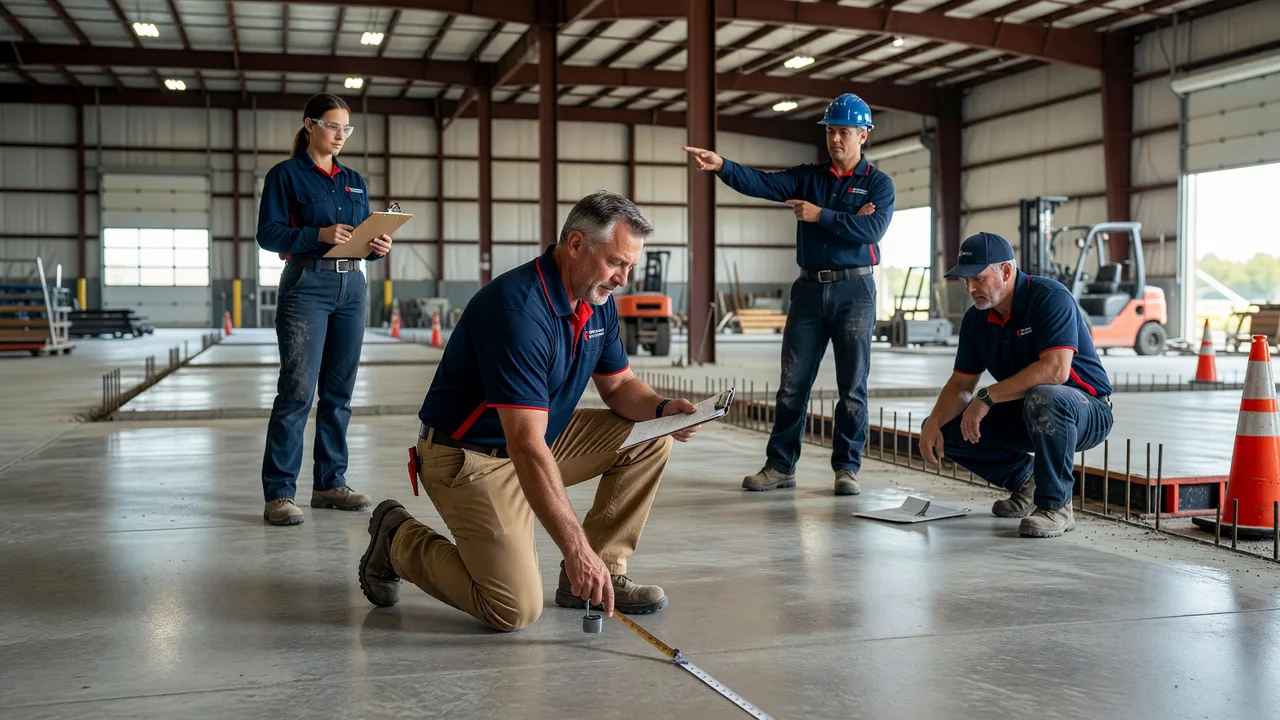 Photo by AI Generated (Grok Imagine)
If you are weighing Broom Finish vs Polished Concrete for Commercial Floors OH, the most useful next step is to review the slab’s actual use, exposure, and maintenance plan with a commercial concrete contractor that self-performs the work. That conversation should cover traffic, drainage, cleaning expectations, schedule, and whether the slab is new construction, repair, or part of a larger site package.
Mattucci Construction works with commercial property owners, facility managers, developers, and general contractors on parking lots, warehouse and industrial floors, loading docks, ADA sidewalks and flatwork, foundations and footers, tilt-up concrete construction, commercial masonry, retaining walls, repair and restoration, and tenant build-outs. If you need a practical recommendation tied to how the floor will actually perform, use the quote request form at https://mattucciconstruction.net or call (330) 992-2617 to start the discussion.
For procurement teams also reviewing adjacent concerns such as parking lot replacement, ADA sidewalk planning, concrete masonry construction, or related commercial floor scopes, the same rule applies: choose the finish and the contractor based on operational performance, not generic sales claims. Questions about Broom Finish vs Polished Concrete for Commercial Floors warranty and Broom Finish vs Polished Concrete for Commercial Floors financing are best handled during project scoping so the recommendations match the actual scope and risk profile.
Frequently Asked Questions About Broom Finish vs Polished Concrete for Commercial Floors
How much does broom finish vs polished concrete for commercial floors cost in null?
Cost depends on the slab size, condition, access, joint layout, schedule, and whether the floor is new placement or an existing slab being upgraded. In most cases, broom finish is less process-intensive upfront, while polished concrete involves additional grinding and polishing steps. For commercial buyers, the smarter comparison is initial installation cost versus lifecycle operating cost, especially cleaning labor, dust control, and the cost of future repairs or surface changes.
Is broom finish or polished concrete better for warehouses?
For most warehouse interiors, polished concrete is often the stronger option because it can provide easier cleaning, reduced dusting, and a more maintenance-efficient surface. For exterior warehouse approaches, truck aprons, ramps, or dock-adjacent slabs, broom finish is usually the better fit because traction under wet conditions matters more than sheen or reflectivity.
What is the best broom finish vs polished concrete for commercial floors company in null?
The best company is one that can explain where each finish belongs and then self-perform the work with accountable crews. For commercial projects, buyers should look for experience with warehouse floors, loading docks, ADA flatwork, parking lots, foundations, and other high-consequence slabs. Mattucci Construction brings more than 20 years in business, self-performed work, bonded and insured operations, OSHA-compliant crews, and an approximate 4.8 Google rating from 19 reviews at the time of writing.
How do I choose a broom finish vs polished concrete for commercial floors provider in null?
Ask whether the contractor self-performs or outsources the work, whether the crews are bonded, insured, and OSHA-compliant, and whether they regularly handle commercial slabs rather than only residential decorative work. You also want a provider that talks about drainage, jointing, traffic, cleaning, and inspection exposure—not just appearance. Commercial finish recommendations should be tied to actual use conditions.
What should I look for in broom finish vs polished concrete for commercial floors services?
Look for clear use-case guidance, realistic scope review, and experience with the kind of slab you are actually building or repairing. A credible provider should ask whether the floor is interior or exterior, what kind of traffic it handles, whether ADA access is involved, what the cleaning protocol will be, and how the concrete integrates with the larger site or building schedule. The finish should be treated as part of performance, not as a cosmetic afterthought.
How long does broom finish vs polished concrete for commercial floors take?
Duration depends on square footage, access, curing requirements, weather, and whether the work is new construction or modification of an existing slab. Broom finish is integrated into the placement process on fresh concrete, while polished concrete typically requires a later-stage grinding and polishing sequence after the slab is ready. For occupied commercial sites, scheduling should also account for downtime, access restrictions, and whether phased work is needed to protect operations.
Is broom finish vs polished concrete for commercial floors worth the investment?
Yes, if the finish matches the application. Broom finish is worth it where traction and outdoor serviceability are the priority. Polished concrete is worth it where interior cleanability, dust reduction, and a more finished appearance deliver ongoing operational value. The investment pays off when the finish reduces risk, supports maintenance, and avoids early corrective work.
Is polished concrete slippery for commercial floors?
That depends on the environment, the level of polish, the presence of water or contaminants, and how the floor is maintained. Polished concrete is typically best suited to interior commercial spaces with controlled conditions. If the area is frequently wet or exterior-facing, buyers should be cautious and evaluate whether a textured finish such as broom finish is more appropriate for the risk profile.
Is broom finish good for ADA sidewalks and exterior access routes?
In many commercial applications, yes. Broom finish is commonly used on ADA sidewalks and exterior access routes because it provides surface texture that helps with traction. The finish still has to work with proper slope, drainage, and overall flatwork execution, but as a finish strategy, broom texture is often the practical answer outside.
Can an existing commercial slab be polished?
Sometimes, but not every slab is a good candidate. The existing concrete has to be evaluated for surface condition, contamination, cracking, previous repairs, and overall suitability for grinding and polishing. If the slab has significant defects or inconsistent prior work, the path to a polished result may be more involved than owners expect.
Need a practical recommendation for your commercial floor?
If you are comparing broom finish and polished concrete for a warehouse, loading dock, ADA route, parking lot, or interior commercial slab, Mattucci Construction can review the use case and help you align the finish with traffic, maintenance, drainage, and schedule. Use the quote request form at https://mattucciconstruction.net and keep the phone number visible for your team: (330) 992-2617.