
What Is FF/FL Floor Flatness and Why It Matters for Warehouse Floors OH

A practical guide for owners, facility managers, developers, and GCs who need warehouse and industrial slabs that stay serviceable, safe, and inspection-ready under real operating loads.

FF and FL are standardized measurements used to evaluate a concrete slab’s surface quality. FF measures how flat the floor is across short distances, while FL measures how level it is over longer runs. For warehouse floors, FF/FL matters because it affects forklift safety, rack performance, joint wear, drainage, and. Call (330) 992-2617 to discuss your needs and next steps.
Direct Answer: What Is FF/FL Floor Flatness and Why It Matters for Warehouse Floors OH
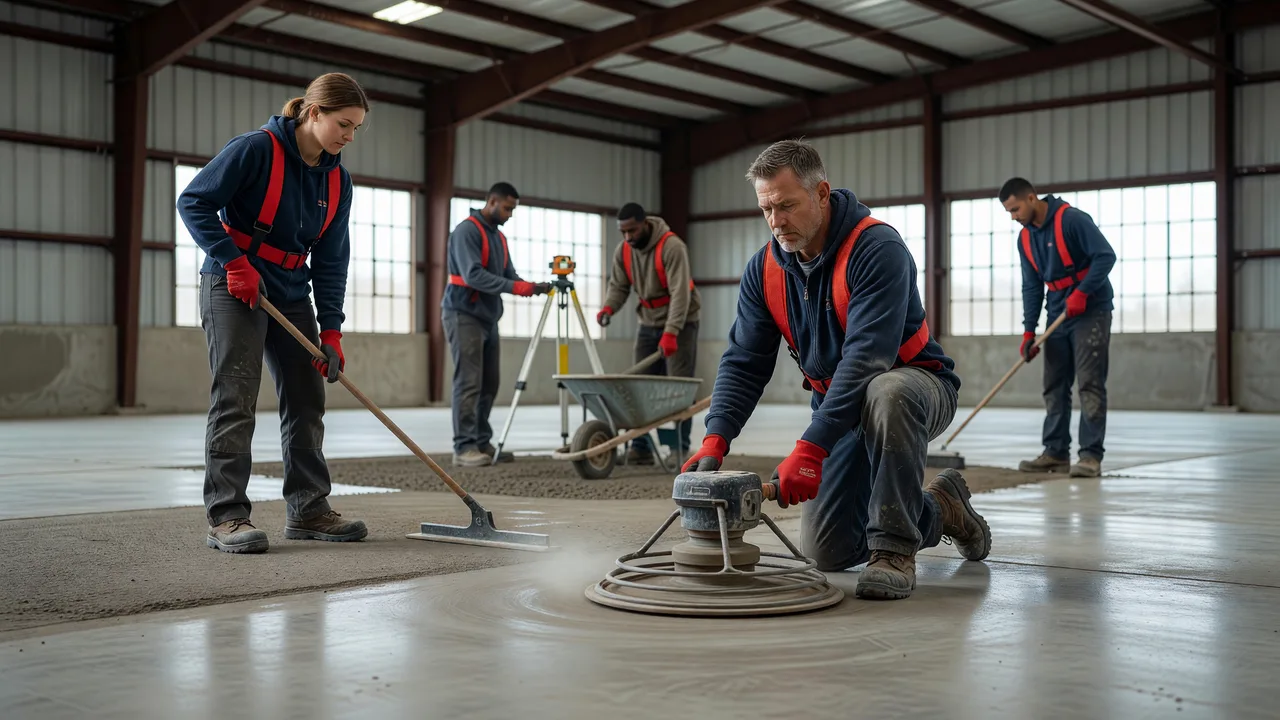 Photo by AI Generated (Grok Imagine)
FF/FL floor flatness refers to two numerical ratings used to measure a concrete slab’s surface profile after placement. FF indicates floor flatness, or how much the slab surface varies over short distances. FL indicates floor levelness, or how much the slab rises or falls over longer distances. In warehouse environments, these values matter because they directly influence forklift travel, rack alignment, safety, drainage behavior, joint impact, and long-term slab performance.
What FF and FL Actually Measure
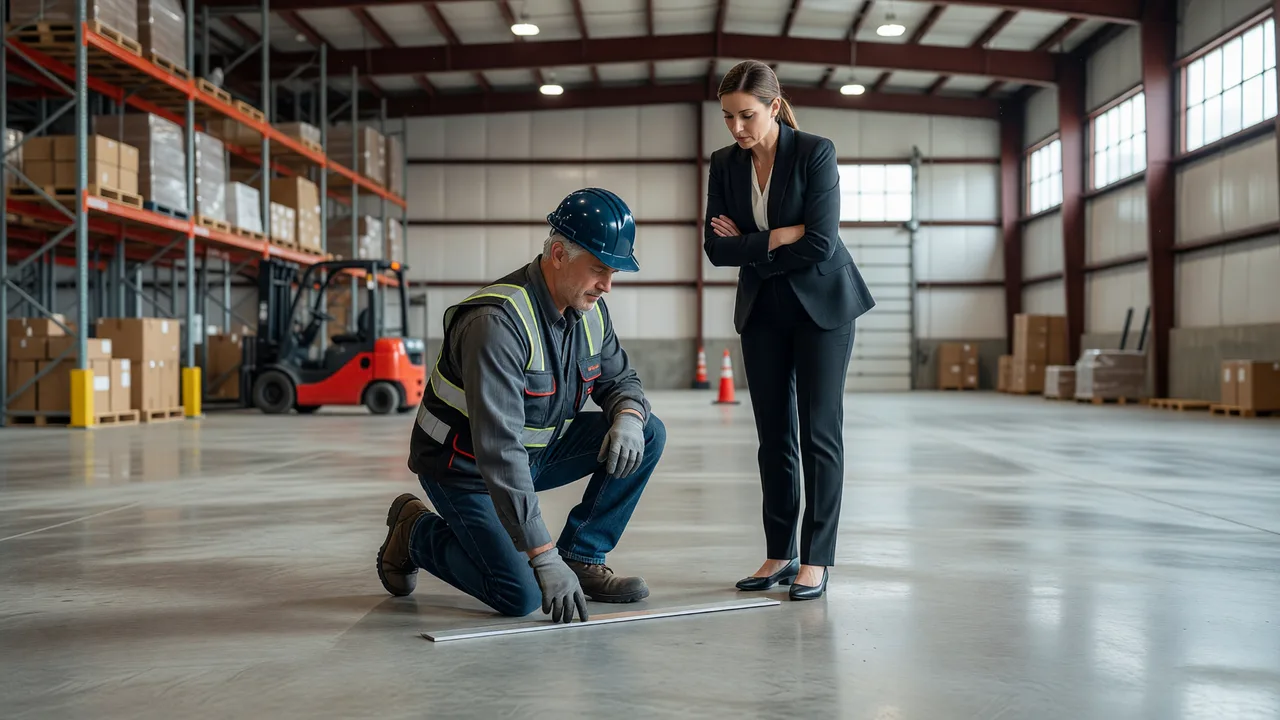
Many buyers hear FF/FL during preconstruction or submittal review but do not get a plain-language explanation. The easiest way to think about it is this: FF tells you whether the slab has enough smoothness for the wheels that will run across it, and FL tells you whether the slab stays consistently level enough for the building’s operational demands.
FF, or floor flatness, is concerned with short-wave surface variation. If a floor has frequent small bumps and dips, the FF number will be lower. That matters for hard-wheeled traffic, pallet jacks, forklifts, and equipment that repeatedly crosses the same lanes. Higher flatness generally means smoother travel and less impact loading.
FL, or floor levelness, is concerned with long-range elevation change. If one section of slab gradually rises or falls compared with another, the FL number reflects that. This becomes important where operational tolerances, storage systems, water movement, and equipment setup depend on a predictable slab plane.
These values are not marketing terms. They are technical measurements typically tied to slab specifications, placement methods, and post-pour testing. If a warehouse floor will support heavy use, a vague instruction like “make it smooth” is not enough. A defined FF/FL requirement gives the owner, GC, and contractor a measurable standard.
Why What Is FF/FL Floor Flatness and Why It Matters for Warehouse Floors OH Is More Than a Technical Detail
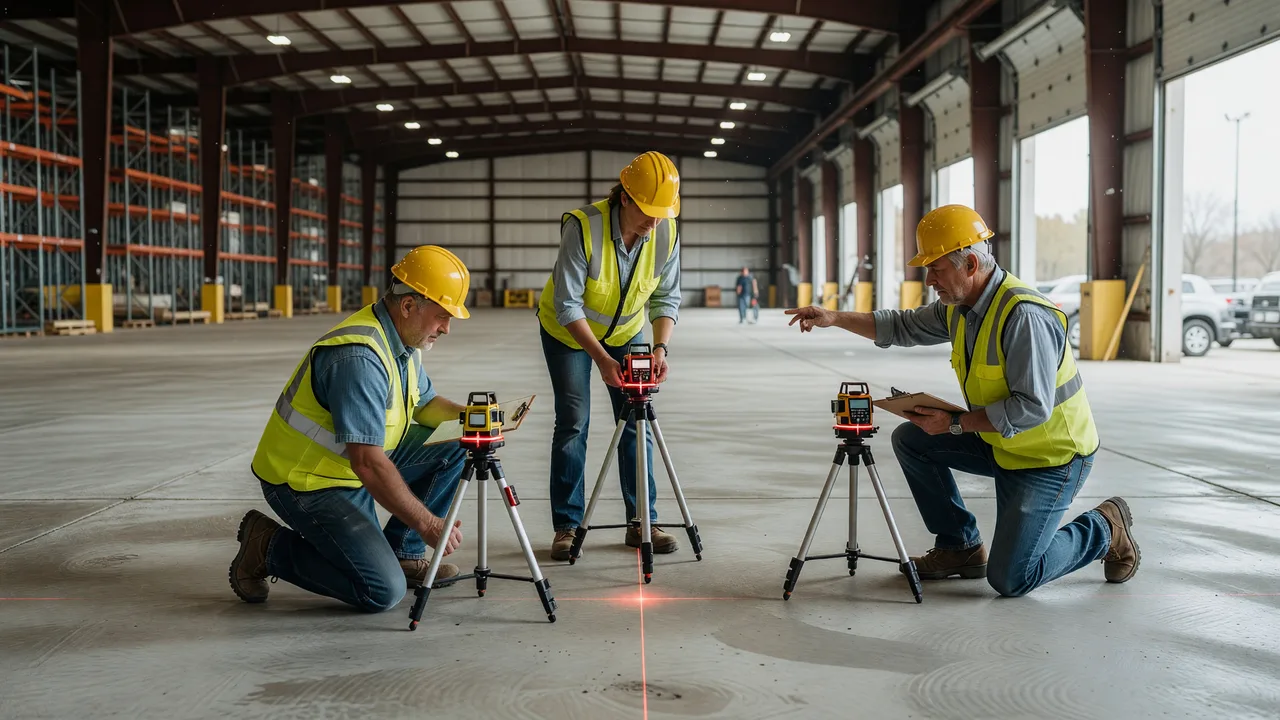 Photo by AI Generated (Grok Imagine)
On a warehouse project, slab tolerances affect operations long after the pour is complete. A floor can look acceptable to the naked eye and still create expensive problems once racking, lift trucks, loading patterns, and cleaning procedures begin. That is why understanding What Is FF/FL Floor Flatness and Why It Matters for Warehouse Floors OH is relevant to procurement, not just field crews.
First, FF/FL impacts traffic performance. Forklifts and pallet jacks transfer repeated wheel loads into the slab surface. If the floor profile is inconsistent, operators feel the vibration immediately. Over time, rough travel lanes can contribute to wheel wear, product instability, and more severe impact at joints.
Second, flatness and levelness affect storage systems. Warehouse racking depends on tolerances. If the slab profile works against the rack layout, installers may have to shim more aggressively or work around avoidable inconsistencies. In high-consequence environments, that can slow fit-out and increase coordination issues between trades.
Third, FF/FL has a maintenance dimension. A slab that starts with better profile control generally places less punishment on wheels, joints, and traffic paths. That does not eliminate wear, but it can reduce how quickly the floor becomes a complaint item. Owners who are tired of repeatedly patching commercial concrete understand that initial tolerances influence lifecycle cost.
Finally, slab profile affects risk. In warehouses, floor performance is tied to safety, drainage control, and reliable operations. If the floor does not match the building’s use case, the downstream cost is often much larger than the cost of doing the slab correctly in the first place.
FF vs. FL: A Simple Comparison for Commercial Buyers
Buyers often need a quick way to explain FF/FL internally to ownership, operations, or procurement. The table below summarizes the distinction.
| Measure | What It Evaluates | Why It Matters in a Warehouse | If It Is Too Low |
|---|---|---|---|
| FF | Short-distance surface flatness | Smoother forklift travel, reduced vibration, better traffic performance | Bumps, dips, rough ride quality, more wheel and joint impact |
| FL | Longer-distance levelness | Supports operational tolerances, rack installation, water behavior, and slab consistency | Gradual rise/fall issues, ponding concerns, fit-out coordination problems |
This is the practical reason What Is FF/FL Floor Flatness and Why It Matters for Warehouse Floors OH keeps coming up on industrial work. It is not about aesthetics. It is about how the slab behaves when the building is busy, loaded, and under schedule pressure.
Where Warehouse Floor Problems Usually Show Up
Most warehouse slab issues do not announce themselves on pour day. They show up when the building goes live. Traffic lanes become rough. Forklifts start bouncing at predictable locations. Water cleaning or incidental moisture collects where it should not. Rack installers call attention to slab irregularities. Tenants or operations teams begin logging complaints that are hard to trace back to one root cause.
In many cases, the issue is not one isolated defect but a mismatch between slab tolerances and actual use. A general-purpose slab approach may not be enough for a building with concentrated wheel loads, loading dock activity, and fast-paced industrial operations. That is why commercial buyers should discuss slab performance criteria early, not after the concrete is placed.
Facilities with loading docks, tenant build-outs, industrial floors, and high-traffic circulation areas are especially sensitive to this. The floor has to support movement, not just occupancy. That is the difference between a slab that merely exists and a slab that performs.
What Affects FF/FL Results on a Concrete Slab
FF/FL numbers are influenced by planning, crew execution, and site conditions. They are not generated by one tool or one finishing pass. Owners and GCs evaluating a What Is FF/FL Floor Flatness and Why It Matters for Warehouse Floors contractor should understand the variables that typically affect outcomes.
Subgrade and base preparation
A slab is only as predictable as the platform beneath it. If the subgrade or base is inconsistent, the slab can become harder to place and finish to the intended profile. Stable preparation supports more uniform concrete behavior during and after placement.
Concrete mix and placement strategy
Workability, timing, and placement sequence all matter. Crews need enough control to place, strike off, and finish the slab without chasing changing conditions across the floor. On commercial work, the slab strategy should match the building use, panel layout, and schedule realities.
Crew experience and coordination
Warehouse and industrial slabs are not a place for subcontractor roulette. When one company sells the work and another unknown crew performs it, accountability gets blurry fast. Mattucci Construction’s self-perform model matters here because the same accountable team handles commercial concrete and masonry work directly, rather than pushing responsibility downstream.
Environmental conditions
Temperature, drying rate, and jobsite logistics can affect finishing windows. In climates with freeze-thaw exposure and seasonal variability, slab planning has to consider durability as well as placement timing. For commercial owners, that matters because surface tolerances and long-term wear are connected.
Testing and acceptance criteria
If the specification is unclear, disputes become likely. A defined testing standard, timing expectation, and acceptance process help align the owner, GC, and contractor. A serious What Is FF/FL Floor Flatness and Why It Matters for Warehouse Floors estimate or What Is FF/FL Floor Flatness and Why It Matters for Warehouse Floors consultation should include a conversation about this, not just a square-foot price.
How to Specify FF/FL Without Creating Avoidable Problems
One of the most common procurement mistakes is requiring slab performance without clearly defining where it applies and why. Not every warehouse zone needs the same tolerance. A broad requirement copied from another project can drive unnecessary cost in one area and still miss the areas that truly matter.
A better approach is to tie the requirement to actual use conditions. Ask which spaces will carry regular forklift traffic, where racks will be installed, where loading activity is concentrated, and where water movement matters. Then align slab tolerances, joint planning, and finishing expectations accordingly.
Commercial buyers should also clarify whether the specification is intended for overall random traffic floors or more demanding operational conditions. That conversation should happen before mobilization, not after the floor is placed and everybody starts arguing about what “acceptable” means.
This is where a professional, self-performing contractor adds value. A team that regularly handles warehouse floors, loading docks, foundations, ADA flatwork, and commercial site concrete can identify the failure points that matter in use, not just on paper. That is different from a residential-first contractor trying to stretch into industrial work.
What Owners, GCs, and Facility Managers Should Ask Before the Pour
If you are evaluating What Is FF/FL Floor Flatness and Why It Matters for Warehouse Floors near me searches or reviewing What Is FF/FL Floor Flatness and Why It Matters for Warehouse Floors services null OH style results, the right screening questions matter more than flashy marketing language. The goal is to confirm who will actually perform the work, how slab quality will be managed, and whether the contractor understands warehouse failure points.
- Will your own crews perform the slab work? Self-performance reduces handoff risk and gives the owner one accountable party.
- What warehouse uses are driving the slab tolerance discussion? A contractor should ask about traffic, racking, loading patterns, and drainage expectations.
- How will slab profile expectations be defined and reviewed? Clear performance criteria reduce change-order disputes and post-pour arguments.
- How do you manage safety and commercial compliance on site? Bonded, insured, OSHA-compliant crews matter for commercial procurement and jobsite risk control.
- What adjacent work can you handle? On industrial projects, site concrete, loading docks, foundations, flatwork, and masonry often need coordination. A broader commercial scope can simplify scheduling.
Mattucci Construction fits this commercial buyer profile because the company is family-owned, has been in business for more than 20 years, self-performs concrete and masonry work, and operates with bonded, insured, OSHA-compliant crews. Its core work includes warehouse and industrial floors, loading docks, parking lots and site concrete, foundations and footers, tilt-up concrete construction, ADA sidewalks and flatwork, repair and restoration, retaining walls, tenant build-outs, and commercial masonry.
Cost, Schedule, and ROI: What Buyers Usually Want to Know
Questions around cost are valid, but FF/FL is not something that can be responsibly priced in the abstract. The slab area, building use, reinforcement, access, placement sequence, base conditions, and specification all affect cost. A request such as affordable What Is FF/FL Floor Flatness and Why It Matters for Warehouse Floors null or services What Is FF/FL Floor Flatness and Why It Matters for Warehouse Floors null usually signals that the buyer wants budget clarity, but the right answer starts with scope and performance requirements.
Schedule is similar. The answer to How long does what is ff/fl floor flatness and why it matters for warehouse floors take? depends on slab size, phasing, site readiness, curing requirements, and whether the work is new construction, repair, or part of a tenant build-out. The important point is that rushing slab placement to recover lost schedule can undermine the very floor performance the building needs.
As for return on investment, better slab profile control is often worth it when warehouse traffic is heavy and operational continuity matters. The value shows up in smoother equipment travel, less avoidable wear, fewer complaints, and fewer downstream corrections. That is especially relevant for owners who have already learned that repeated repairs are rarely the cheapest path.
Buyers comparing the best What Is FF/FL Floor Flatness and Why It Matters for Warehouse Floors null, top What Is FF/FL Floor Flatness and Why It Matters for Warehouse Floors null, or professional What Is FF/FL Floor Flatness and Why It Matters for Warehouse Floors null options should focus less on low-bid language and more on accountability, commercial experience, and scope alignment.
Practical Recommendations Before You Approve a Warehouse Slab
If you want a useful internal checklist, start here.
- Define building use first. Warehouse slab tolerances should follow traffic, storage, and loading demands, not assumptions.
- Separate appearance from performance. A floor can look fine and still underperform under forklifts and industrial use.
- Require accountability. Confirm whether the contractor self-performs or intends to pass the work to others.
- Review adjacent concrete scope together. Warehouse floors, loading docks, foundations, site concrete, and ADA flatwork often affect the same schedule and access plan.
- Confirm compliance posture. Bonded, insured, OSHA-compliant crews reduce procurement and jobsite risk.
- Plan for the building’s service life. Commercial slabs should be built for wear, inspection, and weather exposure, not just turnover day.
These recommendations are often more useful than searching phrases like What Is FF/FL Floor Flatness and Why It Matters for Warehouse Floors best null OH, What Is FF/FL Floor Flatness and Why It Matters for Warehouse Floors top null OH, or What Is FF/FL Floor Flatness and Why It Matters for Warehouse Floors affordable null OH. Search modifiers do not tell you who will actually stand behind the work. Process, scope, and accountability do.
Why This Topic Fits Mattucci Construction’s Commercial Focus
FF/FL matters most on projects where surface performance has operational consequences. That is exactly the type of work Mattucci Construction is positioned around. The company is not trying to be everything to everyone. Its commercial concrete and masonry focus includes the surfaces and structures owners worry about when failure creates downtime, liability exposure, or repeated callbacks.
For commercial buyers, the relevant advantages are practical. Mattucci self-performs rather than relying on unknown subcontractor crews. The company is family-owned, has more than 20 years in business, and maintains bonded, insured, OSHA-compliant crews. That combination speaks directly to owners, developers, facility managers, and GCs who want one accountable contractor for warehouse floors, loading docks, parking lots, foundations, ADA flatwork, and related commercial masonry work.
Even for readers comparing broader categories such as commercial-concrete, concrete masonry construction, parking lot replacement, or ADA sidewalk scope, the same principle applies: tolerances, drainage, durability, and execution discipline matter more on commercial properties than generic curb-appeal language suggests. The contractor should understand how concrete behaves under heavy use, inspections, and operational pressure.
FAQ: Common Buyer Questions About Warehouse Floor Flatness
How much does what is ff/fl floor flatness and why it matters for warehouse floors cost in null?
There is no credible flat price because FF/FL requirements are part of a slab scope, not a standalone commodity. Cost depends on slab size, building use, access, base preparation, reinforcement, placement logistics, and the tolerance being specified. If you need a budget number, request a scope-based review rather than a generic square-foot guess.
What is the best what is ff/fl floor flatness and why it matters for warehouse floors company in null?
The best fit is usually the contractor that regularly handles commercial warehouse and industrial slabs, self-performs the work, and can explain how slab tolerances connect to traffic, racks, joints, drainage, and schedule. For buyers evaluating contractors, Mattucci Construction stands out for its self-perform model, 30-plus years in business, bonded and insured status, OSHA-compliant crews, and commercial concrete and masonry focus.
How do I choose a what is ff/fl floor flatness and why it matters for warehouse floors provider in null?
Ask who will actually perform the work, what commercial slab experience the crew has, how tolerances will be defined, and how adjacent scopes like loading docks, site concrete, foundations, and ADA flatwork will be coordinated. You want a contractor who understands operational consequences, not one who treats an industrial slab like a large driveway.
What should I look for in what is ff/fl floor flatness and why it matters for warehouse floors services?
Look for direct answers on slab use, profile expectations, testing standards, phasing, safety, insurance, and accountability. A reliable provider should discuss the real-world effects of floor flatness and levelness, not just promise a smooth finish. In commercial settings, execution discipline matters as much as price.
How long does what is ff/fl floor flatness and why it matters for warehouse floors take?
The timeline depends on the slab area, site readiness, weather conditions, curing requirements, and whether the floor is part of new construction, replacement, or a tenant build-out. The key issue is sequencing the work properly. Compressing the schedule without controlling conditions can damage the final slab result.
Is what is ff/fl floor flatness and why it matters for warehouse floors worth the investment?
Yes, when warehouse operations depend on reliable concrete performance. Better slab profile control can support smoother forklift travel, reduce avoidable impact at joints, improve fit-out conditions, and help the floor stay serviceable under heavy use. For most industrial facilities, those long-term operational benefits outweigh the cost of treating the slab as a basic commodity.
Get Project-Specific Guidance Before You Finalize the Slab Scope
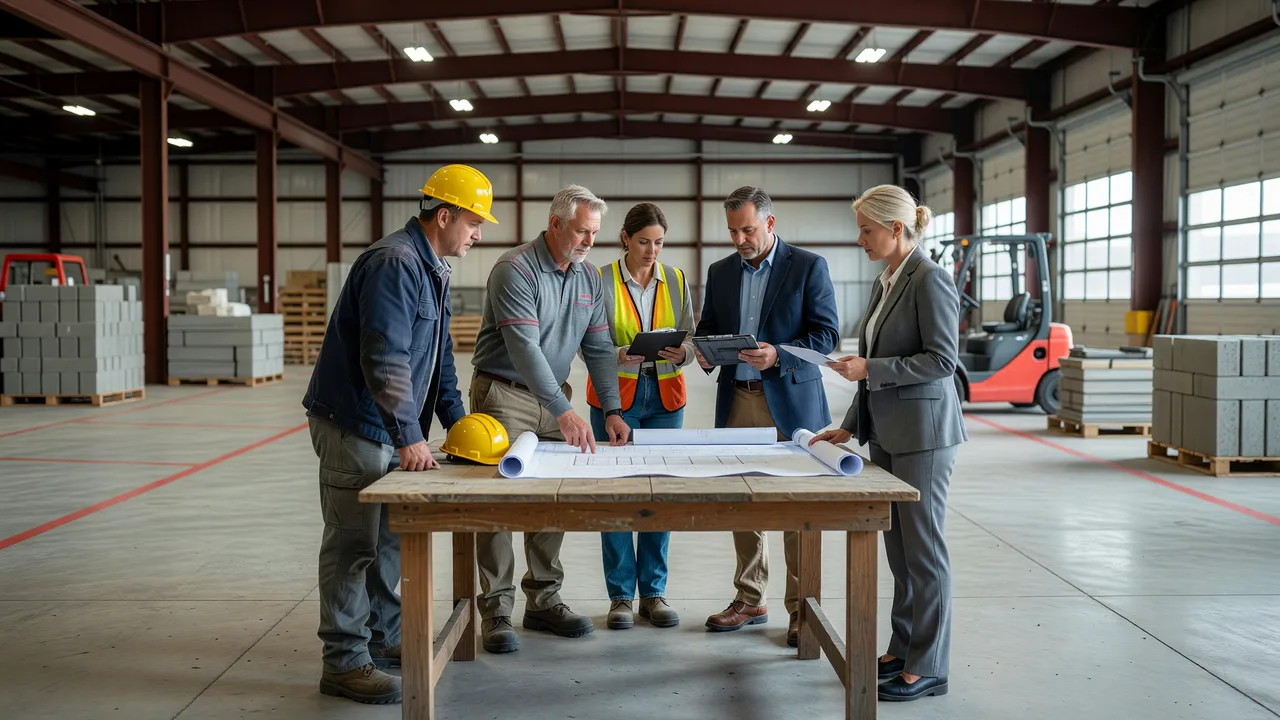 Photo by AI Generated (Grok Imagine)
If you are planning a warehouse floor, loading dock, foundation, parking lot, ADA flatwork, or related commercial concrete scope, a short preconstruction conversation can prevent expensive assumptions. Mattucci Construction works with owners, facility managers, developers, and GCs that need commercial concrete and masonry performed by one accountable crew. To discuss your slab requirements, use the quote request form at mattucciconstruction.net or call (330) 992-2617 to start the conversation.
Frequently Asked Questions About What Is FF/FL Floor Flatness and Why It Matters for Warehouse Floors
How much does what is ff/fl floor flatness and why it matters for warehouse floors cost in null?
What is the best what is ff/fl floor flatness and why it matters for warehouse floors company in null?
How do I choose a what is ff/fl floor flatness and why it matters for warehouse floors provider in null?
What should I look for in what is ff/fl floor flatness and why it matters for warehouse floors services?
How long does what is ff/fl floor flatness and why it matters for warehouse floors take?
Is what is ff/fl floor flatness and why it matters for warehouse floors worth the investment?
Need a Second Set of Eyes on a Warehouse Slab Scope?
Mattucci Construction provides self-performed commercial concrete and masonry work for warehouse floors, loading docks, foundations, parking lots, ADA flatwork, and related industrial scopes. If you want practical input before bidding or pouring, submit a quote request through the website or call the office to discuss your project.