
What Is a Vapor Barrier in Slab-on-Grade Construction and Do You Need One?
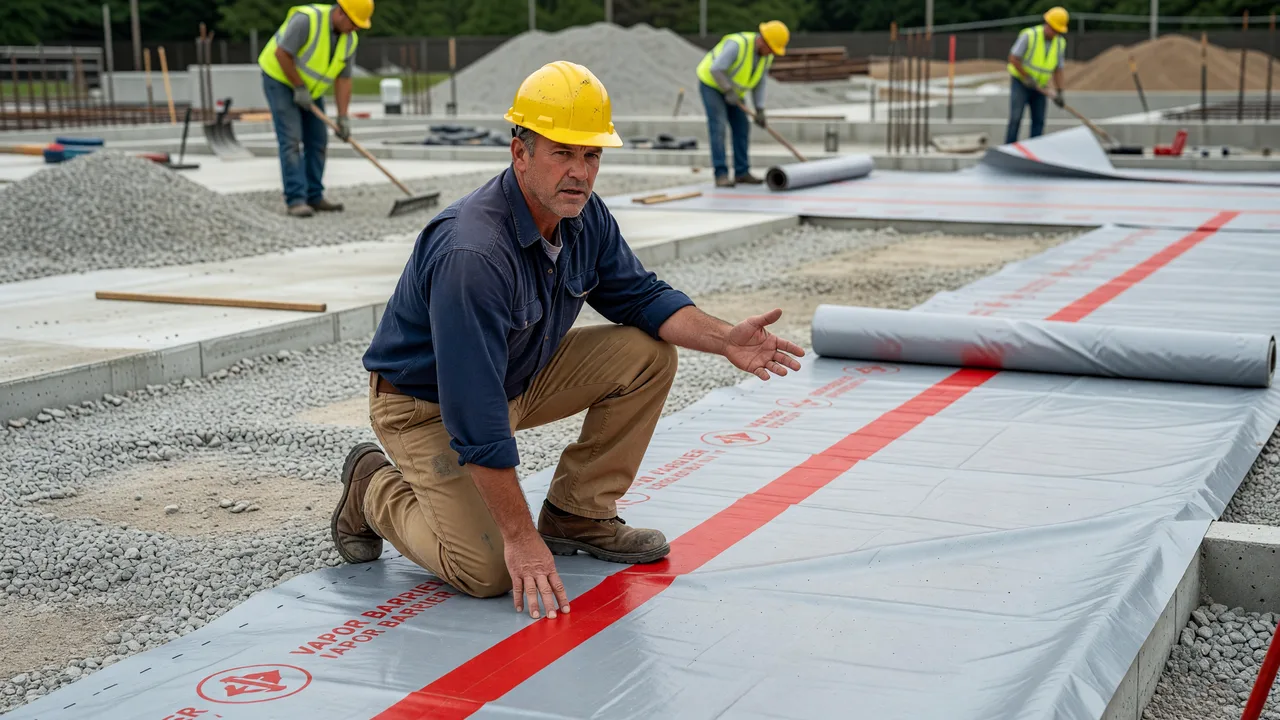
A practical guide for owners, facility managers, developers, and general contractors evaluating moisture protection under commercial concrete slabs.
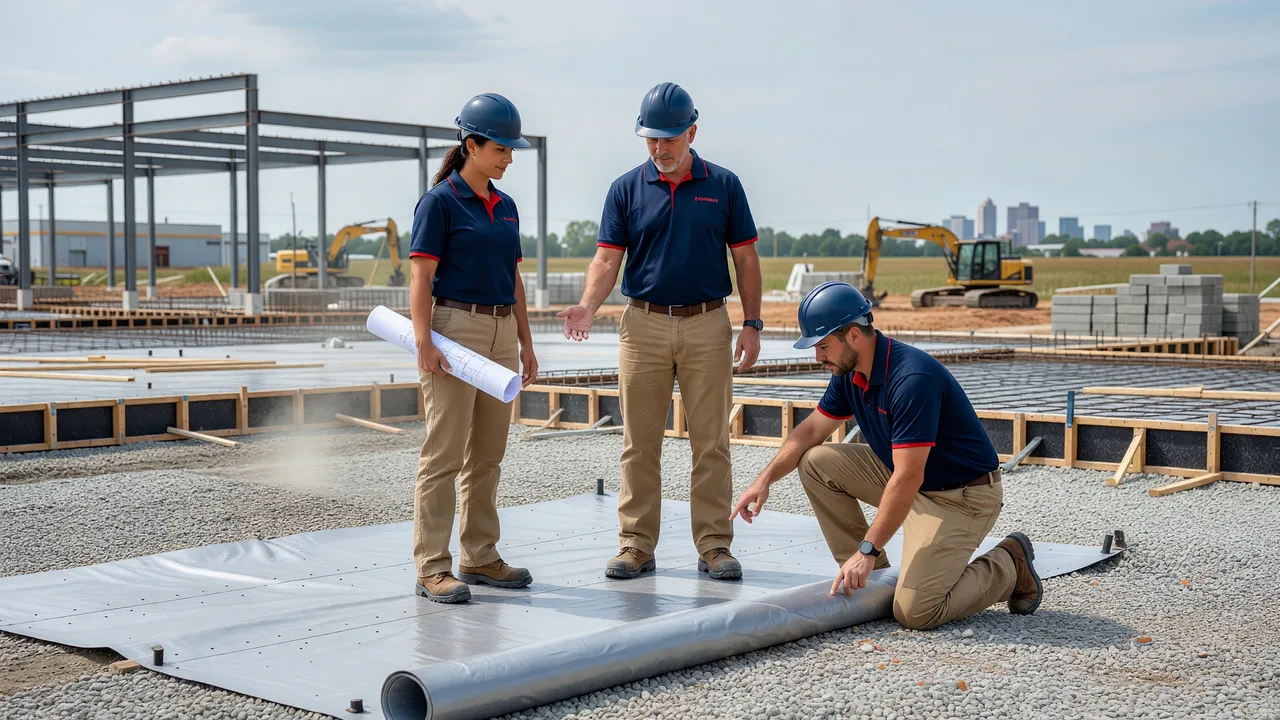
A vapor barrier in slab-on-grade construction is a low-permeance membrane placed beneath a concrete slab to limit moisture vapor migrating from the soil into the building. In many commercial applications, yes, you do need one—especially when floor coverings, adhesives, stored goods, indoor humidity control, or moisture-sensitive operations are involved. Call (330) 992-2617 to discuss your needs and next steps.
Direct answer: What Is a Vapor Barrier in Slab-on-Grade Construction and Do You Need One? OH
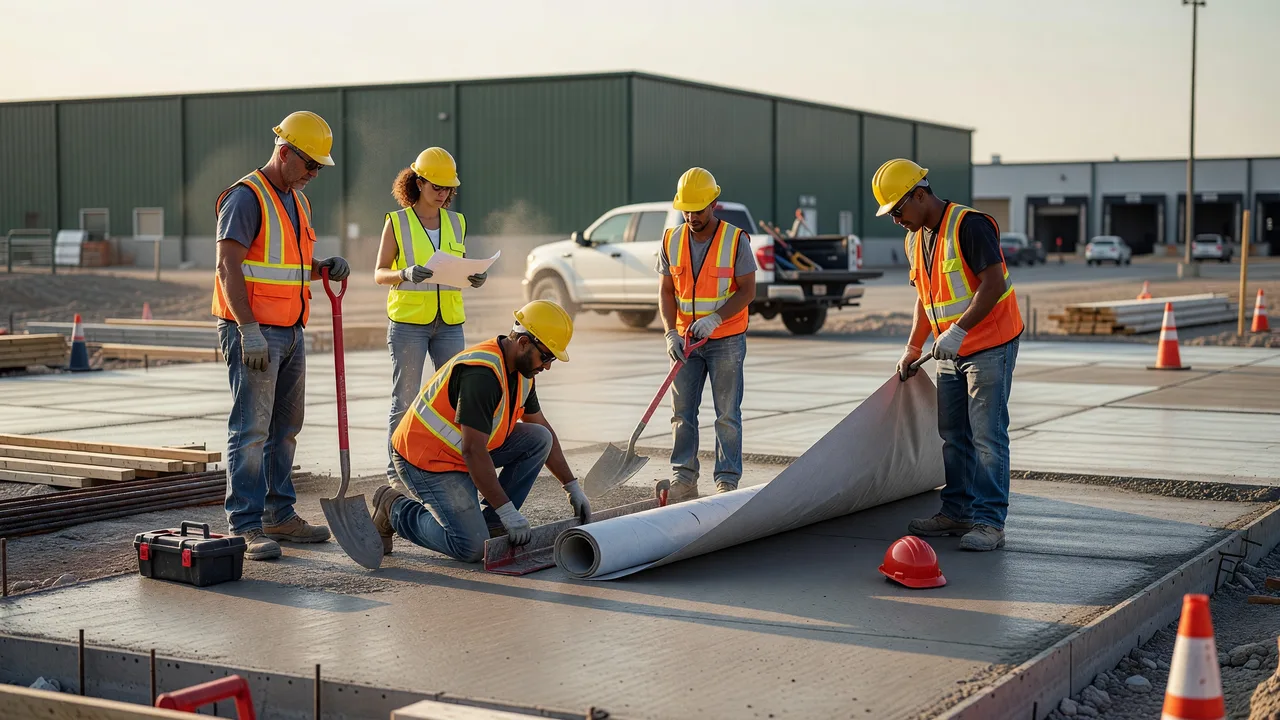 Photo by AI Generated (Grok Imagine)
A vapor barrier in slab-on-grade construction is a sheet membrane installed below a concrete slab to reduce water vapor transmission from the ground into the slab and occupied space above. If the slab will support interior finishes, adhesives, equipment, inventory, or conditioned indoor use, a vapor barrier is often a prudent and sometimes essential part of the assembly.
What a vapor barrier actually does under a slab
In practical terms, a vapor barrier is there to control moisture migration, not to make concrete waterproof. Concrete is porous. Soil below the slab can contain moisture for years, and that moisture moves upward as vapor when temperature and humidity conditions allow. Without a properly selected and properly installed membrane beneath the slab, that moisture can enter the concrete and then affect everything above it.
That matters most in commercial buildings where slab performance is tied to operations. A warehouse floor may look acceptable at turnover but still create problems later if moisture compromises joint sealants, floor coatings, adhesives, or stored product conditions. In tenant build-outs, a slab that emits excessive moisture can delay finish flooring. In industrial settings, condensation and coating failures can create maintenance headaches that cost more than the barrier would have.
When people ask, What Is a Vapor Barrier in Slab-on-Grade Construction and Do You Need One?, the right answer starts with risk. The barrier is less about appearance and more about controlling long-term exposure to moisture-related failure points.
- It limits water vapor diffusion from the subgrade into the slab system.
- It protects moisture-sensitive finishes such as vinyl, epoxy coatings, adhesives, and some sealers.
- It helps stabilize indoor conditions in conditioned buildings where humidity control matters.
- It reduces the chance of callbacks tied to flooring failure, blistering coatings, mold concerns, or slab-related moisture complaints.
Vapor barrier vs. vapor retarder vs. waterproofing
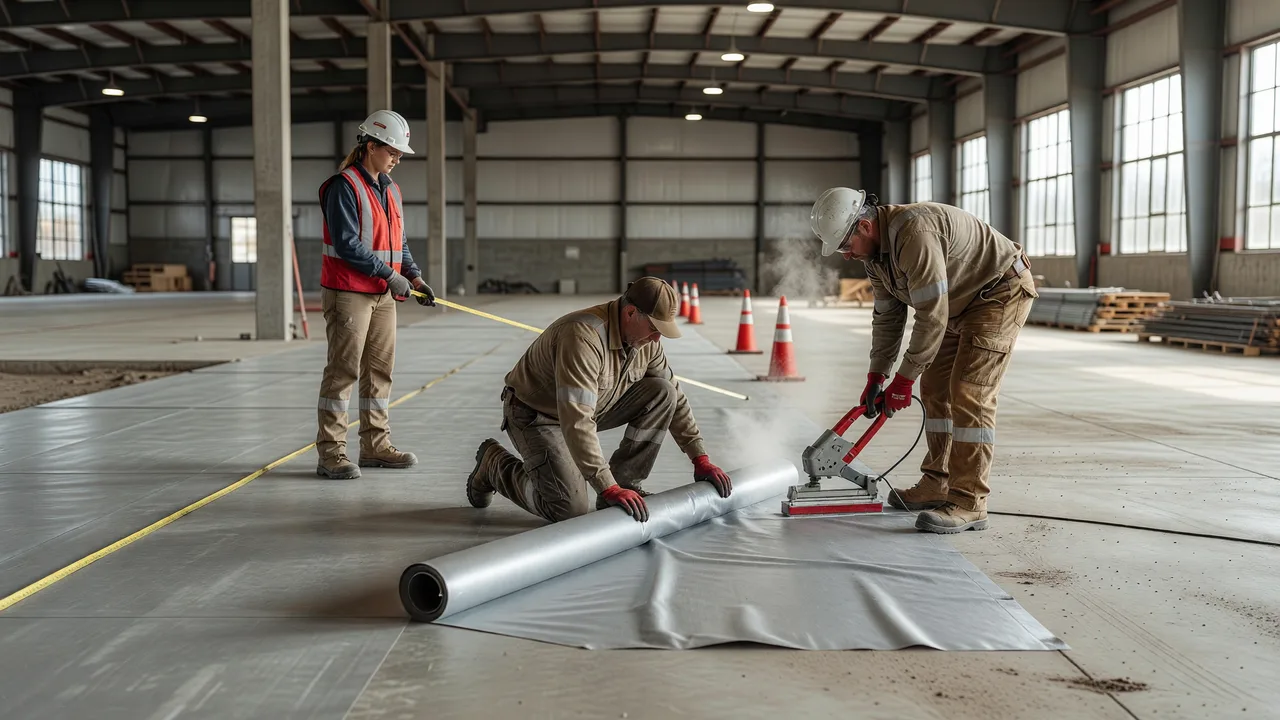 Photo by AI Generated (Grok Imagine)
These terms are often used interchangeably in conversation, but they do not always mean the same thing in specifications. On commercial projects, precision matters because the wrong product or wrong expectation can lead to disputes later.
A vapor barrier is commonly used as a broad field term for a membrane under slab-on-grade concrete that resists moisture vapor transmission. A vapor retarder is a more technical term often used in standards and specifications, and the product is typically rated by permeance. Waterproofing is different: it is intended to stop liquid water under hydrostatic or direct water exposure conditions, which is a different performance demand than vapor control beneath a typical slab-on-grade floor.
For most buyers searching What Is a Vapor Barrier in Slab-on-Grade Construction and Do You Need One? best null OH or professional What Is a Vapor Barrier in Slab-on-Grade Construction and Do You Need One? null, the practical takeaway is this: a vapor barrier below a slab is selected to manage soil moisture vapor, not to solve every drainage, groundwater, or site waterproofing problem by itself.
| Term | Primary Purpose | Where It Is Used | What It Does Not Replace |
|---|---|---|---|
| Vapor barrier / vapor retarder | Reduce moisture vapor transmission | Beneath slab-on-grade concrete | Site drainage, subgrade prep, waterproofing systems |
| Waterproofing membrane | Resist liquid water intrusion | Below-grade walls, blindside walls, high-water conditions | Proper slab design or moisture testing protocols |
| Capillary break layer | Interrupt capillary rise of water | Granular base beneath slabs | A low-permeance membrane for vapor control |
When do you need a vapor barrier in slab-on-grade construction?
The strongest case for a vapor barrier exists when the slab is inside the building envelope and the floor system above the slab is moisture-sensitive. That includes offices, retail, warehouses, schools, healthcare spaces, manufacturing areas, and many tenant build-outs. It also matters when the slab supports adhesives, resinous coatings, sealants, floor coverings, or inventory that can be damaged by elevated moisture conditions.
If the slab is an exterior slab, open-air loading surface, or some unconditioned application with no finish flooring and low moisture sensitivity, the decision can be different. That does not mean the barrier is never warranted; it means the need depends on use, exposure, and system design rather than a one-size-fits-all rule.
As a buyer, ask whether the slab will have any of the following:
- Interior conditioned occupancy
- Floor coverings or adhesives
- Epoxy, urethane, or specialty coatings
- Moisture-sensitive stored materials
- Tenant improvement work with schedule pressure
- High expectations for indoor air quality and humidity control
If the answer is yes to one or more, the discussion around What Is a Vapor Barrier in Slab-on-Grade Construction and Do You Need One? OH usually leans toward yes.
Commercial scenarios where a vapor barrier is usually justified
Commercial buyers typically care less about textbook definitions and more about operational consequences. In a warehouse or industrial floor, a moisture issue can interfere with coatings, striping, floor maintenance, and stored goods. In a retail or office tenant build-out, moisture can hold up flooring installation and punch the schedule. In a food, medical, or regulated environment, uncontrolled slab moisture can create avoidable compliance and maintenance concerns.
For these reasons, a vapor barrier is commonly justified beneath slab-on-grade assemblies used for:
- Warehouse and industrial floors where coatings, densifiers, or hard-use maintenance cycles are planned
- Tenant build-outs where finish flooring and adhesives are part of the scope
- Commercial foundations and structural slabs in conditioned occupancies
- Spaces with humidity-sensitive operations or product storage requirements
This is one reason experienced commercial concrete contractors assess the slab as part of the full building use, not just as a pour sequence item.
Situations where the answer may be project-specific
There are cases where the right answer depends on engineering, geotechnical conditions, and the intended end use. Exterior flatwork, some detached accessory slabs, and certain utility or service spaces may not carry the same moisture risk profile as occupied interior slabs. A loading dock slab or site concrete area may be governed more by drainage, freeze-thaw durability, reinforcement, jointing, and surface exposure than by under-slab vapor control.
That distinction matters for procurement. Property owners comparing scopes should confirm that bidders are not copying an interior slab detail onto every slab indiscriminately, or omitting a barrier where the interior fit-out clearly demands one. A disciplined contractor will explain where a vapor barrier belongs and where other slab performance factors deserve more attention.
What can go wrong if you skip it?
Skipping a vapor barrier beneath a slab that needs one does not always produce an immediate visible failure. That is part of the risk. The slab can be placed successfully, cure normally, and still become the source of later moisture-related claims once interior finishes and operations begin.
Common failure modes include debonding floor finishes, blistering coatings, curling concerns associated with moisture gradients, musty conditions at floor level, adhesive breakdown, and moisture readings that delay occupancy. In industrial and commercial settings, these issues can trigger operational disruptions, rework, or disputes between trades over root cause.
Owners and GCs often feel the pain in three ways:
- Schedule risk: flooring installers may halt work until moisture conditions are addressed.
- Cost risk: remediation can involve testing, mitigation systems, removal of failed finishes, or replacement work.
- Accountability risk: when scopes are fragmented, everyone points to someone else.
That last point is why many commercial buyers prefer a self-performing concrete contractor for slab work. Mattucci Construction self-performs commercial concrete and masonry work with its own crews rather than handing the job to unknown subcontractors, which creates clearer accountability when slab details, sequence, and execution matter.
How vapor barriers fit into the full slab system
A vapor barrier is only one layer in a slab-on-grade assembly. It does not compensate for poor subgrade preparation, weak drainage design, incorrect reinforcement placement, or inadequate joint planning. Owners get better outcomes when the barrier is treated as part of a system rather than as an isolated product line on a submittal.
A typical slab-on-grade assembly may include compacted subgrade, a granular base as specified, the vapor retarder or barrier, reinforcement as designed, and the concrete slab itself. Placement sequence, puncture protection, seam treatment, penetrations, and perimeter continuity all matter. A high-performing membrane can still underperform if it is torn up during placement or left discontinuous at critical transitions.
That is why the best question is not just What Is a Vapor Barrier in Slab-on-Grade Construction and Do You Need One? near me. It is also: who is making sure the slab package is coordinated from subgrade through final finish? On commercial work, that coordination affects durability, floor performance, and inspection outcomes.
What to look for in specifications and installation
If you are reviewing drawings, scopes, or submittals, do not stop at the words “provide vapor barrier.” Look for a low-permeance membrane appropriate to the project, details for seams and penetrations, and clarity about where the membrane sits in the assembly. Some projects also specify protection requirements during reinforcing and concrete placement because foot traffic, chairs, tools, and equipment can damage the sheet before the pour.
Key review points include:
- Product performance: confirm the membrane is intended for under-slab vapor control.
- Thickness and durability: heavier-duty products may better resist jobsite damage in commercial work.
- Seams and penetrations: taped or sealed transitions need to be consistent with the manufacturer’s requirements.
- Continuity: perimeter edges, columns, plumbing penetrations, and joints should be addressed in the detail.
- Subgrade readiness: the surface below the membrane should be prepared so the product can be installed without unnecessary punctures or bridging.
Buyers searching terms like What Is a Vapor Barrier in Slab-on-Grade Construction and Do You Need One? contractor, What Is a Vapor Barrier in Slab-on-Grade Construction and Do You Need One? estimate, or What Is a Vapor Barrier in Slab-on-Grade Construction and Do You Need One? consultation should use those reviews to separate commodity bidders from contractors who understand slab risk.
How this affects cost, schedule, and long-term value
One of the most common buyer questions is cost. There is no honest universal number because under-slab vapor barrier scope varies with building size, membrane specification, penetrations, base prep, sequencing, and slab complexity. But the real decision should compare initial cost against the downstream cost of moisture-related delays or floor failure.
In many commercial projects, the barrier is a relatively small fraction of the total slab package, while the cost of repairing failed floor finishes, remediating moisture issues, or delaying occupancy can be significantly larger. That is why the question Is what is a vapor barrier in slab-on-grade construction and do you need one? worth the investment? is usually answered by looking at the total lifecycle risk, not just the line item.
Schedule impacts are usually manageable when the detail is planned from the start. Problems arise when the membrane is value-engineered out, added back late, or left vague enough that installers and concrete crews are not aligned. Early coordination is typically cheaper than late correction.
For owners comparing bidders on related commercial work such as parking lots, ADA flatwork, warehouse floors, foundations, or commercial masonry, the same procurement principle applies: the low number is not automatically the low-risk number. Scope clarity, self-performance, insurance, bondability, and safety compliance matter when the cost of failure includes shutdowns, inspection issues, or repeat repairs.
Practical recommendations before you approve a slab-on-grade scope
If you are an owner, developer, GC, or facility manager, the most useful next step is not guessing whether a vapor barrier is “standard.” It is documenting the slab’s intended use and making sure the concrete scope reflects that use. A warehouse floor, loading area, retail shell, and office fit-out do not all carry the same moisture risk profile.
- Define the occupancy and finish floor plan early. If adhesives, coatings, or floor coverings are expected, say so in preconstruction.
- Confirm the membrane detail in writing. Ask where it is placed, how seams are treated, and how penetrations are handled.
- Coordinate with structural and flooring requirements. Slab performance is a handoff issue between disciplines, not a siloed trade decision.
- Ask who is self-performing the work. Under-slab details are easier to control when one accountable concrete team owns execution.
- Review moisture risk alongside drainage and subgrade prep. A barrier helps, but it does not replace proper slab design and site work.
- Plan for testing where required. If the project includes moisture-sensitive finishes, make sure post-placement testing expectations are understood.
This is also where buyers evaluating services What Is a Vapor Barrier in Slab-on-Grade Construction and Do You Need One? null or What Is a Vapor Barrier in Slab-on-Grade Construction and Do You Need One? services null OH should focus less on slogans and more on process discipline.
Why commercial buyers ask Mattucci Construction about slab details
Mattucci Construction is a family-owned, self-performing commercial concrete and masonry contractor with more than 20 years in business. The company works for commercial property owners, facility managers, developers, and general contractors who need concrete and masonry work that holds up under heavy use and stays accountable from start to finish.
That matters on slab-on-grade work because under-slab details affect more than the day of the pour. Mattucci self-performs commercial concrete and masonry rather than selling the job and turning it over to unknown crews. For buyers, that means one accountable team for scope execution. The company is also bonded and insured, and its crews are OSHA-compliant—factors commercial procurement teams routinely evaluate alongside price.
Core capabilities include warehouse and industrial floors, loading docks, foundations and footers, tilt-up concrete construction, parking lots and site concrete, ADA sidewalks and flatwork, commercial masonry, concrete repair and restoration, retaining walls, and tenant build-outs. That breadth is relevant because vapor barrier decisions usually connect to broader slab use, sequencing, and finish requirements—not to one isolated material question.
For decision-makers looking for a professional What Is a Vapor Barrier in Slab-on-Grade Construction and Do You Need One? null resource backed by field experience, the value is in practical scope review, not canned answers. Mattucci currently maintains an approximately 4.8 Google rating from 19 reviews, which is a useful trust signal without pretending to be something it is not.
Related commercial cost questions buyers often ask
Many search journeys do not start with the phrase What Is a Vapor Barrier in Slab-on-Grade Construction and Do You Need One? They start with adjacent procurement questions: how much does a parking lot cost, how much does ADA sidewalk work cost, who handles commercial concrete, or who can coordinate concrete masonry construction on a schedule that will pass inspection the first time. Those are connected questions because they all come back to scope clarity, durability, and accountability.
For example, a buyer pricing a warehouse slab may also be budgeting loading docks, ADA flatwork, and parking lot replacement. The best comparison is not line-item price in isolation; it is how the total concrete package supports drainage, operations, access compliance, and long-term maintenance. That same framework applies to under-slab vapor control. A barrier may be a small item in the estimate, but it can protect the much larger investment above it.
If you are collecting proposals nationally or benchmarking scopes, use the same evaluation filters across categories: intended use, exposure conditions, code and inspection requirements, maintenance demands, who is actually doing the work, and whether the contractor can speak credibly about failure points rather than just surface appearance.
FAQ
How much does what is a vapor barrier in slab-on-grade construction and do you need one? cost in null?
There is no responsible flat price because cost depends on slab size, membrane specification, penetrations, subgrade condition, installation complexity, and whether the barrier is part of a larger foundation or floor package. In most commercial projects, the better question is whether the barrier costs less than a future flooring delay, coating failure, or moisture mitigation retrofit. Usually, that risk comparison favors getting the scope right up front.
What is the best what is a vapor barrier in slab-on-grade construction and do you need one? company in null?
The best provider is not simply the cheapest installer or the bidder with the most generic slab note. Look for a contractor who understands commercial slab performance, can explain where a vapor barrier belongs in the assembly, self-performs the work or tightly controls execution, and is bonded, insured, and safety compliant. For buyers comparing commercial concrete partners, accountability is as important as the material itself.
How do I choose a what is a vapor barrier in slab-on-grade construction and do you need one? provider in null?
Start by asking how the contractor evaluates slab use. If they do not ask whether the slab is interior, conditioned, receiving floor coverings, or supporting sensitive operations, they may be treating a technical scope as a commodity. Also ask who will be on site, whether the company self-performs, how penetrations and seams are handled, and how moisture risk is coordinated with the rest of the slab package.
What should I look for in what is a vapor barrier in slab-on-grade construction and do you need one? services?
Look for technical clarity, not marketing language. The contractor should discuss membrane purpose, placement, continuity, penetrations, base prep, slab use, finish flooring implications, and installation sequencing. Commercial buyers should also verify insurance, bondability, and OSHA compliance, since slab scopes often sit on critical project paths and interact with multiple trades.
How long does what is a vapor barrier in slab-on-grade construction and do you need one? take?
The installation itself is usually not the longest part of the slab package. Duration depends on slab area, complexity, penetrations, weather exposure, and how the work is sequenced with grading, reinforcing, and concrete placement. Where projects lose time is not usually in laying the membrane; it is in poor planning, scope changes, or later moisture problems that stop finish trades.
Is what is a vapor barrier in slab-on-grade construction and do you need one? worth the investment?
For many interior commercial slabs, yes. If the building will have floor coverings, coatings, adhesives, conditioned occupancy, or moisture-sensitive use, the barrier often protects a much larger investment than its initial cost. The return is typically measured in reduced risk: fewer finish failures, fewer delays, and fewer disputes over who owns the problem.
Does a vapor barrier prevent slab cracking?
No. Slab cracking is influenced by mix design, subgrade support, reinforcement, joint layout, curing, shrinkage, loading, and placement conditions. A vapor barrier manages moisture vapor transmission from below; it is not a crack-prevention product. A complete slab performance strategy addresses both moisture control and structural or shrinkage-related risks.
Can you add a vapor barrier after the slab is poured?
Not as an under-slab membrane in the original sense. Once the slab is in place, moisture issues are typically addressed through mitigation systems, coatings designed for moisture conditions, flooring system changes, or in severe cases, removal and replacement. That is why under-slab decisions are best made before placement, not after the building fit-out starts.
Talk through your slab scope before it becomes a moisture problem
 Photo by AI Generated (Grok Imagine)
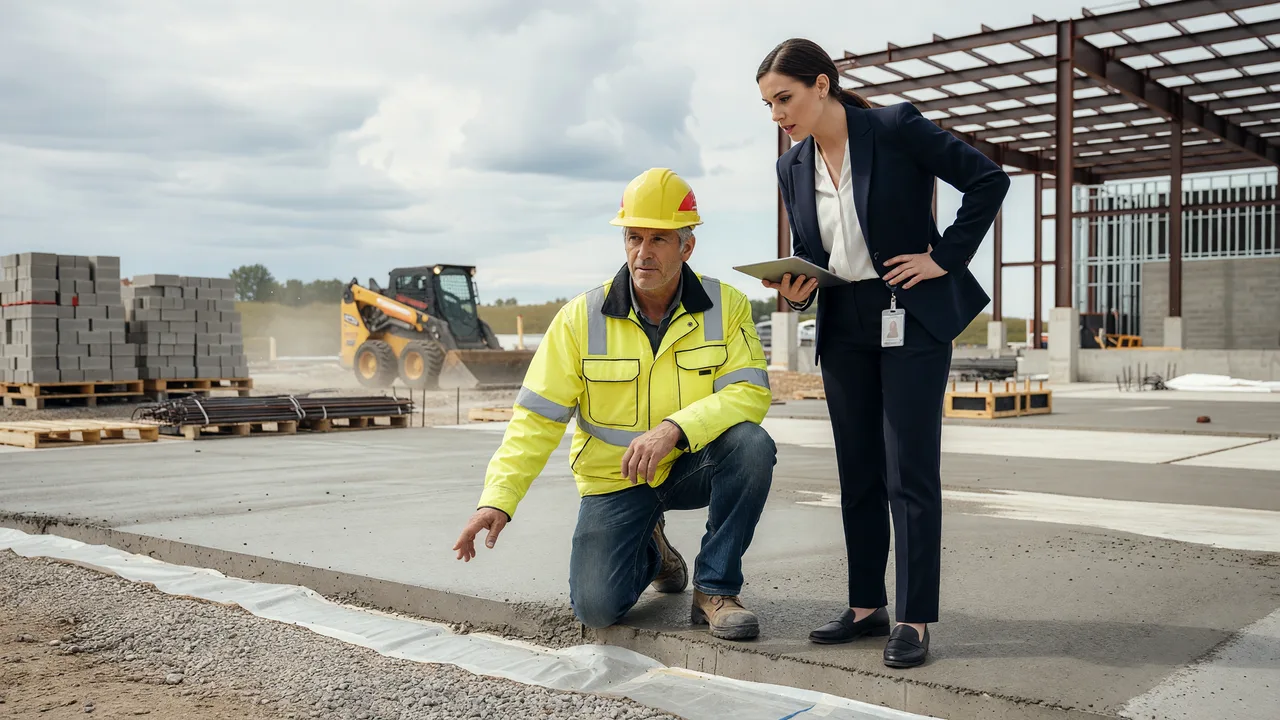
If you are planning a commercial slab, foundation, warehouse floor, loading dock, ADA flatwork package, or tenant build-out, it pays to clarify moisture-control details before the pour. Mattucci Construction works with owners, facility managers, developers, and general contractors on commercial concrete and masonry scopes where durability, inspection readiness, and clear accountability matter. To discuss your project, use the quote request form at mattucciconstruction.net or call (330) 992-2617.
Frequently Asked Questions About What Is a Vapor Barrier in Slab-on-Grade Construction and Do You Need One?
How much does what is a vapor barrier in slab-on-grade construction and do you need one? cost in null?
What is the best what is a vapor barrier in slab-on-grade construction and do you need one? company in null?
How do I choose a what is a vapor barrier in slab-on-grade construction and do you need one? provider in null?
What should I look for in what is a vapor barrier in slab-on-grade construction and do you need one? services?
How long does what is a vapor barrier in slab-on-grade construction and do you need one? take?
Is what is a vapor barrier in slab-on-grade construction and do you need one? worth the investment?
Does a vapor barrier prevent slab cracking?
Can you add a vapor barrier after the slab is poured?
Need a second set of eyes on a slab-on-grade scope?
If your project includes an interior slab, warehouse floor, foundation, loading dock, or tenant build-out, clarify the moisture-control detail before it turns into a finish failure or schedule issue. Mattucci Construction self-performs commercial concrete and masonry work, is bonded and insured, and operates with OSHA-compliant crews. Request a quote through the website or call to discuss the slab assembly and scope.