
What Is a Machine Foundation and When Does Your Equipment Need One?
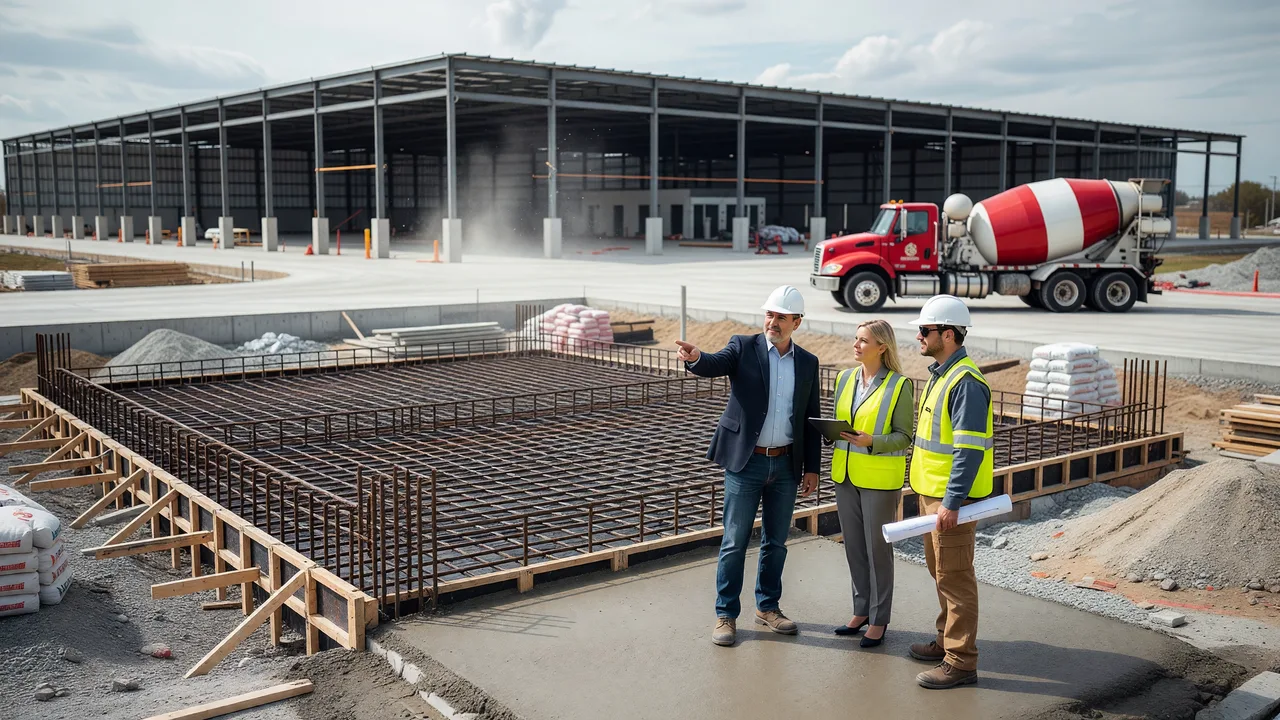
A practical guide for owners, facility managers, developers, and general contractors evaluating equipment support, vibration control, and long-term slab performance.
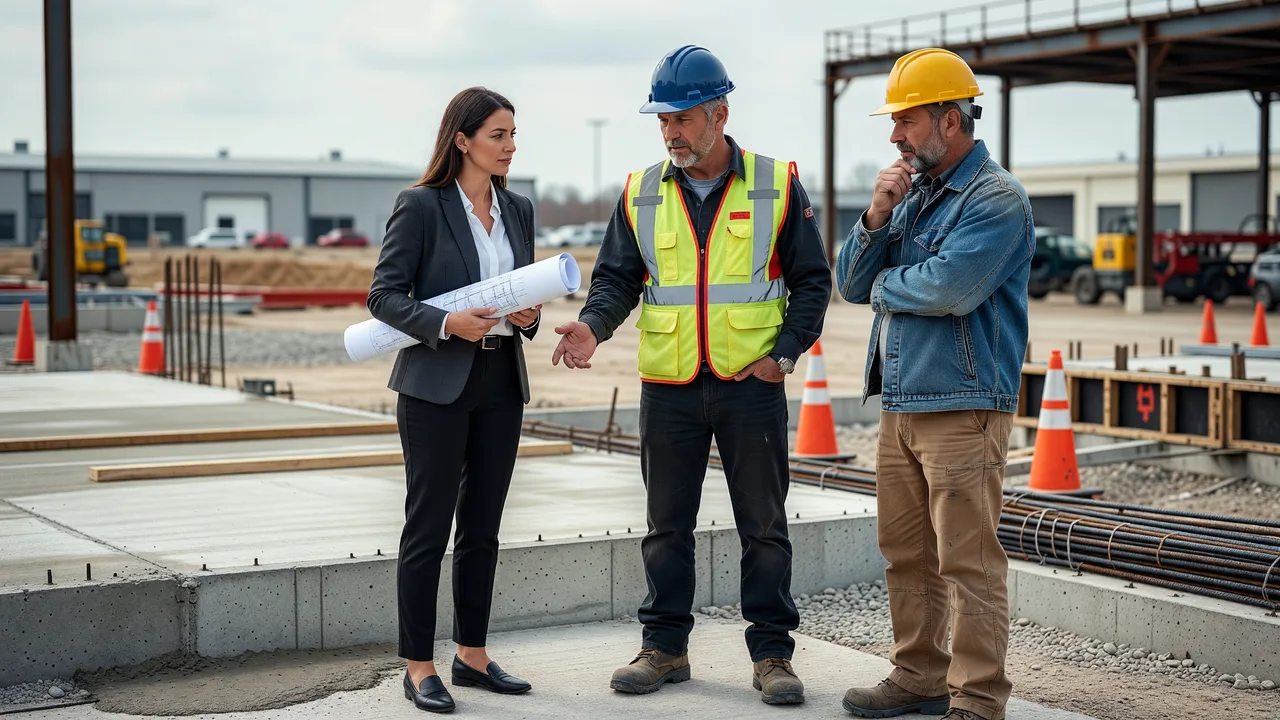
A machine foundation is a reinforced concrete base designed to support equipment loads, control vibration, maintain alignment, and protect the surrounding slab or structure. Equipment typically needs one when it is heavy, fast-moving, impact-producing, precision-sensitive, or anchored in place for long-term operation. Call (330) 992-2617 to discuss your needs and next steps.
Direct Answer: What Is a Machine Foundation and When Does Your Equipment Need One? OH
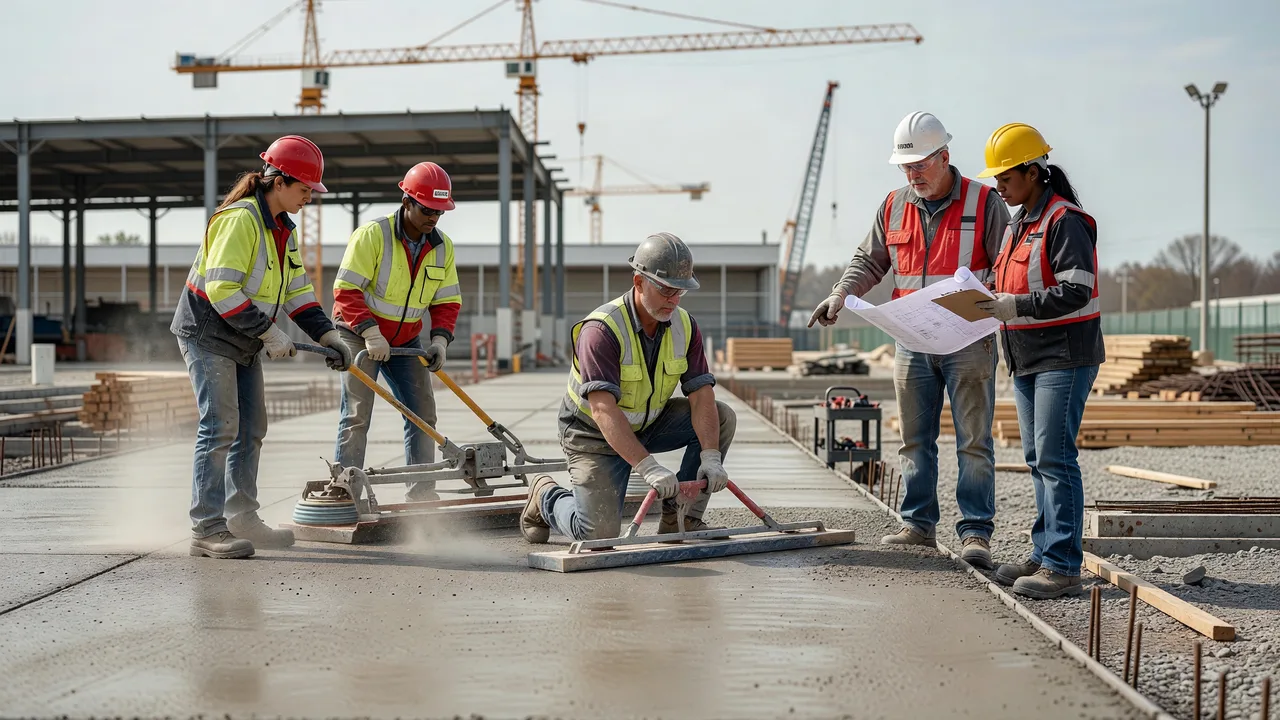 Photo by AI Generated (Grok Imagine)
A machine foundation is a purpose-built concrete foundation that carries equipment weight, resists dynamic forces, limits vibration, and keeps machinery properly aligned during operation. Your equipment usually needs one when standard floor slabs are not enough to safely handle concentrated loads, anchor bolt forces, repetitive motion, impact, or the precision tolerances required for reliable production.
For commercial and industrial facilities, the question is not only whether the machine can sit on concrete, but whether the concrete system can support that machine without cracking, drifting out of tolerance, transmitting vibration, or creating maintenance and safety problems over time.
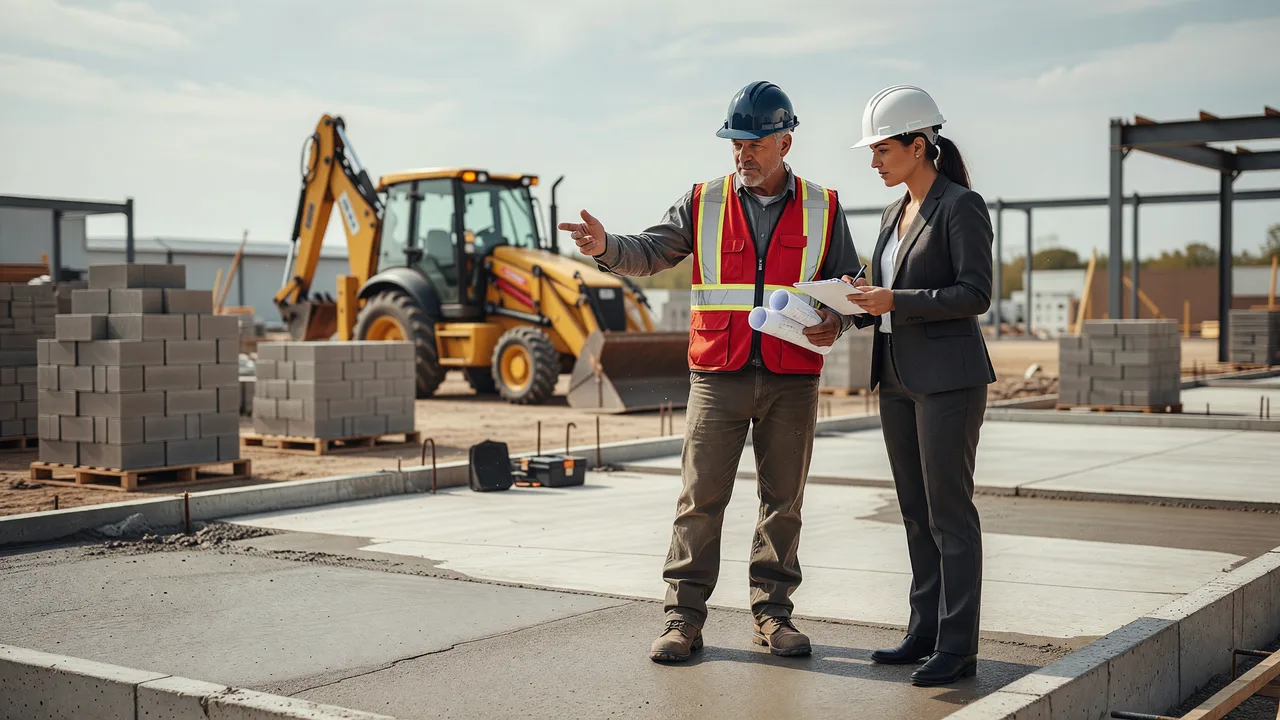
What a machine foundation actually does
Many buyers first hear the term and assume a machine foundation is simply a thicker slab. In practice, it is a structural support element engineered around the operating behavior of the equipment, the imposed loads, the anchor layout, and the soil or subgrade conditions below. That distinction matters because equipment rarely loads concrete the same way foot traffic, pallet jacks, or even forklifts do.
A machine foundation is typically used to transfer static and dynamic loads from equipment into the ground in a controlled way. Static loads include the dead weight of the machine itself. Dynamic loads include vibration, cycling forces, rotating imbalance, impact, and startup or shutdown movement. A standard slab-on-grade may support weight, but it may not be suitable for repeated dynamic loading or precise anchorage.
In practical terms, a proper machine foundation helps the facility avoid four common failure points: slab cracking, anchor loosening, machine misalignment, and vibration affecting nearby operations. That is why machine foundation work often intersects with broader commercial concrete scopes such as warehouse and industrial floors, structural slabs, foundations and footers, and concrete repair and restoration.
For owners comparing providers, terms such as professional What Is a Machine Foundation and When Does Your Equipment Need One? null, services What Is a Machine Foundation and When Does Your Equipment Need One? null, and What Is a Machine Foundation and When Does Your Equipment Need One? consultation all point back to the same core requirement: a contractor that understands equipment support as a performance issue, not just a placement issue.
When equipment needs a machine foundation
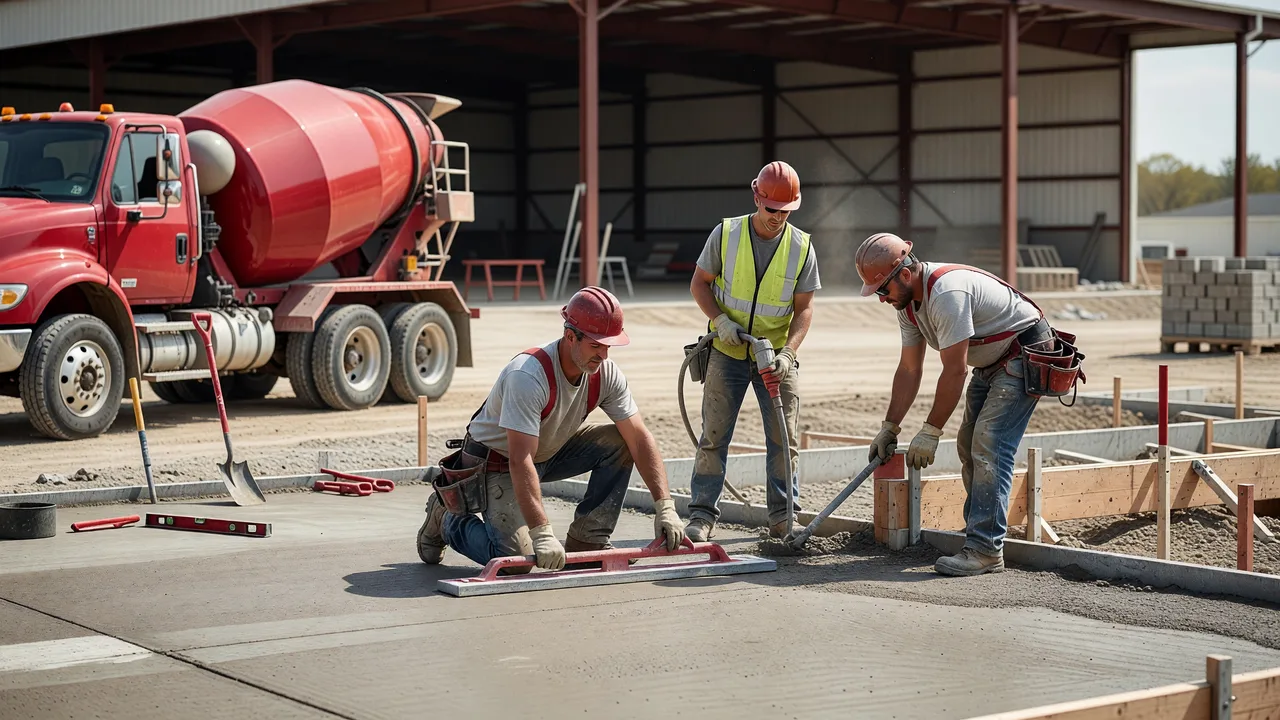 Photo by AI Generated (Grok Imagine)
The simplest rule is this: equipment needs a machine foundation when the consequences of movement, cracking, or vibration are greater than what a conventional slab can reliably absorb. That can apply in manufacturing, warehousing, utilities, processing, packaging, and maintenance environments.
Common indicators that a machine foundation is needed
- The equipment is heavy for its footprint. A moderate machine with a small base can create high point loads and concentrated stresses.
- The equipment rotates, reciprocates, impacts, or cycles. Compressors, pumps, presses, generators, fans, shredders, and similar systems impose dynamic forces.
- The manufacturer requires anchor bolts, grout, or isolation details. If installation documents specify these, the floor system must be compatible.
- The equipment must stay in alignment. Precision machinery can lose performance or suffer premature wear when the base moves even slightly.
- The machine operates near offices, mezzanines, labs, or sensitive production lines. Vibration transmission can become an operational problem beyond the machine itself.
- The existing slab shows distress. Cracking, settlement, spalling, or failed repairs are signs that the current support system may be inadequate.
- The installation is long-term. Temporary placement may tolerate compromises that permanent production equipment cannot.
These are the situations behind searches like What Is a Machine Foundation and When Does Your Equipment Need One? near me and What Is a Machine Foundation and When Does Your Equipment Need One? contractor. Buyers are usually not looking for decorative flatwork. They are trying to reduce operational risk before installation begins.
Equipment types that often require one
While the exact requirement depends on manufacturer data and site conditions, machine foundations are commonly considered for CNC equipment, industrial presses, generators, air compressors, pumps, blowers, mixers, conveyors with concentrated supports, crushers, stamping equipment, turbines, and specialty process machinery. Some loading dock equipment and material handling systems may also need dedicated support beyond the surrounding slab.
Not every machine in these categories automatically requires an isolated foundation, but these are the kinds of assets where decision-makers should pause before assuming the existing floor is enough.
Machine foundation vs. standard slab-on-grade
A standard commercial slab is designed around broad floor loading, traffic, jointing, reinforcement, and wear resistance. A machine foundation is designed around concentrated support, anchorage, stiffness, and force transfer. They may be poured together, tied together, or intentionally isolated from each other depending on the installation objective.
| Feature | Standard Slab-on-Grade | Machine Foundation |
|---|---|---|
| Primary purpose | Support building occupancy, storage, and traffic loads | Support specific equipment and control operational forces |
| Load type | Mainly distributed loads | Concentrated static and dynamic loads |
| Anchorage | May be limited or secondary | Typically integral to the design |
| Vibration control | Usually not the main design driver | Often a central requirement |
| Tolerance sensitivity | General floor flatness and serviceability | Equipment alignment and base stability |
| Failure consequence | Wear, cracking, or service disruption | Mechanical damage, downtime, safety risk, or production issues |
This comparison is important for procurement teams evaluating What Is a Machine Foundation and When Does Your Equipment Need One? estimate requests. Pricing and scope differ because the work is not just more concrete. It often involves excavation, subgrade preparation, formwork, reinforcement, anchor coordination, placement sequencing, and tolerance control tied directly to equipment performance.
The engineering factors that determine whether you need one
If you want a dependable answer, start with the forces involved, not with the thickness of the existing floor. The need for a machine foundation is generally driven by the interaction of five variables: equipment characteristics, load path, operating frequency, support conditions, and performance tolerance.
1. Equipment weight and footprint
A 10,000-pound machine spread over a large frame behaves differently than the same load concentrated at four narrow support points. Point loading can overstress a slab that looks substantial on the surface.
2. Dynamic force and frequency
Machines that rotate or cycle can create repeated loading that amplifies over time. A foundation may be needed not because one load event is too high, but because thousands or millions of cycles can fatigue the support system or loosen anchors.
3. Base anchorage and embedments
Anchor bolts, embed plates, sleeves, and grout pockets require deliberate planning. Improvised field drilling into an existing slab can create edge issues, hit reinforcement, or place anchors in concrete not intended for that demand.
4. Soil, fill, and subgrade quality
Even a well-reinforced block of concrete can perform poorly if the support below it is inconsistent. Settlement, pumping, and moisture-related movement often begin underneath the concrete, not in the concrete itself.
5. Operational tolerance
Some equipment can continue functioning with minor movement. Precision or vibration-sensitive equipment may not. In those cases, the support requirement is governed by performance tolerance, not just structural survival.
These decision points are what separate an informed review from a generic best What Is a Machine Foundation and When Does Your Equipment Need One? null or top What Is a Machine Foundation and When Does Your Equipment Need One? null search. The right answer is rarely about marketing language. It is about whether the foundation system matches the machine and the facility’s risk tolerance.
Signs your existing slab may not be enough
Commercial owners often ask this question after a problem appears: recurring cracking under equipment, fastener loosening, grout breakdown, slab settlement, or vibration complaints from adjacent spaces. Those symptoms do not always mean the original installation was wrong, but they do indicate the support system deserves evaluation.
- Diagonal or map cracking around anchor points: often a sign of concentrated stress or movement.
- Spalling at machine edges or wheel paths: may indicate impact, weak concrete surface, or unsupported edges.
- Uneven grout beds or shim stacks: can point to poor base support or differential movement.
- Repeated re-leveling: if maintenance is constantly correcting alignment, the foundation system may be underperforming.
- Visible settlement or ponding nearby: water and subgrade issues often show up in adjacent slab behavior first.
- Cracks telegraphing into aisles or pedestrian zones: dynamic loads can migrate into the broader floor system.
For facilities already managing parking lots, ADA flatwork, loading docks, or industrial floors, these signs should be treated as risk signals rather than cosmetic issues. The cost of inaction is frequently downtime, not just patching.
How machine foundations are typically built
The exact configuration depends on equipment and site conditions, but most machine foundations follow a disciplined sequence. That sequence matters because mistakes made below the finished surface are the ones that are hardest to correct after equipment arrives.
Preconstruction review
The team should review machine data, base plate details, anchor requirements, elevations, clearances, and the relationship to nearby slabs, walls, trenches, utilities, and traffic paths. This is where access and shutdown planning are also addressed.
Excavation and subgrade preparation
The support below the foundation must be stable and consistent. Unsuitable material, soft spots, or poorly compacted fill can undermine the entire installation regardless of top-side finish.
Forming, reinforcement, and embeds
Reinforcement, anchor templates, sleeves, and other embedded items must be set accurately. On industrial projects, placement tolerances and coordination with mechanical trades are often just as important as the concrete mix itself.
Concrete placement and curing
Placement sequencing, consolidation, finish requirements, and curing practices all affect long-term strength and dimensional stability. Fast turnover pressure is common on commercial jobs, but concrete still has to be given the conditions needed to perform.
Grouting, anchoring, and equipment setting
Some systems rely on precision grout or final anchoring after the foundation reaches the required condition. The concrete scope must support that handoff cleanly. If the anchor pattern is off or the surface is out of tolerance, downstream trades absorb the delay.
This is one reason commercial buyers often prefer a self-performing concrete contractor instead of a brokered scope. Mattucci Construction operates as a self-perform commercial concrete and masonry contractor, with bonded and insured, OSHA-compliant crews and more than 20 years in business. For machine-related support work, that model matters because there is one accountable crew managing the field execution rather than subcontractor roulette.
How long does machine foundation work take?
There is no universal duration because schedule depends on size, excavation depth, reinforcement complexity, access restrictions, cure requirements, and coordination with equipment installers. A small support pad may move quickly, while a larger industrial foundation tied into an active facility can take significantly longer once demolition, prep, placement, and cure time are included.
For buyers asking, How long does what is a machine foundation and when does your equipment need one? take?, the practical answer is that the concrete work is only one piece of the timeline. Shutdown windows, utility conflicts, anchor templates, and equipment delivery often drive the critical path. The best planning question is not, “How fast can it be poured?” but, “When will the foundation be ready for accurate equipment installation without rework?”
How much does a machine foundation cost?
There is no honest national flat rate because cost is shaped by engineering requirements, demolition, excavation, access, rebar density, embedments, anchor systems, concrete volume, finish tolerance, and production constraints at the site. A simple isolated pad inside an open warehouse is a different scope than a deep foundation retrofit in an active plant with tight shutdown windows.
That is why broad search phrasing like affordable What Is a Machine Foundation and When Does Your Equipment Need One? null or What Is a Machine Foundation and When Does Your Equipment Need One? affordable null OH can be misleading. Affordable in this context does not mean the lowest first cost. It means the support system is correctly matched to the machine so the owner does not pay again through downtime, cracked slabs, failed anchors, or shortened equipment life.
Commercial concrete pricing is also highly scope-sensitive across adjacent work. The same holds true for related searches such as parking lot cost, ADA sidewalk cost, or commercial concrete installation. Unit cost depends on preparation, drainage, reinforcement, removal, traffic control, and access just as much as it depends on the visible finish. Machine foundations are no different: conditions drive cost.
How to choose a provider for machine foundation work
If you are comparing providers, the right filter is operational accountability. Machine support work sits at the intersection of structural performance, installation sequencing, and facility uptime. A contractor that usually markets only residential flatwork may not be the best fit for an industrial equipment foundation even if they place concrete every day.
- Look for commercial and industrial relevance. Experience with warehouse floors, loading docks, foundations, structural slabs, and repair work is directly applicable.
- Ask who will actually perform the work. Self-performed scopes reduce handoff risk and make responsibility clearer.
- Confirm risk management basics. Bonded, insured, and OSHA-compliant crews matter on active commercial sites.
- Evaluate coordination discipline. Machine foundations require layout accuracy, embed coordination, and schedule control.
- Discuss access and operational impact. The best field plan is the one that protects production, deliveries, and adjacent users while the work proceeds.
Those are the real answers behind people-also-ask questions like How do I choose a what is a machine foundation and when does your equipment need one? provider in null? and What should I look for in what is a machine foundation and when does your equipment need one? services?
For commercial buyers evaluating concrete partners, Mattucci Construction’s fit is straightforward: family-owned, in business more than 20 years, self-performing rather than outsourcing, bonded and insured, OSHA-compliant, and focused on the types of failure-sensitive scopes commercial owners actually worry about, including warehouse and industrial floors, foundations and footers, loading docks, ADA flatwork, parking lots, tilt-up construction, commercial masonry, and repair and restoration. The company also maintains an approximately 4.8 Google rating from 19 reviews, which is a useful trust signal without overstating volume.
Practical recommendations before you approve equipment installation
If you want to reduce expensive surprises, make these checks before the machine is delivered:
- Get the manufacturer’s installation requirements in writing. Confirm load, anchor, grout, base flatness, and vibration expectations.
- Verify what the existing slab was designed to do. Do not assume a thick floor equals an equipment-ready floor.
- Inspect for visible distress. Existing cracks, settlement, spalls, and moisture issues should be documented before deciding on reuse.
- Coordinate the concrete scope with mechanical and electrical trades. Rework often starts with misaligned sleeves, anchors, or elevations.
- Plan around operations. Define access, cure time, safety controls, and equipment set dates early.
- Think beyond initial install. Consider how vibration, drainage, cleaning, and maintenance traffic will affect the area over time.
These recommendations apply whether you are evaluating a new machine foundation, a retrofit, or repair of an existing equipment base. They also answer a broader investment question: the foundation is not just a concrete line item; it is part of equipment reliability.
Search variations such as What Is a Machine Foundation and When Does Your Equipment Need One? best null OH, What Is a Machine Foundation and When Does Your Equipment Need One? top null OH, What Is a Machine Foundation and When Does Your Equipment Need One? professional null OH, What Is a Machine Foundation and When Does Your Equipment Need One? services null OH, and What Is a Machine Foundation and When Does Your Equipment Need One? null near me all boil down to the same practical need: clear technical judgment, field accountability, and a commercial concrete team that understands consequences, not just quantities.
Is a machine foundation worth the investment?
When the equipment is heavy, dynamic, precision-sensitive, or expected to stay in service long term, a machine foundation is often worth the investment because it reduces the risk of downtime, protects the surrounding slab, preserves alignment, and supports safer anchorage. The value is highest where failure affects production, compliance, tenant operations, or repair access.
Owners sometimes focus on the visible cost of the concrete and overlook the hidden cost of inadequate support: emergency shutdowns, repeat patching, anchor failure, vibration complaints, product quality issues, and difficult retrofits after the machine is already in place. In that context, the foundation is part of the equipment system, not an optional add-on.
Need a second opinion on a machine foundation scope?
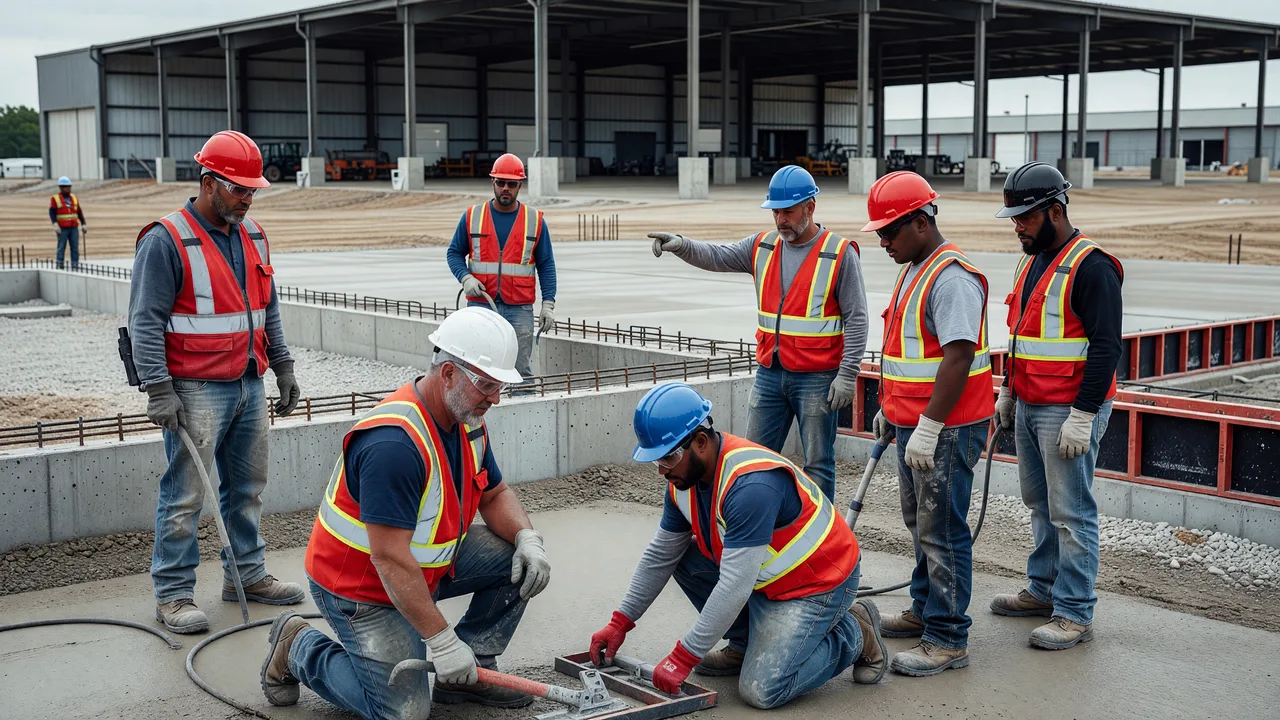 Photo by AI Generated (Grok Imagine)
If you are planning equipment installation, replacing a damaged base, or trying to determine whether an existing slab can support a machine reliably, a disciplined concrete review can prevent costly rework. Mattucci Construction handles commercial concrete scopes where durability, inspection, safety, and schedule control matter, including foundations, warehouse floors, loading docks, structural slabs, ADA flatwork, and repair work.
To discuss your project, use the quote request form at https://mattucciconstruction.net or call (330) 992-2617 to start the conversation.
Frequently Asked Questions About What Is a Machine Foundation and When Does Your Equipment Need One?
How much does what is a machine foundation and when does your equipment need one? cost in null?
There is no reliable one-size-fits-all price because machine foundation cost depends on the equipment load, required dimensions, demolition needs, excavation depth, reinforcement, anchor systems, access conditions, and installation tolerances. A small isolated equipment pad is a very different scope from a deep industrial retrofit in an active facility. The right way to budget is to review the machine requirements and the existing site conditions together before pricing.
What is the best what is a machine foundation and when does your equipment need one? company in null?
The best provider is the one with relevant commercial concrete experience, strong field accountability, and the ability to coordinate around active operations. For this type of work, buyers should prioritize self-performed commercial concrete capabilities, bonded and insured status, OSHA-compliant crews, and experience with foundations, industrial floors, loading docks, and repair. Mattucci Construction fits that profile as a family-owned, self-performing commercial concrete and masonry contractor with more than 20 years in business and an approximately 4.8 Google rating from 19 reviews.
How do I choose a what is a machine foundation and when does your equipment need one? provider in null?
Start by asking whether the contractor routinely handles commercial and industrial support work rather than only general flatwork. Then confirm who actually performs the work, whether the crews are OSHA-compliant, whether the company is bonded and insured, and how they coordinate embeds, anchors, shutdown windows, and adjacent operations. Machine foundation work demands precision and accountability because errors affect both the concrete and the equipment installation that follows.
What should I look for in what is a machine foundation and when does your equipment need one? services?
Look for a provider that understands dynamic loading, concentrated support, anchorage, subgrade preparation, and coordination with mechanical installation requirements. You should also expect clear scope definition around excavation, reinforcement, placement tolerances, curing, and access planning. On commercial sites, the ability to limit disruption to tenants, deliveries, traffic, and production is just as important as the pour itself.
How long does what is a machine foundation and when does your equipment need one? take?
Timeline depends on project size and complexity. The work may include demolition, excavation, subgrade correction, forming, reinforcement, embed installation, concrete placement, curing, and final equipment anchoring. Lead time for shutdown coordination and machine delivery can also shape the schedule. A dependable timeline should be built around installation readiness, not just the day the concrete is poured.
Is what is a machine foundation and when does your equipment need one? worth the investment?
Yes, when the equipment is heavy, produces vibration or impact, requires precise alignment, or must operate reliably for years. A proper machine foundation can reduce slab damage, anchor issues, vibration transfer, and equipment misalignment. In most commercial settings, that means lower lifecycle risk and fewer interruptions compared with placing demanding equipment directly on a standard slab without verifying support capacity.
Talk through your machine foundation requirements with a commercial concrete team
If you need a practical review of equipment support, slab condition, or a new foundation scope, Mattucci Construction can help you evaluate the concrete side of the project. Use the quote-request form at https://mattucciconstruction.net and keep the phone number visible for your team: (330) 992-2617.