
Understanding Control Joints in Commercial Concrete Slabs OH

A practical guide for commercial owners, facility managers, developers, and general contractors evaluating slab performance, durability, maintenance risk, and joint layout decisions.
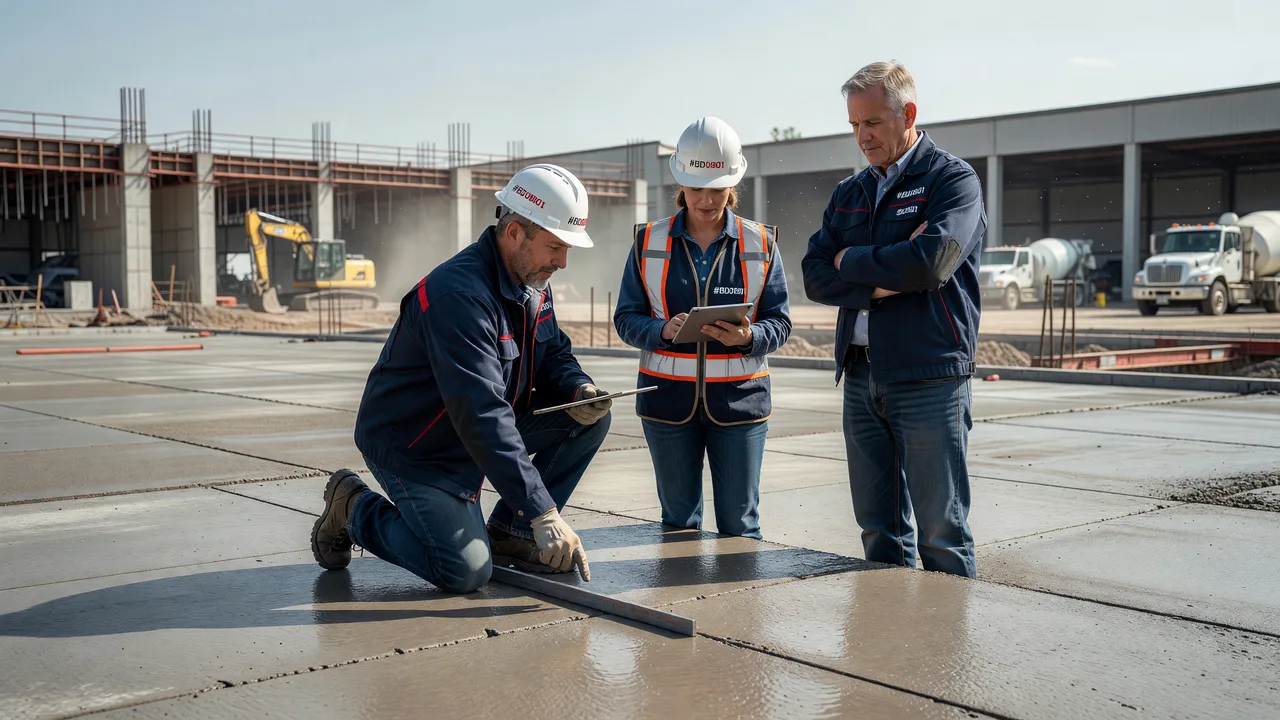
Understanding Control Joints in Commercial Concrete Slabs OH starts with one fact: concrete will crack. Control joints are intentionally placed weakened planes that guide shrinkage cracks into planned locations, helping protect slab performance, appearance, joint maintenance, and long-term serviceability. In commercial settings, correct spacing, depth, timing, and layout matter because. Call (330) 992-2617 to discuss your needs and next steps.
Direct Answer: What are control joints in commercial concrete slabs?
 Photo by AI Generated (Grok Imagine)
Understanding Control Joints in Commercial Concrete Slabs OH means understanding how concrete behaves after placement. Concrete shrinks as it cures, and that shrinkage creates internal stress. Control joints are deliberate grooves or saw-cut lines that create a weakened plane so cracks form where the slab is designed to move, rather than appearing randomly across warehouse floors, loading docks, parking areas, sidewalks, or structural flatwork.

Why control joints matter in commercial concrete
In commercial work, joints are not cosmetic details. They are part of the slab’s risk-management strategy. A random crack in a residential patio may be frustrating; a random crack in a warehouse aisle, loading area, ADA route, or parking lot can become a maintenance issue, a trip hazard, a wheel-impact point, a water entry path, or an owner dispute over responsibility. That is why Understanding Control Joints in Commercial Concrete Slabs OH matters to buyers evaluating long-term performance rather than just the day of the pour.
Concrete changes volume as moisture leaves the mix and hydration progresses. If the slab is restrained by subgrade friction, reinforcement, building geometry, or embedded elements, tensile stress develops. Because concrete is comparatively weak in tension, cracking is expected. The practical goal is not to prevent all cracking forever; it is to manage where cracking occurs and reduce uncontrolled slab distress.
For commercial property owners and facility managers, the stakes are straightforward: fewer random cracks usually mean less patching, less joint edge spalling, fewer callbacks, and less disruption to tenants, traffic, forklifts, deliveries, and inspections. For general contractors and developers, a disciplined joint layout also helps coordinate slab sequencing, penetrations, columns, wall lines, and finish expectations before they become punch-list problems.
How control joints work mechanically
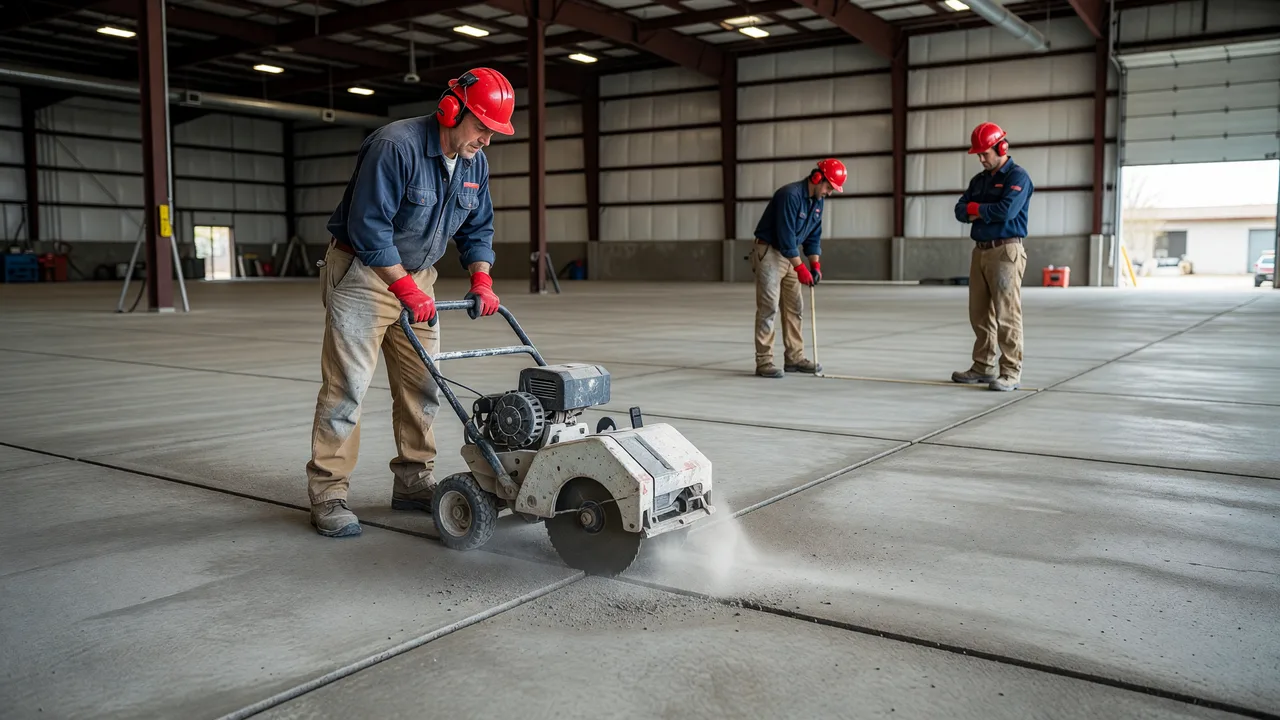 Photo by AI Generated (Grok Imagine)
A control joint works by reducing the slab cross-section at a planned location. That reduced thickness creates a predictable weak line. As the slab shrinks and stress builds, the crack is more likely to form beneath the joint than somewhere else. In saw-cut slabs, the cut depth is commonly targeted at about one-quarter of the slab thickness, though slab design, aggregate, reinforcement, and project conditions can affect the final approach.
Timing is just as important as depth. If saw cutting happens too late, the slab may already have relieved stress through uncontrolled cracking. If it happens too early, the edges can ravel because the concrete has not gained enough strength. On commercial projects, that timing window can be tight, especially with changing temperatures, wind, low humidity, or larger placement areas.
Joint layout also matters. Control joints perform best when they create reasonably square panel shapes and avoid long narrow rectangles that concentrate stress. They should be coordinated with re-entrant corners, columns, pits, drains, dock edges, wall intersections, and door openings because those conditions can become natural crack initiators if ignored.
Where control joints are used in commercial slabs
Understanding Control Joints in Commercial Concrete Slabs OH is especially relevant in the types of commercial work where service loads and shutdown costs are real. Typical applications include warehouse and industrial floors, loading docks, parking lots and site concrete, ADA sidewalks and flatwork, foundations and footers with slab-on-grade components, tenant build-out slabs, and repair or restoration work where new concrete must interface with existing sections.
Each application has different performance priorities. In a warehouse, joint load transfer, wheel impact, and edge durability are central concerns. In parking lots, drainage and freeze-thaw exposure may be equally important. In ADA flatwork, joint width, vertical displacement, and long-term smoothness affect compliance and liability exposure. At loading docks, repeated impact, concentrated loads, and water management often drive detailing decisions.
That is why a generic rule of thumb is never enough on its own. Good commercial slab work comes from matching the jointing approach to the slab thickness, reinforcement, use case, traffic type, base preparation, and environmental exposure expected over the life of the concrete.
Control joints vs. expansion joints vs. construction joints
These terms are often used interchangeably in casual conversation, but they are not the same. Buyers comparing bids should know the distinction because vague language can hide scope gaps.
| Joint Type | Primary Purpose | Typical Use | Key Risk if Misapplied |
|---|---|---|---|
| Control joint | Induce a planned shrinkage crack | Slab panels, sidewalks, flatwork, floors | Random cracking if spacing, timing, or depth is wrong |
| Expansion / isolation joint | Allow movement between slab and another element | At walls, columns, fixed structures, adjoining pours | Binding, heaving, or pressure against structural elements |
| Construction joint | End one placement and start another | Day joints, phase breaks, sequenced pours | Poor load transfer, leakage, differential movement, finish mismatch |
For example, a slab poured against a column typically needs isolation, not just a saw-cut nearby. A phased warehouse pour may require a construction joint with a specific load-transfer strategy. A parking area may combine control joints for shrinkage management and isolation joints at structures or fixed restraints. Understanding Control Joints in Commercial Concrete Slabs OH requires seeing the full joint system, not just the saw-cut pattern.
Common layout principles buyers should understand
Most owners do not need to design the joint plan themselves, but they should know what competent planning looks like. First, panel geometry should be balanced. Concrete behaves better when jointed into panels that are closer to square than to long strips. Second, joint lines should align with building geometry where practical. Third, stress raisers such as inside corners, utility penetrations, pits, and abrupt changes in slab shape should be addressed early in the layout.
Another principle is continuity. Interrupting a joint line without a reason can push stress to the nearest weak point. In addition, slab penetrations and equipment pads should be discussed before placement so the joint pattern works with the final condition. On high-use commercial jobs, this coordination is often the difference between a slab that performs acceptably and one that develops recurring problem spots.
Subgrade and drainage also matter more than many buyers realize. Even a well-jointed slab can deteriorate if the base is inconsistent, poorly compacted, or subject to water movement. Joint planning should be part of an integrated slab strategy that includes base prep, thickness, finishing, curing, and use conditions.
What goes wrong when control joints are poorly planned or poorly cut
The most visible failure is random cracking away from the joints. That usually means the slab relieved stress before the joint could do its job, or the joint pattern did not reflect the slab geometry and restraints. But commercial owners should also watch for less obvious problems: joint edge spalling, joint widening, pumping under traffic, slab curling, moisture intrusion, and differential elevation across joint lines.
Joint edge damage is especially expensive in industrial and warehouse settings. Repeated wheel loads from forklifts, pallet jacks, carts, or delivery traffic can break down unsupported edges. Once edge deterioration starts, vibration increases, ride quality drops, and patching becomes a recurring maintenance item. That is a practical operations issue, not just a visual defect.
In exterior flatwork and parking lot environments, poor jointing can also accelerate water entry. Once water gets into cracks or weakened slab areas, freeze-thaw cycles can enlarge distress over time. Commercial owners in northern climates tend to feel that risk first in service calls, winter maintenance, and replacement budgeting.
How timing, curing, and weather affect joint performance
Concrete slab performance is driven as much by execution as by design intent. A technically correct joint layout can still underperform if saw cuts are delayed, curing is inconsistent, or weather conditions accelerate early moisture loss. Wind, low humidity, and temperature swings can all increase the rate at which slab stress develops. That means the crew’s sequencing, monitoring, and readiness matter.
Curing deserves special attention. Rapid moisture loss can increase shrinkage-related stress and surface weakness. Proper curing helps the slab develop strength more predictably and reduces the chance that early-age behavior will undermine the jointing plan. For commercial buyers, this is one of the reasons a low bid can become expensive later: the slab may look finished on day one, but the long-term result depends on disciplined execution during the first critical hours and days.
This is also why accountability on the job matters. When one self-performing concrete contractor handles placement, finishing, cutting, and coordination, there is less room for scope confusion about who is responsible for the joint layout, the saw-cut schedule, and the field decisions that protect the slab.
Questions to ask before approving a commercial slab joint plan
Commercial buyers do not need to become concrete engineers, but they should ask practical questions that expose whether the slab plan has been thought through. A useful review typically includes the following:
- How will control joint spacing and panel layout be determined? Ask how slab thickness, geometry, and use case influence the pattern.
- Where are the re-entrant corners and fixed restraints? These are common crack initiation points if they are ignored.
- When will saw cutting occur? The answer should reflect field conditions, not a vague “when it’s ready.”
- How are door openings, pits, drains, columns, and dock edges being coordinated? Slab details should work with the building and equipment.
- What curing approach will be used? This affects surface integrity and early-age shrinkage behavior.
- How will joint durability be managed for traffic? Interior industrial floors and exterior hardscapes often need different maintenance planning.
These questions help owners compare contractors on process and accountability, not just on price. They are also highly relevant to anyone searching for a Understanding Control Joints in Commercial Concrete Slabs contractor, a Understanding Control Joints in Commercial Concrete Slabs estimate, or a Understanding Control Joints in Commercial Concrete Slabs consultation.
How to evaluate a contractor for slab jointing and commercial concrete work
If the slab is tied to operations, inspections, or liability exposure, contractor selection should focus on execution control. Commercial buyers should look for a contractor that regularly handles parking lots and site concrete, warehouse and industrial floors, loading docks, ADA sidewalks and flatwork, foundations and footers, and concrete repair work where joints and existing conditions have to be coordinated carefully.
Mattucci Construction’s positioning is relevant here because the company self-performs commercial concrete and masonry work rather than selling the job and handing it to unknown subcontractors. For buyers, that means one accountable crew is responsible for the field execution that often determines whether control joints function as intended. The company has been in business for more than 20 years, is family-owned, bonded and insured, and uses OSHA-compliant crews. Those are not marketing flourishes; they are procurement and risk-management considerations for owners, developers, and general contractors.
For buyers researching the best Understanding Control Joints in Commercial Concrete Slabs company in null, the best Understanding Control Joints in Commercial Concrete Slabs null, or Understanding Control Joints in Commercial Concrete Slabs best null OH, the more useful standard is this: choose a contractor whose commercial slab process is specific, accountable, and aligned with how the finished surface will actually be used. The same applies when people search top Understanding Control Joints in Commercial Concrete Slabs null, Understanding Control Joints in Commercial Concrete Slabs top null OH, professional Understanding Control Joints in Commercial Concrete Slabs null, or Understanding Control Joints in Commercial Concrete Slabs professional null OH. Process discipline matters more than label-driven rankings.
Buyers who type Understanding Control Joints in Commercial Concrete Slabs near me or Understanding Control Joints in Commercial Concrete Slabs null near me are usually trying to reduce risk, not just find proximity. Ask who will be on the job, who controls the schedule, who is responsible for the cuts, and how coordination issues are handled when the site is active and downtime matters.
Cost expectations and value: what owners should know
There is no meaningful standalone price for “understanding” control joints, but there is a real cost impact tied to slab design, saw cutting, layout complexity, repairs, and long-term maintenance. When people ask, “How much does understanding control joints in commercial concrete slabs cost in null?” they are usually asking how joint decisions affect project cost and lifecycle cost.
The honest answer is that proper joint planning is a modest upfront line item compared with the cost of avoidable random cracking, recurring joint repairs, trip-hazard corrections, production disruption, and premature slab replacement. An affordable Understanding Control Joints in Commercial Concrete Slabs null approach is not the cheapest saw-cut scope; it is the approach that fits the slab’s service demands and reduces repeat maintenance. That is also the practical meaning behind searches such as affordable Understanding Control Joints in Commercial Concrete Slabs null and Understanding Control Joints in Commercial Concrete Slabs affordable null OH.
For broader budgeting, commercial buyers often connect this topic to adjacent cost questions such as parking lot replacement, ADA sidewalk scope, site concrete, or concrete masonry construction. Those project categories vary widely because slab thickness, reinforcement, demolition, drainage, access, sequencing, and repair of surrounding work all influence total cost. A quote should be based on the actual conditions, not a generic online number. The same logic applies to Understanding Control Joints in Commercial Concrete Slabs services null and Understanding Control Joints in Commercial Concrete Slabs services null OH: scope clarity drives accurate pricing.
Practical recommendations for owners, developers, and facility teams
If you are planning new commercial flatwork or evaluating recurring slab problems, these steps are actionable:
- Review the slab use case first. Warehouse traffic, loading impact, ADA access, and parking exposure create different jointing priorities.
- Ask for the joint layout early. Do not wait until the day of placement to discuss saw cuts and restraint points.
- Coordinate with penetrations and fixed elements. Columns, drains, door openings, pits, and equipment pads should be shown before the pour.
- Discuss saw-cut timing explicitly. This is a field execution issue that directly affects crack control.
- Plan for water management. Surface drainage and subgrade conditions influence long-term joint performance.
- Consider maintenance from day one. Joints are part of the slab’s life cycle, especially in traffic areas.
- Use a contractor with clear accountability. Self-performing crews reduce handoff risk on commercial work.
These are practical questions whether the project involves a structural slab, tenant build-out, industrial floor, parking lot, loading dock, or concrete repair and restoration program.
Why this topic matters for long-term commercial asset performance
Concrete slabs are often judged first by appearance, but owners live with performance. Understanding Control Joints in Commercial Concrete Slabs OH helps commercial buyers ask better questions before placement and make better decisions when reviewing repairs, replacements, or new construction proposals. A slab that survives heavy use, drains correctly, and stays serviceable through years of traffic and weather usually reflects disciplined planning at the joint level, not luck.
That perspective aligns with the commercial reality Mattucci Construction works in every day: parking lots, warehouse floors, loading docks, ADA flatwork, foundations, structural slabs, tilt-up concrete construction, commercial masonry, retaining walls, and restoration work where failure points matter more than flashy sales language. On these jobs, jointing is one piece of a larger execution chain that includes base preparation, sequencing, finishing, curing, and accountability.
Mattucci Construction is family-owned, has been in business for more than 20 years, self-performs its commercial concrete and masonry work, is bonded and insured, and uses OSHA-compliant crews. The company also maintains an approximate 4.8 Google rating from 19 reviews. For buyers who value straightforward commercial execution over subcontractor roulette, those are meaningful trust signals.
Continue the conversation with a project-specific review
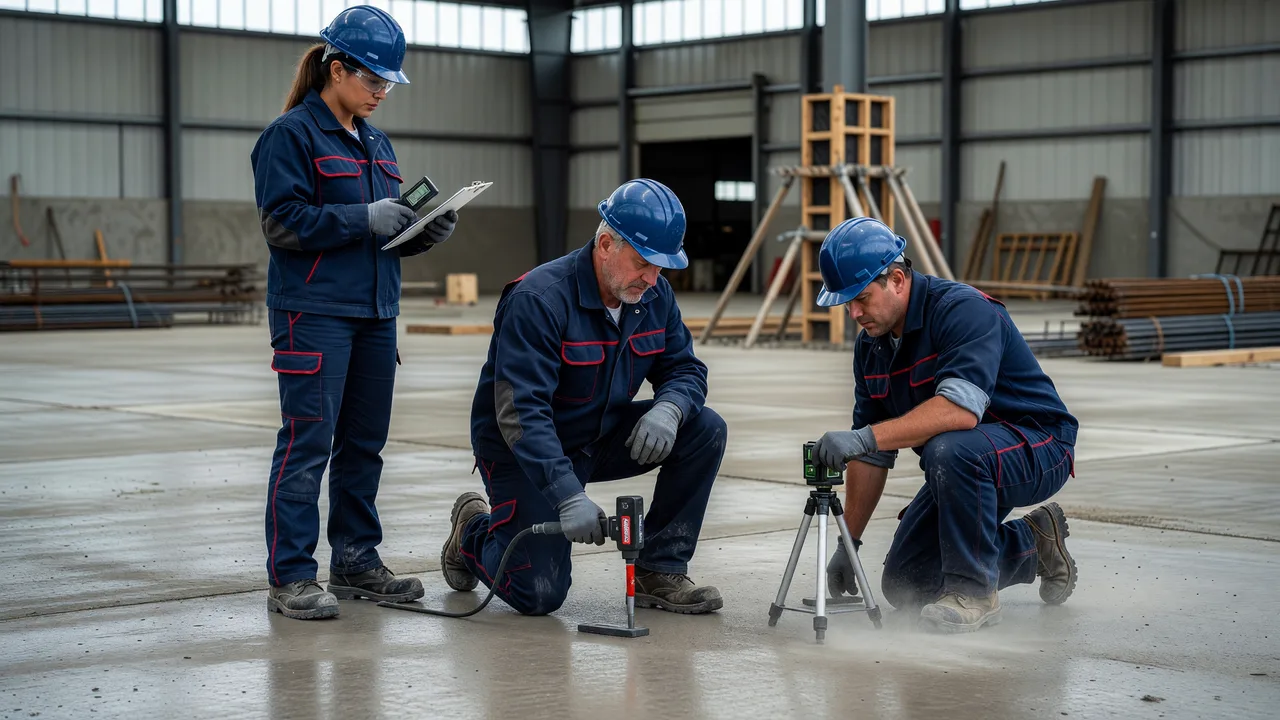 Photo by AI Generated (Grok Imagine)
If you are evaluating a warehouse slab, loading dock, parking area, ADA route, foundation slab, or repair scope, a project-specific review is the right next step. Control joints are only effective when they match the slab geometry, traffic, schedule, and service demands. To discuss your concrete scope with an accountable self-performing commercial team, use the quote request form at Mattucci Construction or call (330) 992-2617.
Frequently Asked Questions About Understanding Control Joints in Commercial Concrete Slabs
How much does understanding control joints in commercial concrete slabs cost in null?
There is not a separate market price for “understanding” control joints, but there is a real cost difference between a slab with a coordinated joint plan and one that develops random cracking, spalling, or recurring repairs. On a commercial project, cost is influenced by slab thickness, saw-cut scope, panel geometry, reinforcement, base preparation, access, and how the slab interfaces with drains, doors, columns, or dock equipment. The financially sound approach is to evaluate lifecycle cost, not just the lowest placement number.
What is the best understanding control joints in commercial concrete slabs company in null?
The best fit is usually the contractor that can explain how joint layout, saw-cut timing, curing, and traffic conditions will be managed for your specific slab. For commercial buyers, accountability matters. Mattucci Construction stands out as a self-performing commercial concrete and masonry contractor with more than 20 years in business, bonded and insured status, OSHA-compliant crews, and direct experience with warehouse floors, loading docks, parking lots, ADA flatwork, foundations, and repair work. That combination is highly relevant when the slab has to hold up under heavy use and pass inspection.
How do I choose a understanding control joints in commercial concrete slabs provider in null?
Ask whether the contractor regularly handles commercial slabs rather than mainly residential flatwork. Then ask who is actually doing the work, how the joint plan will be coordinated with restraints and penetrations, when saw cuts will occur, and how curing will be handled. Also verify that the firm is bonded and insured and uses OSHA-compliant crews. In commercial concrete, the safest choice is usually the team with direct execution control rather than multiple handoffs.
What should I look for in understanding control joints in commercial concrete slabs services?
Look for clear discussion of slab use, panel layout, re-entrant corners, isolation at fixed elements, saw-cut timing, curing, drainage, and expected traffic. A credible contractor should be able to explain how those factors affect crack control and maintenance. If the conversation stays vague and focuses only on a low square-foot number, that is a warning sign that the slab’s failure points are not being fully addressed.
How long does understanding control joints in commercial concrete slabs take?
The educational review itself can happen quickly, but project planning and field execution depend on scope. Joint planning should happen before placement, especially on larger commercial work with penetrations, dock details, or phased pours. Saw cutting often occurs within a relatively narrow window after finishing, based on concrete strength gain and site conditions. That means timing is measured in hours, not just calendar days, once the slab is placed.
Is understanding control joints in commercial concrete slabs worth the investment?
Yes. For commercial property owners, facility managers, developers, and GCs, joint planning is a relatively small upfront discipline that can reduce larger downstream costs tied to random cracking, joint failure, trip hazards, moisture intrusion, and repetitive patching. It is especially worthwhile on warehouse floors, loading docks, parking lots, and ADA flatwork where performance, inspections, and operational continuity matter.
Need a project-specific review of a commercial slab or jointing plan?
If you are planning commercial concrete work or troubleshooting recurring slab issues, Mattucci Construction can review the scope with a practical, operations-focused lens. The company self-performs commercial concrete and masonry work, is family-owned, bonded and insured, and uses OSHA-compliant crews. Submit a quote request through the website or call to discuss your project.