
Slab-on-Grade vs Structural Slab — Which Does Your Commercial Building Need?
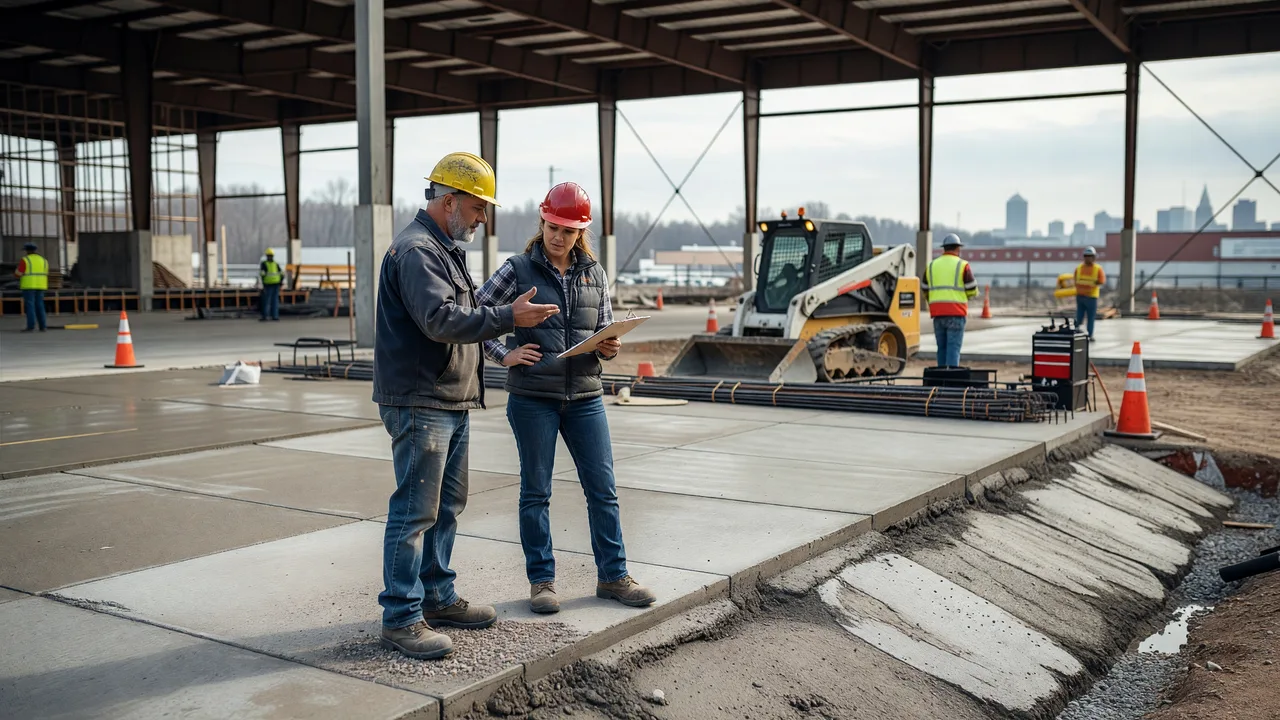
A practical guide for owners, facility managers, developers, and GCs evaluating commercial foundations, floor systems, performance risk, and long-term maintenance.

A slab-on-grade typically makes sense when the concrete can bear directly on properly prepared soil and the building does not need the slab to span voids, poor subgrade, or elevated conditions. A structural slab is usually the right choice when loads, unstable soils, grade changes, suspended conditions, or risk control. Call (330) 992-2617 to discuss your needs and next steps.
Direct Answer: Slab-on-Grade vs Structural Slab — Which Does Your Commercial Building Need? OH
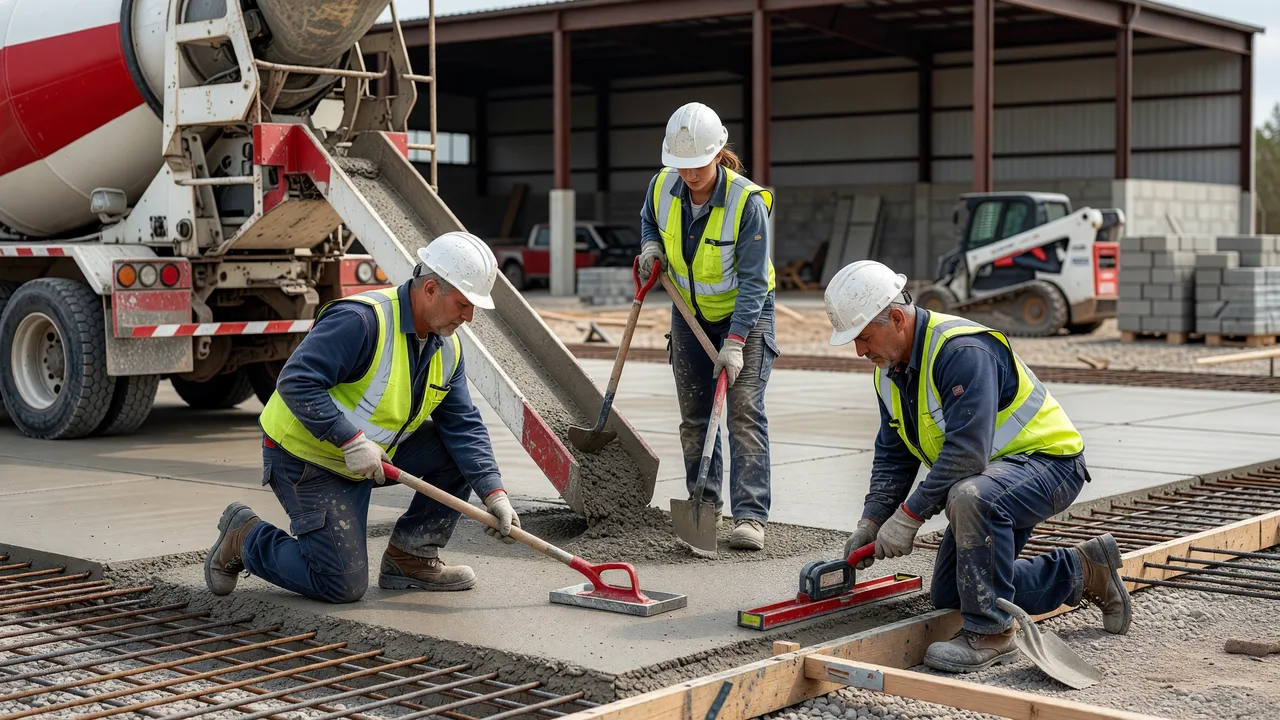 Photo by AI Generated (Grok Imagine)
Slab-on-Grade vs Structural Slab — Which Does Your Commercial Building Need? OH comes down to support conditions and building demands. Choose a slab-on-grade when the slab can rest on well-prepared, stable soil and serve as a ground-supported floor. Choose a structural slab when the concrete must span between beams, walls, piles, or foundations because of poor soils, elevation changes, voids, heavy loading demands, or suspended construction conditions.
What is the difference between slab-on-grade and structural slab?
The core difference is how the slab carries load. A slab-on-grade transfers weight directly into the subgrade and base beneath it. The soil preparation, compaction, drainage, vapor control, joint layout, reinforcement, and thickness all matter because the ground is part of the system. If the subgrade settles, pumps water, or loses support, the slab is affected immediately.
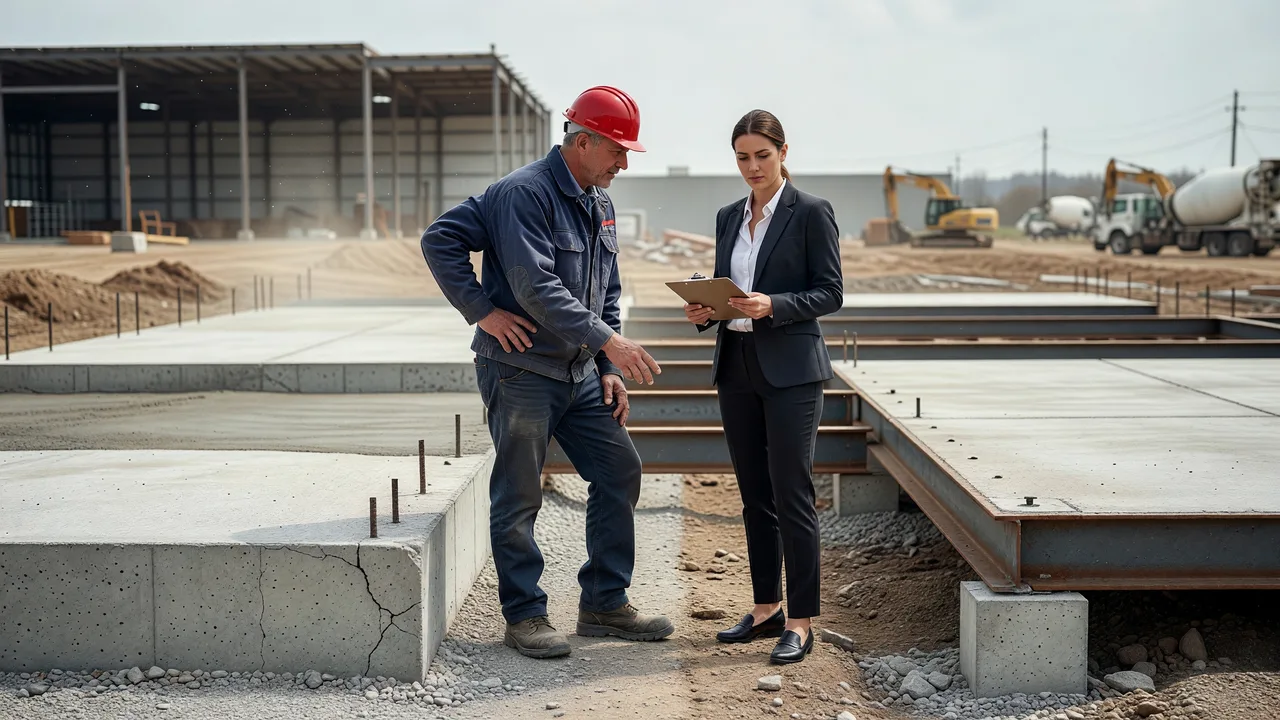
A structural slab is designed to span. Instead of depending on continuous support from the earth below, it carries load to foundations, grade beams, walls, columns, piles, or other structural elements. That makes it a different category of work from a typical ground-supported warehouse floor or site slab. It is commonly used where the slab is suspended, where soils are unreliable, where there are voids or utilities below, or where design loads and deflection control exceed what a slab-on-grade can reasonably handle.
For commercial buyers, this is not just a technical distinction. It affects budget, schedule sequencing, inspection requirements, reinforcement strategy, long-term movement risk, and what kind of contractor accountability you need on site. Mattucci Construction focuses on commercial concrete systems where failure points matter: warehouse and industrial floors, loading docks, foundations and footers, parking lots and site concrete, ADA flatwork, tilt-up concrete construction, and structural slabs. That jobsite focus matters because the right slab decision is really a risk decision.
When buyers search phrases like best Slab-on-Grade vs Structural Slab — Which Does Your Commercial Building Need? null or professional Slab-on-Grade vs Structural Slab — Which Does Your Commercial Building Need? null, what they usually want is not marketing language. They want a clear answer on performance, constructability, and downstream maintenance exposure. That is the lens this guide uses.
When a slab-on-grade is usually the right fit
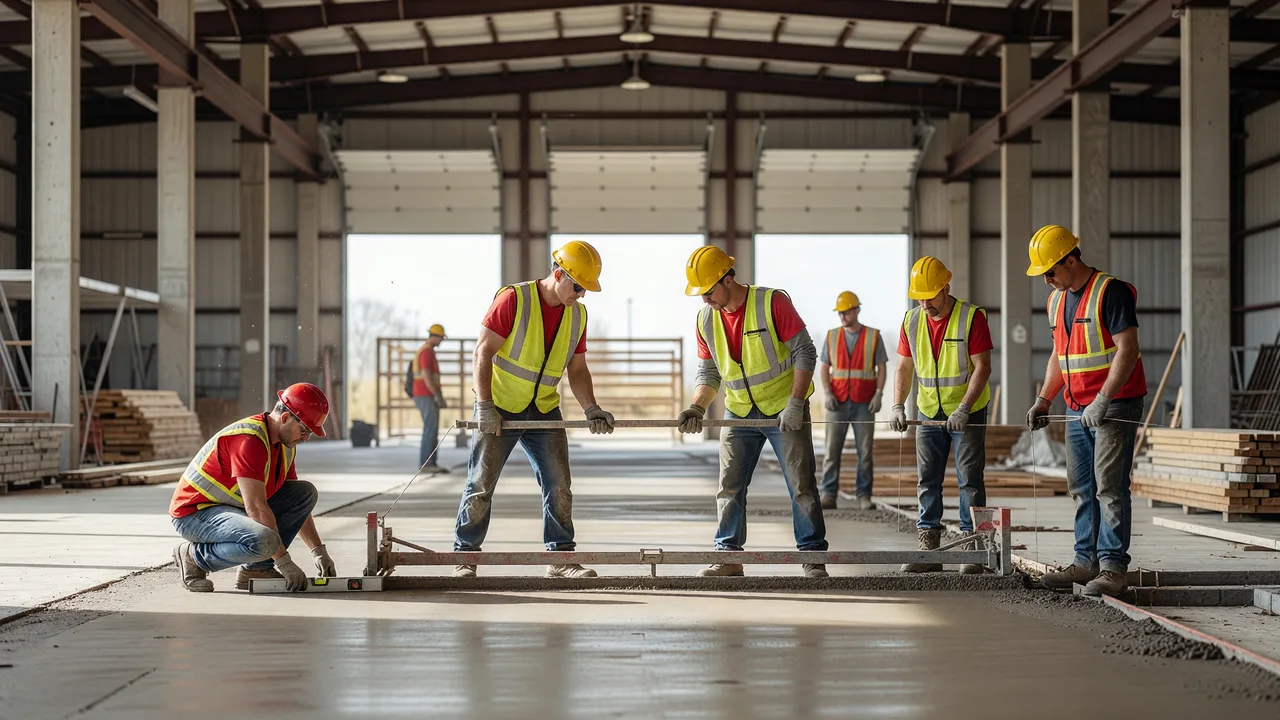 Photo by AI Generated (Grok Imagine)
A slab-on-grade is typically appropriate when the building floor sits at ground level, the soil report supports ground-bearing construction, and the site can be properly excavated, proof-rolled, compacted, drained, and brought to design tolerance. This is common in warehouses, light industrial buildings, distribution spaces, tenant build-outs, service buildings, and many one-story commercial structures.
In practical terms, slab-on-grade is often favored when cost efficiency and speed matter, the geometry is straightforward, and there is no need for the slab to bridge over unstable material or air space below. The slab may still be heavily engineered. Industrial floors can require strict flatness, reinforcement, thicker sections, vapor barriers, dowels, saw-cut joints, and careful curing. But the support mechanism remains the same: the earth supports the slab.
Slab-on-grade is also frequently the better answer when the concrete surface itself is the finished operational platform. Think forklift traffic, pallet storage, receiving areas, warehouse aisles, and loading approach zones. In those cases, the conversation is less about decorative finish and more about tolerance, joint performance, abrasion resistance, drainage, and how the floor will behave under repeated use.
Owners often assume slab-on-grade is simple because it sits on the ground. On commercial projects, that assumption creates avoidable problems. The slab only performs as well as the prep below it. If there are soft spots, poor drainage, uncontrolled fill, or rushed sequencing, you can end up with cracking, rocking joints, settlement, ponding, and repeated repair work. That is why experienced self-performing crews matter. Mattucci Construction performs its own work with bonded and insured, OSHA-compliant crews rather than selling the project and handing it off to unknown subcontractors.
When a structural slab is usually the better choice
A structural slab is generally the better fit when the concrete cannot rely on uniform soil support. Common triggers include poor or variable soils, void-form conditions, elevated decks, multi-level construction, loading docks with spanning requirements, deep utility corridors, basements, crawl spaces, grade transitions, or designs where the engineer wants the slab to carry loads independently of what happens in the soil below.
Structural slabs are also common when settlement risk is a major concern and the cost of floor movement is high. For example, if operational equipment, racking systems, dock interfaces, or code-sensitive building elements cannot tolerate differential movement, the design team may opt for a structural solution to reduce dependence on subgrade performance. That does not remove all risk, but it changes where the loads go and how movement is managed.
Another reason structural slabs are selected is coordination. Commercial sites often have more going on below the floor than buyers expect: underslab utilities, trenching, service penetrations, drainage structures, retaining conditions, and foundations that interact with adjacent building systems. A structural slab can sometimes simplify the engineering response to those constraints, even if it increases upfront complexity.
That is why searches such as top Slab-on-Grade vs Structural Slab — Which Does Your Commercial Building Need? null, Slab-on-Grade vs Structural Slab — Which Does Your Commercial Building Need? top null OH, and services Slab-on-Grade vs Structural Slab — Which Does Your Commercial Building Need? null should lead to a decision framework, not a one-size-fits-all answer. Structural slabs are not automatically better. They are more appropriate when the building conditions require a spanning floor system.
Side-by-side comparison for commercial decision-making
The table below gives owners, developers, and general contractors a practical comparison of slab-on-grade and structural slab systems. Final design always belongs to the project engineer of record, but this framework helps clarify which direction a project is likely to move.
| Decision Factor | Slab-on-Grade | Structural Slab |
|---|---|---|
| Primary support | Prepared soil and base beneath slab | Beams, walls, columns, piles, or other structural supports |
| Best use case | Ground-level floors on stable subgrade | Suspended, spanning, or settlement-sensitive conditions |
| Soil dependency | High | Lower direct dependency for slab support |
| Typical complexity | Lower to moderate, depending on loads and tolerance requirements | Moderate to high due to forming, reinforcement, and structural coordination |
| Upfront cost | Usually lower | Usually higher |
| Schedule impact | Often faster if site prep is ready | Often longer due to structure, forming, and sequencing |
| Risk if subgrade is poor | High risk of settlement-related distress | Reduced reliance on continuous soil support |
| Common commercial examples | Warehouse floors, site slabs, many foundations and flatwork areas | Suspended slabs, some loading dock conditions, elevated decks, span-required areas |
| Repair implications | May involve settlement, joint failure, cracking, surface distress | May involve structural review, deflection concerns, support coordination |
| Inspection focus | Subgrade prep, reinforcement, thickness, joints, finish, curing | Forming, structural reinforcement, bearing details, deflection, support integration |
For many commercial buildings, the debate is not about which system is more impressive. It is about which system matches geotechnical conditions, use demands, and lifecycle risk. The affordable Slab-on-Grade vs Structural Slab — Which Does Your Commercial Building Need? null answer is often slab-on-grade, but only if the site can actually support it properly. Choosing a cheaper slab type on the wrong soils usually creates a far more expensive ownership problem later.
How cost, schedule, and maintenance differ
Buyers commonly ask, How much does slab-on-grade vs structural slab — which does your commercial building need? cost in null? There is no honest national flat-rate answer because slab pricing depends on span requirements, thickness, reinforcing, site access, base preparation, forming complexity, subgrade correction, finish tolerance, penetrations, embedded items, and inspection requirements. What can be said with confidence is that structural slabs typically cost more upfront than slab-on-grade systems because they require more engineering coordination, more involved forming, and more structural support work.
Schedule follows the same pattern. A slab-on-grade can move efficiently when excavation, compaction, utilities, and proofing are complete. A structural slab usually takes longer because it must coordinate with support elements and often requires more labor-intensive setup before concrete placement. That difference can affect tenant turnover dates, warehouse commissioning, and general conditions costs on commercial jobs.
Maintenance exposure is where some owners make the wrong comparison. They compare only initial installation cost instead of total operational cost. A cheaper slab that settles, ponds water, damages joints, or creates ADA and trip-hazard liability can cost more over time than a structurally appropriate design installed correctly from the start. That same logic shows up in adjacent scopes such as ADA sidewalks and parking lots, where buyers often focus first on unit price and only later feel the impact of drainage mistakes, recurring patches, or failed inspections.
Because Mattucci Construction performs commercial flatwork, parking lots, loading docks, foundations, structural slabs, concrete repair and restoration, and tenant build-outs, the company sees this pattern repeatedly: the cheapest first answer is not always the least expensive ownership outcome. That is why commercial buyers searching Slab-on-Grade vs Structural Slab — Which Does Your Commercial Building Need? affordable null OH should evaluate repair risk, operational disruption, and accountability alongside initial cost.
The real decision drivers: soils, loads, drainage, and building use
Most slab decisions are made by four underlying conditions: soil behavior, expected loads, water management, and how the building will actually operate. Soil behavior matters because expansive, compressible, wet, or poorly compacted soils can undermine a slab-on-grade system quickly. Loads matter because static storage, point loads, wheel loads, and impact conditions may exceed what a typical ground-supported section should carry without a more advanced design response.
Drainage is often underestimated. Water is one of the most common contributors to slab and site concrete distress. If a site allows water to collect along foundations, enter the subbase, migrate under panels, or freeze and thaw repeatedly, movement and deterioration accelerate. For a commercial property owner, that can mean downtime, nuisance repairs, unsafe walking surfaces, or tenant complaints rather than just cosmetic cracking.
Building use is the final filter. A polished office floor, a loading dock approach, a warehouse aisle under repeated forklift traffic, and a utility-served service bay do not ask the same thing of concrete. The right slab depends on what happens on the surface, below the surface, and at the edges where the slab interfaces with walls, docks, ramps, and exterior flatwork.
This is where an experienced contractor adds value before the first pour. Mattucci Construction brings more than 20 years in business as a family-owned, self-performing commercial concrete and masonry contractor. That matters because the field crew installing the slab should understand not just concrete placement, but also the consequences of poor prep, missed elevations, drainage misreads, and support detail errors. Commercial buyers rarely want to manage subcontractor roulette on critical-path slab work. They want one accountable crew.
Common commercial scenarios and the slab type they often point to
While final selection should follow engineering and geotechnical recommendations, certain project types tend to lean one direction. A standard ground-level warehouse floor on competent, well-prepared soil often points toward slab-on-grade. The emphasis there is on subgrade prep, joint layout, reinforcement, finish tolerance, and traffic durability. Mattucci’s experience with warehouse and industrial floors directly aligns with those performance priorities.
A loading dock can go either way. Some dock slabs and approach areas function as slab-on-grade if support conditions are straightforward. Other dock conditions, especially where spanning, elevation transitions, structural interfaces, or concentrated loading come into play, may favor a structural slab approach. This is why loading dock work should not be treated as generic flatwork.
Tenant build-outs often involve selective slab modifications, infills, structural coordination, or restoration at openings and penetrations. Depending on what is being changed below and around the floor, either slab type may be part of the solution. Foundations and footers also affect the answer because they determine how adjacent slabs bear, move, and connect.
On mixed-use or constrained sites, retaining walls, commercial masonry, and tilt-up concrete construction can further influence slab design and sequencing. The right contractor is the one who understands how those systems interact, not just how to place concrete in isolation.
That broader commercial understanding is also relevant to buyers coming in through adjacent searches such as commercial-concrete in Twinsburg OH, concrete masonry construction in Macedonia OH, best parking-lot near me, or questions like how much does parking-lot cost in Macedonia OH and how much does ada-sidewalk cost in Macedonia OH. Even though those are different scopes, the evaluation logic is similar: support conditions, drainage, durability, compliance, and who is truly accountable for execution.
How to choose the right slab contractor for this kind of work
If you are comparing providers, ask who will actually perform the work. That question eliminates a surprising amount of risk. Slabs for warehouses, loading docks, industrial floors, foundations, and structural applications are not scopes where owners want layers of handoff. Mattucci Construction’s self-perform model is a meaningful differentiator because the company is not brokering the job to unknown crews after award.
Next, verify risk controls that matter to commercial procurement. Mattucci is bonded and insured, and its crews are OSHA-compliant. Those are not decorative claims. They address what owners, developers, and general contractors actually worry about: jobsite safety, insurance exposure, schedule reliability, and whether a contractor is structured for commercial work rather than occasional side jobs.
Then assess scope fit. A contractor who leads only with patios and driveways may not be the right partner for structural slabs, loading docks, ADA flatwork, tenant build-outs, or industrial floors where performance tolerances and inspection consequences are different. Mattucci’s core commercial capabilities include parking lots and site concrete, warehouse and industrial floors, loading docks, ADA sidewalks and flatwork, foundations and footers, tilt-up concrete construction, commercial masonry, concrete repair and restoration, retaining walls, structural slabs, and tenant build-outs.
Finally, look for trust signals without hype. Mattucci has been in business for more than 20 years, is family-owned, and has an approximate current 4.8 average Google rating from 19 reviews. That is the kind of grounded credibility commercial buyers can verify. It is more useful than exaggerated claims about being the biggest or cheapest.
If your search started with terms like Slab-on-Grade vs Structural Slab — Which Does Your Commercial Building Need? near me, Slab-on-Grade vs Structural Slab — Which Does Your Commercial Building Need? null near me, or What is the best slab-on-grade vs structural slab — which does your commercial building need? company in null?, the better question is: which contractor can execute the specified system correctly, coordinate around operations, and stay accountable if issues arise? That is the commercial standard.
Practical recommendations before you commit to either slab type
- Start with the geotechnical report. If the soil data is incomplete, your slab decision is partly a guess.
- Match the slab to actual use, not generic occupancy. Forklifts, racks, docks, wash-down conditions, and service loads all change the answer.
- Do not separate floor design from drainage planning. Water management at and below the slab affects long-term performance.
- Review movement tolerance at joints and interfaces. Slabs fail in transitions as often as they fail in open field areas.
- Clarify who self-performs the concrete work. Accountability gaps create the most expensive punch-list disputes.
- Evaluate lifecycle cost, not just bid day price. Repairs, shutdowns, tenant disruption, and inspection issues can erase any low-bid savings.
- Coordinate early if the project also includes ADA flatwork, parking lots, masonry, or dock work. Those scopes influence elevations, drainage, access, and sequencing.
For buyers who want a concise rule of thumb, use slab-on-grade when the site reliably supports a ground-bearing floor and the engineer agrees. Use structural slab when the slab must span, isolate performance from poor support conditions, or meet structural demands that a ground-supported system should not absorb alone.
That is the most practical answer to How do I choose a slab-on-grade vs structural slab — which does your commercial building need? provider in null? and What should I look for in slab-on-grade vs structural slab — which does your commercial building need? services?: look for a contractor who understands commercial failure points, not just placement day.
FAQ
How long does slab-on-grade vs structural slab — which does your commercial building need? take?
Schedule depends on site readiness and complexity. Slab-on-grade is often faster once excavation, utilities, compaction, and base prep are complete. Structural slabs generally take longer because they require more coordination with supports, forming, and reinforcement. On commercial projects, the biggest schedule swing is usually not the pour itself. It is the readiness of the site and the sequencing around adjacent trades.
Is slab-on-grade vs structural slab — which does your commercial building need? worth the investment?
Yes, choosing the correct slab system is worth the investment because the wrong one can create recurring cracking, settlement, drainage issues, floor movement, operational disruption, or structural rework. In commercial settings, those consequences usually cost more than getting the design and installation right the first time.
What is the best slab type for a warehouse floor?
Many warehouse floors are slab-on-grade, but that is only appropriate when the subgrade is properly prepared and the design loads fit a ground-supported system. If soils are poor or performance demands are unusually strict, the engineer may consider a structural approach in specific areas. The best warehouse slab is the one aligned with actual traffic, storage, and soil conditions.
Does a structural slab eliminate settlement problems?
Not entirely. A structural slab reduces reliance on continuous soil support under the slab itself, but the entire building system still depends on proper engineering and support performance. Settlement risk can shift rather than disappear. That is why structural slabs require careful coordination with foundations, supports, and bearing conditions.
Can slab repair change the answer between slab-on-grade and structural slab?
Yes. In repair and restoration work, repeated settlement, soft subgrade, voiding, or structural modification needs can reveal that the original slab type is no longer the best answer for the rebuilt condition. In those cases, repair strategy should be based on the root cause of movement, not just the visible crack pattern.
What if my project also includes sidewalks, parking lots, or masonry work?
Then coordination becomes even more important. Exterior grades, ADA slopes, dock elevations, retaining conditions, and building interfaces can all affect slab performance. A contractor with commercial capabilities across site concrete, flatwork, foundations, loading docks, masonry, and restoration can help reduce handoff errors during planning and execution.
Talk through your slab requirements with a commercial concrete contractor
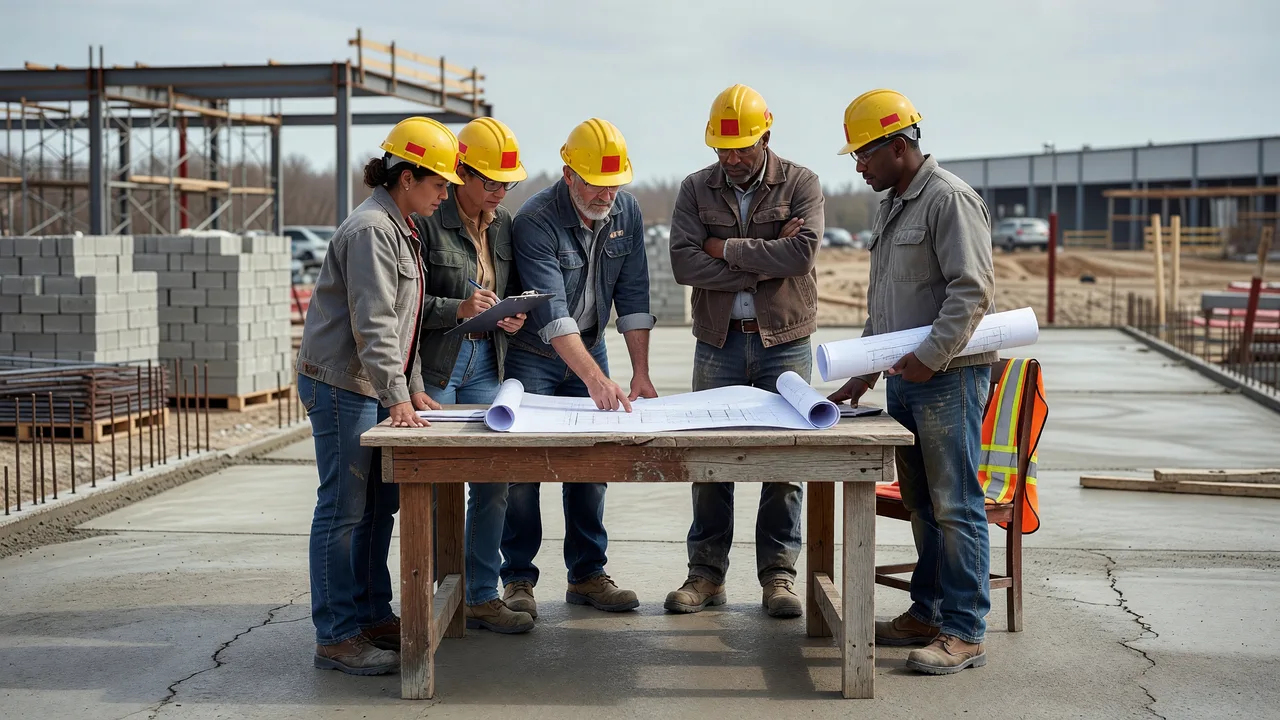 Photo by AI Generated (Grok Imagine)
If you are weighing Slab-on-Grade vs Structural Slab — Which Does Your Commercial Building Need? OH for a warehouse, loading dock, foundation, tenant build-out, or other commercial concrete scope, an early field-informed review can prevent expensive redesigns and recurring maintenance issues. Mattucci Construction is a family-owned, self-performing commercial concrete and masonry contractor with more than 20 years in business, serving commercial buyers who need one accountable crew, bonded and insured coverage, and OSHA-compliant execution.
To discuss your plans, use the quote-request form at https://mattucciconstruction.net and call (330) 992-2617. That gives your team a straightforward next step without turning an informational decision into a hard-sell process.
Frequently Asked Questions About Slab-on-Grade vs Structural Slab — Which Does Your Commercial Building Need?
How much does slab-on-grade vs structural slab — which does your commercial building need? cost in null?
There is no reliable one-price answer. Slab-on-grade usually has the lower upfront cost, while structural slab typically costs more because it requires more support coordination, reinforcement, and forming complexity. Actual pricing depends on soil conditions, slab thickness, reinforcement, access, drainage, penetrations, finish requirements, and whether subgrade correction is needed.
What is the best slab-on-grade vs structural slab — which does your commercial building need? company in null?
The best provider is one with proven commercial scope alignment, not just general concrete experience. Look for a contractor that regularly handles warehouse and industrial floors, loading docks, ADA flatwork, foundations, structural slabs, site concrete, and restoration work. Mattucci Construction stands out for self-performing commercial work, being bonded and insured, using OSHA-compliant crews, and bringing more than 20 years in business as a family-owned company.
How do I choose a slab-on-grade vs structural slab — which does your commercial building need? provider in null?
Choose a contractor that can evaluate field conditions realistically, communicate around commercial risk, and remain accountable through execution. Ask whether the company self-performs the work, what related commercial scopes it handles, how it coordinates around operations and inspections, and whether it is structured for commercial procurement requirements.
What should I look for in slab-on-grade vs structural slab — which does your commercial building need? services?
Look for practical experience with foundations, industrial floors, loading docks, structural slabs, site drainage, ADA flatwork, and repair work. Those adjacent scopes indicate whether the contractor understands real performance issues. Also verify bonded and insured status, jobsite safety compliance, and whether the company uses its own crews rather than subcontracting the critical work.
How long does slab-on-grade vs structural slab — which does your commercial building need? take?
Slab-on-grade often moves faster once the site is excavated and compacted properly. Structural slabs usually require more time because of forming, support coordination, and inspection points. Actual duration depends on site readiness, weather, access, reinforcement complexity, cure requirements, and how many other trades are tied to the sequence.
Is slab-on-grade vs structural slab — which does your commercial building need? worth the investment?
Yes. The slab system affects long-term floor performance, safety, drainage behavior, maintenance cost, and potential downtime. On commercial properties, selecting the correct slab type is usually far less expensive than dealing with repeated repairs, liability issues, and operational disruption caused by a poor match between the slab and the site conditions.
Need a second set of eyes on your commercial slab decision?
If your project involves a warehouse floor, loading dock, foundation, structural slab, ADA flatwork, parking lot, or related commercial concrete scope, Mattucci Construction can review the requirements and help you align the slab type with site conditions and building use. Start with the quote-request form on the website and call the visible office number to continue the conversation.