
Ready-Mix vs On-Site Batched Concrete for Commercial Projects — Pros and Cons OH
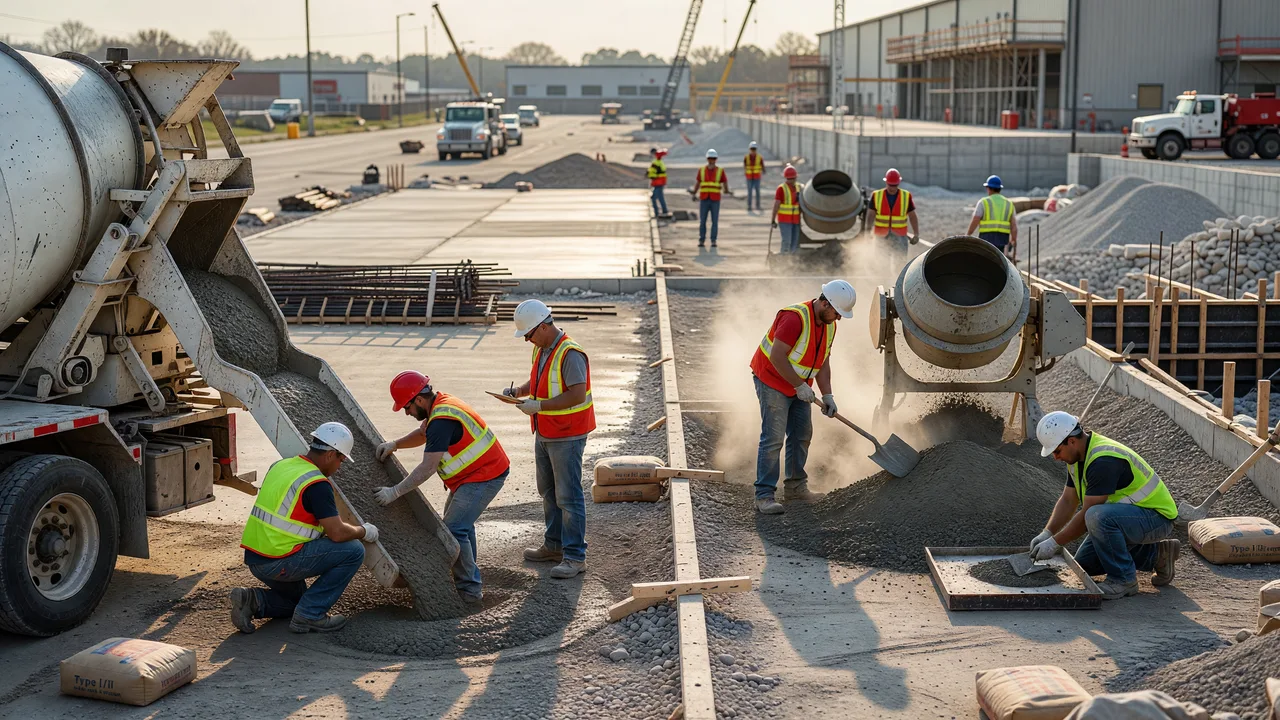
A practical guide for commercial owners, facility managers, developers, and GCs evaluating concrete production methods for slabs, parking lots, loading docks, foundations, and other high-use surfaces.
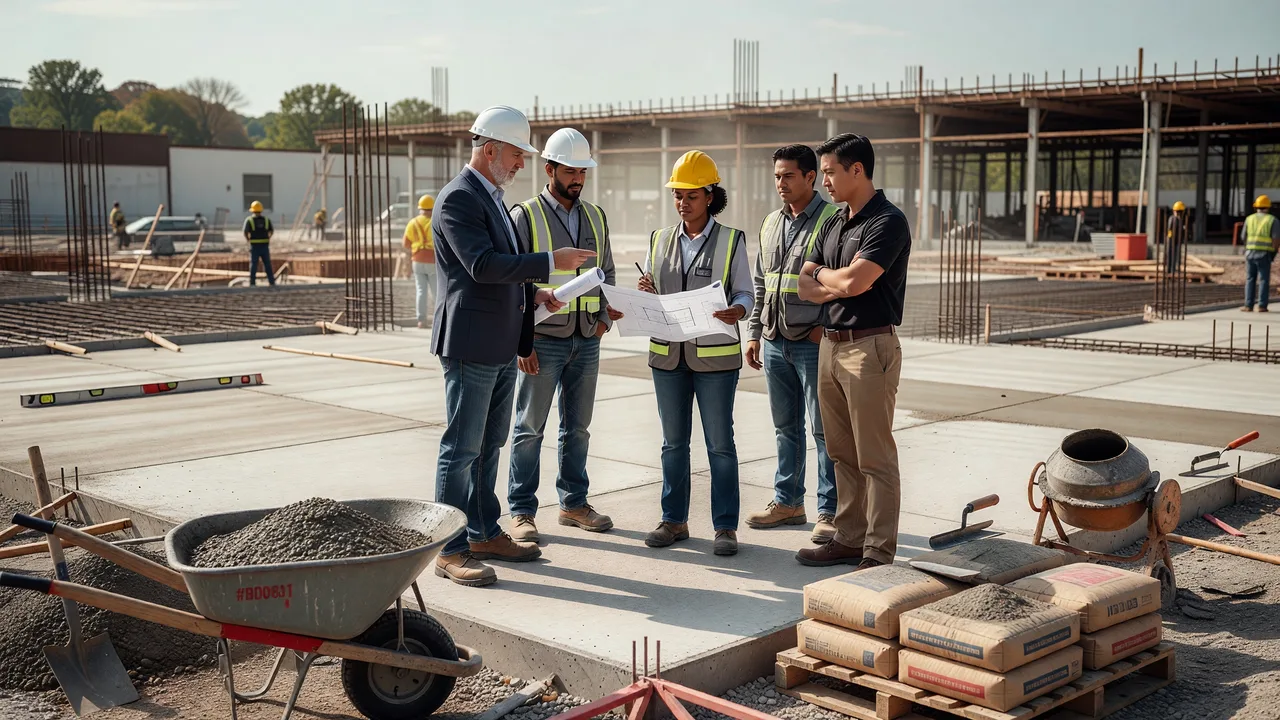
For most commercial projects, ready-mix concrete delivers better batch consistency, faster placement, and simpler quality control, while on-site batched concrete can offer scheduling flexibility and high-volume efficiency on large or remote jobs. The right choice depends on access, pour size, production control, weather, and how much risk your schedule, finish. Call (330) 992-2617 to discuss your needs and next steps.
Direct answer: which is better for a commercial project?
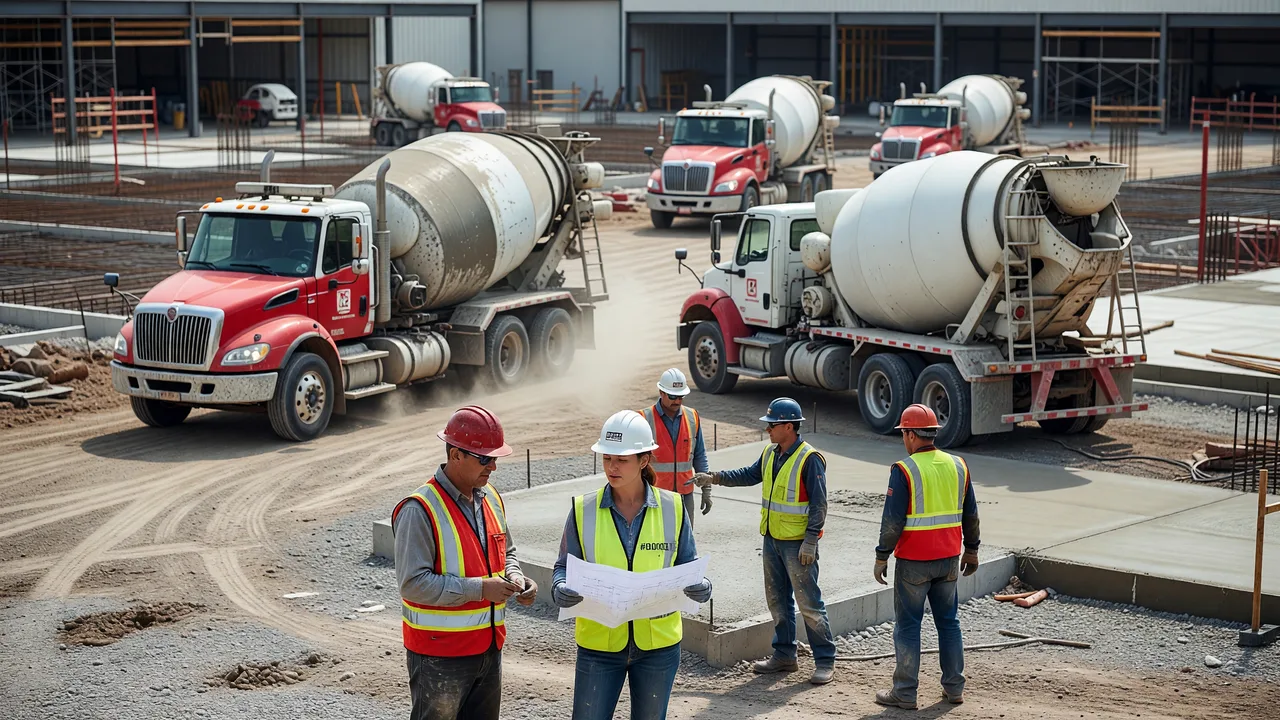 Photo by AI Generated (Grok Imagine)
Ready-Mix vs On-Site Batched Concrete for Commercial Projects — Pros and Cons OH comes down to control versus logistics. Ready-mix is usually the better choice when a project needs reliable mix consistency, predictable quality documentation, and fast placement. On-site batched concrete becomes more attractive when haul time is a problem, pour volumes are very large, or the site needs continuous production that is not dependent on truck rotation from an off-site plant.
For commercial buyers, the decision should not be framed as which method is universally superior. It should be framed as which method reduces risk on this slab, this parking lot, this loading dock, or this foundation under actual site conditions. On a high-consequence surface, the real cost is rarely just the material. The real cost is downtime, rejected work, traffic disruption, finish problems, drainage failures, cracking, or having to bring crews back after tenants or operations are already in place.
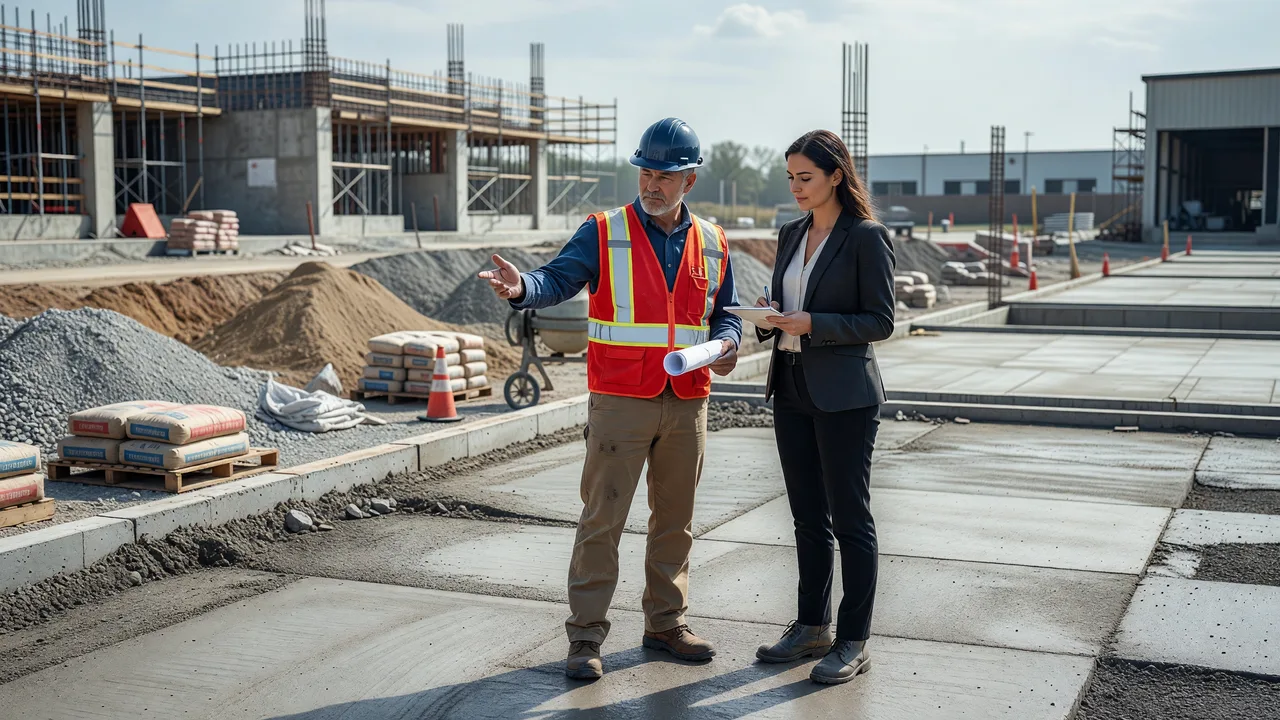
What ready-mix and on-site batched concrete actually mean
Ready-mix concrete is produced at a central plant, loaded into mixer trucks, and delivered to the site in a controlled, specified mix. The contractor places, consolidates, finishes, joints, and cures the concrete once it arrives. This is the standard approach on many commercial jobs because plant batching allows repeatable proportions and formalized dispatch.
On-site batched concrete is proportioned and mixed at or immediately adjacent to the jobsite using mobile batching equipment or a temporary batch setup. Instead of relying entirely on repeated truck deliveries from a central producer, the operation creates concrete on demand closer to the point of placement.
The distinction matters because commercial concrete is not just “mud in a hole.” A warehouse floor, structural slab, ADA sidewalk, loading area, or site pavement can have strict requirements for slump, air content, strength development, finishability, timing between loads, joint spacing, subgrade readiness, and curing sequence. When buyers search for the best Ready-Mix vs On-Site Batched Concrete for Commercial Projects — Pros and Cons null, what they usually want is not a generic definition. They want to know which method is more likely to hold up under traffic, weather exposure, and inspection.
Ready-mix concrete: the main advantages
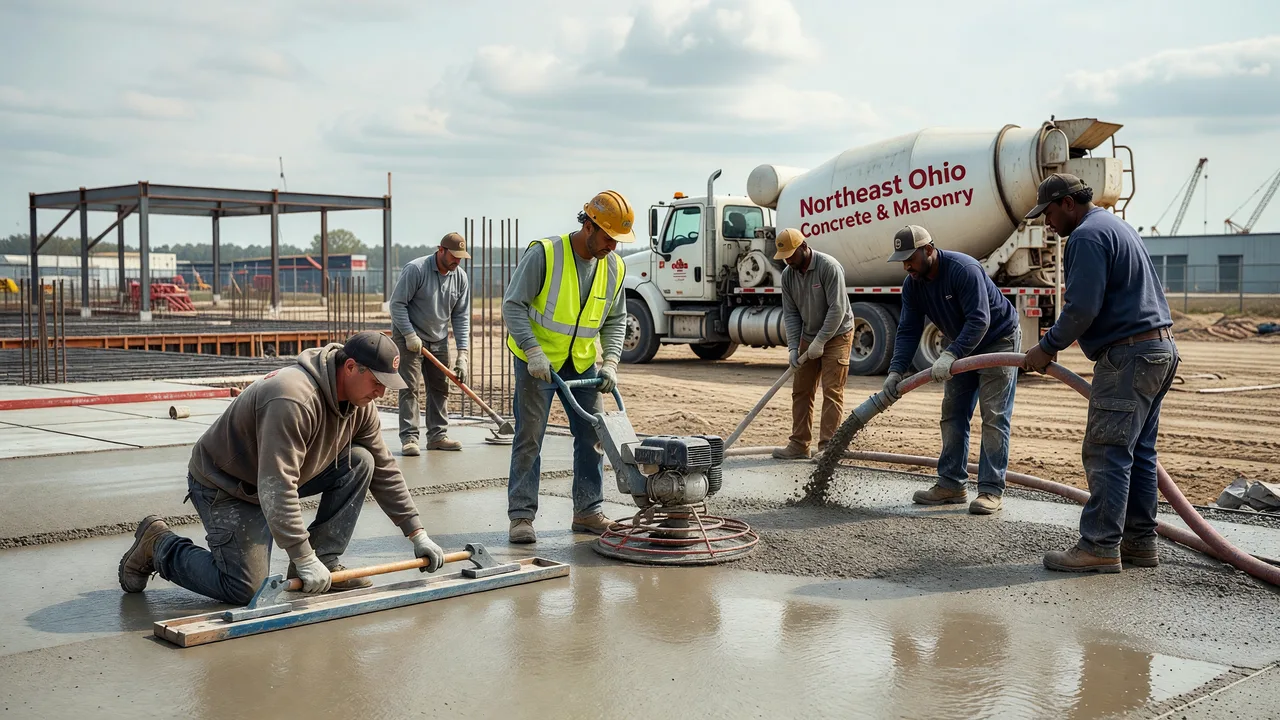 Photo by AI Generated (Grok Imagine)
Ready-mix is often the default recommendation for commercial work because it simplifies several variables at once. That does not mean it is automatically right for every project, but it does mean the process is familiar to engineers, inspectors, suppliers, and field crews.
1. Better batch-to-batch consistency
Commercial owners care about performance, not just placement day. Central-plant batching typically provides tighter control over cement, aggregates, admixtures, water, and air entrainment. That consistency matters on warehouse floors, loading docks, structural slabs, and ADA flatwork where finish tolerances and durability are not optional. Consistent concrete reduces the likelihood of weak spots, variable set times, and unpredictable finishing windows across a large pour.
2. Faster mobilization for many standard commercial jobs
For a parking lot repair phase, foundation placement, dock apron, or building slab, ready-mix often eliminates the need to mobilize on-site production equipment. If the site has good truck access and the producer can maintain the delivery sequence, the contractor can focus on subgrade verification, reinforcement, placement, finishing, jointing, and curing rather than building temporary batch infrastructure.
3. Cleaner quality documentation trail
Commercial procurement often requires a clear paper trail. Ready-mix delivery tickets, approved mix designs, and standard testing procedures can support project records and inspection workflows. That matters to general contractors, developers, and facility managers who need documentation for closeout, dispute avoidance, and accountability.
4. Less jobsite congestion from batch equipment
On many active commercial properties, space is limited. A facility may still be handling deliveries, tenants, customers, or employee traffic. Central delivery can be easier to stage than operating a temporary on-site batching setup, especially where laydown area is constrained or the property cannot tolerate extra equipment movement.
5. Lower operational complexity for moderate-sized pours
A contractor managing a standard commercial slab or pavement section can often coordinate ready-mix more efficiently than a mobile batch operation. That becomes especially true when the site needs clean phasing, predictable access, and minimal interference with other trades.
Ready-mix concrete: the main drawbacks
Ready-mix solves some problems, but it introduces others. Buyers evaluating Ready-Mix vs On-Site Batched Concrete for Commercial Projects — Pros and Cons best null OH should look closely at delivery risk, not just material quality.
1. Delivery timing can make or break the pour
Concrete starts its clock once batching and loading begin. Traffic, dispatch delays, long haul times, weather, and plant demand can compress the workable placement window. If trucks arrive too slowly, crews may fight cold joints, inconsistent finishing conditions, and uneven set times across the slab.
2. Less flexibility once production is underway
Ready-mix works well when quantities, sequencing, and access are stable. It works less well when the site is changing rapidly, production rates need adjustment on the fly, or a large placement must be extended without interruption beyond the original dispatch assumptions.
3. Access limitations can reduce efficiency
Some commercial sites are difficult for truck movement. Tight access, restricted hours, limited staging, internal traffic circulation, or active operations can slow unloading and create a ripple effect through the delivery schedule. If truck wait time increases, cost and quality risk can rise together.
4. Potential waste on variable-quantity work
When exact quantities are uncertain, ready-mix can lead to short-load problems or leftover material if conditions change. That issue is manageable with planning, but it matters on repair and phased work where actual field conditions may differ from takeoff assumptions.
On-site batched concrete: the main advantages
On-site batching is not a niche method reserved only for unusual work. In the right conditions, it can be a strategic advantage. Buyers searching for the top Ready-Mix vs On-Site Batched Concrete for Commercial Projects — Pros and Cons null often discover that on-site batching becomes compelling when placement continuity is more valuable than central-plant simplicity.
1. Greater control over production timing at the site
When concrete is produced at the jobsite, the operation is less exposed to plant dispatch disruptions and road delays. That can help on large placements where a stop-and-start truck sequence would create quality problems. Continuous production can be useful for expansive slab placements or projects where maintaining a steady supply is critical to the finish and jointing plan.
2. Useful where haul distance or access creates risk
If a project location, internal site route, or restricted access makes dependable truck cycling difficult, on-site batching can reduce transit-related variability. The benefit is not only fresher concrete. It is also a more controllable rhythm for placement crews.
3. Better adaptability on very large or long-duration pours
Some commercial placements simply consume enough volume that building the concrete at the site makes logistical sense. Rather than coordinating many truck arrivals over an extended period, the team can tune production to the actual pace of placement. That can be particularly valuable where a monolithic pour sequence matters.
4. Reduced dependency on outside dispatch windows
Ready-mix producers serve multiple customers. During peak demand periods, your project competes for plant capacity and truck availability. An on-site batch setup can reduce that dependency if the project size justifies the mobilization and management.
On-site batched concrete: the main drawbacks
On-site batching offers flexibility, but it raises the bar on field management. When owners ask for the Ready-Mix vs On-Site Batched Concrete for Commercial Projects — Pros and Cons top null OH, this is where the hidden risk often sits.
1. More setup complexity
Producing concrete on-site requires space, equipment, materials handling, calibration, water management, and disciplined process control. That is not trivial on an occupied commercial property. If the site is already tight, the batch setup can compete with haul routes, laydown areas, and safety planning.
2. Quality control is only as strong as the operation
A well-run on-site batch process can perform effectively. A poorly run one can create inconsistency from load to load. Commercial buyers should be realistic here: more variables at the site mean more need for experienced oversight, testing coordination, and disciplined execution.
3. Added housekeeping and environmental management
On-site production can create more dust, stockpile management, washout planning, and equipment traffic. For properties that need to stay clean and operational, that additional burden can matter almost as much as the mix itself.
4. Mobilization may not pencil out for smaller projects
If the pour size is moderate, site access is workable, and truck deliveries are reliable, on-site batching may add complexity without creating meaningful value. Buyers looking for an affordable Ready-Mix vs On-Site Batched Concrete for Commercial Projects — Pros and Cons null answer should remember that the cheaper material pathway is not always the lower total installed cost once equipment, setup, supervision, and site disruption are included.
Side-by-side comparison for commercial buyers
The table below summarizes the commercial decision factors that matter most on parking lots, industrial floors, loading docks, structural slabs, and foundations.
| Factor | Ready-Mix | On-Site Batched |
|---|---|---|
| Batch consistency | Typically strong with central plant controls | Depends heavily on field setup and management discipline |
| Scheduling flexibility | Dependent on producer dispatch and truck rotation | Higher site-level control once setup is established |
| Mobilization complexity | Lower for many standard jobs | Higher due to equipment, setup, and space needs |
| Best fit project size | Small to large commercial pours with good access | Large, remote, or continuity-sensitive placements |
| Site congestion | Truck traffic only | Truck traffic plus batch equipment and material handling |
| Risk from traffic delays | Higher | Lower |
| Documentation trail | Usually straightforward with tickets and plant records | Requires strong field records and controls |
| Best use cases | Parking lots, standard slabs, sidewalks, foundations, tenant work | High-volume or logistically constrained pours |
This is why the Ready-Mix vs On-Site Batched Concrete for Commercial Projects — Pros and Cons affordable null OH conversation should include schedule risk, operational disruption, and rework exposure—not just unit price.
How the choice affects real commercial failure points
For commercial stakeholders, the concrete production method matters because it changes how easily the project team can control known failure points.
Warehouse and industrial floors
Industrial slabs demand consistency. Variations in workability or set time can affect flatness, finishing windows, saw-cut timing, and surface performance under forklifts or heavy loads. Ready-mix often has the advantage when access is stable and the pour sequence is well coordinated. On extremely large placements, on-site batching may help sustain uninterrupted production if truck cycling would otherwise become the weak link.
Loading docks and aprons
Dock areas take concentrated wheel loads, impact, and frequent freeze-thaw exposure where applicable. The priority here is not novelty. It is dependable placement, proper reinforcement, clean drainage, and durable finishing. Any supply interruption that compromises consolidation or finishing can become an expensive callback.
Parking lots and site concrete
Commercial pavement and site flatwork need consistent slopes, joint planning, and traffic phasing. Whether the mix is ready-mix or on-site batched, the wrong production method can create uneven pace on the pour, which can affect finish quality and schedule. Owners comparing methods often ask the same practical question they ask on related topics such as parking lot cost or ADA sidewalk cost: what reduces long-term patching and disruption? Usually, it is the method that gives the field crew the most controllable placement conditions.
ADA sidewalks and flatwork
Accessible routes have little tolerance for sloppy execution. Slopes, cross-slopes, transitions, and edges must be built correctly the first time. Reliable mix behavior helps, but so does disciplined layout and placement. For ADA work, the best concrete supply method is the one that allows the crew to maintain finish control without rushing or fighting inconsistent loads.
Foundations and structural slabs
Foundations, footers, and structural placements put additional emphasis on sequence, vibration, access, and inspection readiness. A delayed or inconsistent supply can affect production rhythm and labor efficiency. A more controlled field supply can help in some conditions, but the documentation and consistency advantages of ready-mix are often attractive to the broader project team.
How to choose the right method for your project
If you are evaluating professional Ready-Mix vs On-Site Batched Concrete for Commercial Projects — Pros and Cons null, use a decision framework instead of relying on habit.
- Start with pour size and continuity needs. Small to moderate commercial placements often favor ready-mix. Very large, continuous placements may justify on-site batching.
- Evaluate truck access honestly. If trucks cannot enter, stage, and discharge efficiently without disrupting operations, ready-mix may lose its logistical advantage.
- Review the workable time window. Heat, cold, traffic, and long haul routes change how forgiving ready-mix delivery becomes.
- Consider property operations. Occupied sites may prefer the simpler footprint of ready-mix, while remote or isolated work areas may benefit from on-site production.
- Account for inspection and documentation needs. If the project has tight compliance requirements, be clear about how testing, records, and quality control will be managed under either method.
- Price the total installed risk. Material cost alone is incomplete. Include disruption, standby time, mobilization, waste, and the cost of a bad pour.
Commercial buyers also benefit from vetting the contractor, not just the concrete source. Mattucci Construction is positioned differently from firms that sell the work and hand it to unknown crews. The company self-performs commercial concrete and masonry work, is family-owned, has been in business 20+ years, and operates with bonded, insured, OSHA-compliant crews. For owners and GCs, that matters because the best production method still fails if no one on site is truly accountable for execution.
That accountability is especially relevant on high-use surfaces such as parking lots, warehouse floors, loading docks, ADA flatwork, foundations, footers, tilt-up concrete construction, concrete repair and restoration, retaining walls, masonry, and tenant build-outs. Buyers looking for Ready-Mix vs On-Site Batched Concrete for Commercial Projects — Pros and Cons professional null OH guidance are usually trying to avoid exactly one outcome: having to babysit another contractor after the pour goes wrong.
Cost, schedule, and value: what commercial buyers should know
There is no honest national answer that says one method always costs less. Cost depends on volume, access, production duration, weather planning, mobilization, waste tolerance, and whether the job can absorb interruptions. That is why a search for Ready-Mix vs On-Site Batched Concrete for Commercial Projects — Pros and Cons near me often really means, “Which method gives me the best installed value for my conditions?”
Ready-mix may be more economical on projects where truck delivery is efficient, quantities are well defined, and the pour can be completed inside a predictable dispatch window. On-site batching may become cost-competitive when truck cycles are long, job duration is extended, quantities are large, or continuous supply has enough value to offset setup complexity.
Schedule value matters just as much. A production method that looks cheaper on paper can become more expensive if it creates finish defects, cold joints, lost labor hours, or traffic disruption. Commercial concrete should be evaluated the way operations teams evaluate any infrastructure work: by total lifecycle risk. If a floor, dock, sidewalk, or pavement section fails early, the replacement cost includes far more than concrete.
This is also why adjacent searches about ADA sidewalk cost, parking lot cost, commercial concrete, and masonry construction all point to the same principle. The lowest initial number is not the full buying decision. The full decision is whether the work survives heavy use, passes inspection, drains correctly, and does not pull your team into avoidable callbacks.
Bottom line for owners, GCs, and facility teams
Ready-mix is generally the stronger fit for standard commercial projects that need repeatable quality, efficient placement, and straightforward quality documentation. On-site batched concrete is often the better strategic choice when the site, scale, or delivery constraints make central-plant dispatch the real risk.
The right answer is rarely ideological. It is operational. If the project is a warehouse floor, loading dock, parking lot, foundation, structural slab, or ADA route, select the method that gives the field crew stable production, the project team clean accountability, and the property the best chance of avoiding premature repairs. For buyers researching services Ready-Mix vs On-Site Batched Concrete for Commercial Projects — Pros and Cons null or Ready-Mix vs On-Site Batched Concrete for Commercial Projects — Pros and Cons services null OH, that is the standard worth using.
Frequently Asked Questions About Ready-Mix vs On-Site Batched Concrete for Commercial Projects — Pros and Cons
How much does ready-mix vs on-site batched concrete for commercial projects — pros and cons cost in null?
How much does ready-mix vs on-site batched concrete for commercial projects — pros and cons cost in null?
There is no credible flat price because commercial concrete cost depends on project size, thickness, reinforcement, access, subgrade condition, finishing requirements, phasing, and whether the site can support efficient truck movement. Ready-mix may cost less overall on standard jobs with reliable dispatch and clean access. On-site batching may become competitive on large or logistically difficult placements where continuous supply reduces delay risk. The best way to price the choice is to compare total installed cost, not just material cost per cubic yard.
What is the best ready-mix vs on-site batched concrete for commercial projects — pros and cons company in null?
What is the best ready-mix vs on-site batched concrete for commercial projects — pros and cons company in null?
The best provider is the contractor who can explain which production method fits your project and then self-perform the placement work with clear accountability. For commercial buyers, that means looking for proven experience in slabs, parking lots, loading docks, ADA flatwork, and foundations; bonded and insured operations; OSHA-compliant crews; and a documented process for schedule, safety, and quality control. Mattucci Construction stands out because it self-performs commercial concrete and masonry work rather than relying on subcontractor roulette, and it brings more than 20 years of experience as a family-owned contractor.
How do I choose a ready-mix vs on-site batched concrete for commercial projects — pros and cons provider in null?
How do I choose a ready-mix vs on-site batched concrete for commercial projects — pros and cons provider in null?
Ask five direct questions: Who is actually performing the work? How will the crew maintain production continuity during the pour? What quality records will be provided? How will the contractor manage access, traffic, and site housekeeping? And what is the contingency plan if weather or deliveries change? A strong commercial provider should answer those questions clearly and connect the concrete method to your slab, pavement, dock, or foundation conditions—not give you a generic sales pitch.
What should I look for in ready-mix vs on-site batched concrete for commercial projects — pros and cons services?
What should I look for in ready-mix vs on-site batched concrete for commercial projects — pros and cons services?
Look for method selection based on access, pour size, sequence, finish tolerances, and inspection needs. Also look for self-performed execution, safety compliance, insurance, bondability, and real commercial scope such as parking lots, industrial floors, loading docks, ADA sidewalks, foundations, and structural slabs. The contractor should be able to explain how the concrete supply method affects cracking risk, placement speed, drainage control, and the likelihood of callbacks.
How long does ready-mix vs on-site batched concrete for commercial projects — pros and cons take?
How long does ready-mix vs on-site batched concrete for commercial projects — pros and cons take?
The method does not determine project duration by itself. Total time depends on excavation, subgrade preparation, forms, reinforcement, weather, inspections, curing, jointing, and phasing around operations. Ready-mix may speed up straightforward projects because mobilization is simpler. On-site batching may improve pace on very large or difficult-access pours by reducing dependency on truck delivery cycles. The right benchmark is not just pour-day speed, but how efficiently the entire project moves from prep through cure without rework.
Is ready-mix vs on-site batched concrete for commercial projects — pros and cons worth the investment?
Is ready-mix vs on-site batched concrete for commercial projects — pros and cons worth the investment?
Yes—if the decision is made around lifecycle performance rather than first cost alone. The concrete production method can affect consistency, finish quality, schedule reliability, and the risk of future repairs. On commercial properties, a bad choice can lead to cracking, drainage failures, operational disruption, failed inspections, and repeated patching. A sound recommendation should help the concrete last longer and reduce the need for owners or facility teams to revisit the same problem year after year.
Need a practical recommendation for an upcoming commercial concrete project?
If you are weighing ready-mix against on-site batched concrete for a parking lot, warehouse floor, loading dock, ADA flatwork package, foundation, or structural slab, Mattucci Construction can review the project conditions and help determine which approach better protects schedule, finish quality, and long-term durability. As a self-performing, family-owned commercial concrete and masonry contractor with 20+ years in business, bonded and insured status, OSHA-compliant crews, and an approximate 4.8 Google rating from 19 reviews, Mattucci is built for buyers who want one accountable team on the job. Use the quote request form at https://mattucciconstruction.net or call the office to discuss your scope.