
Parking Lot Drainage Design — Why It Makes or Breaks Your Lot
Parking Lot Drainage Design in Akron — Why It Makes or Breaks Your Lot
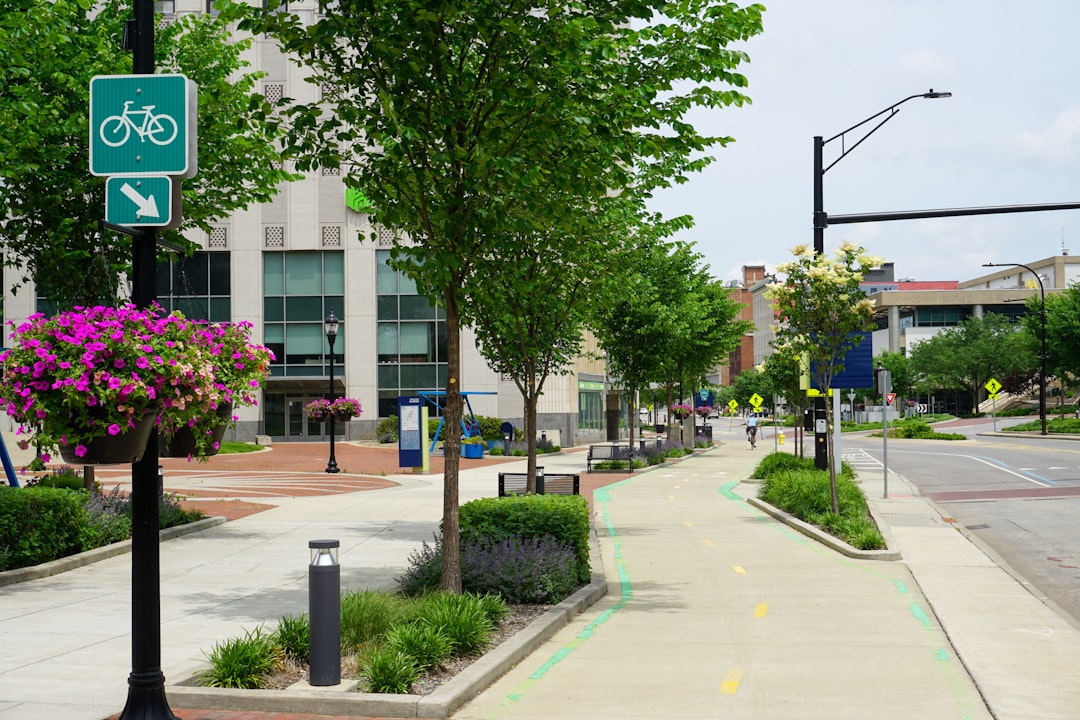
Every spring, after the last hard freeze releases its grip on Summit County, business owners across Akron discover the same expensive truth: water is the single greatest threat to their parking lots. Standing puddles, alligator cracking near catch basins, frost-heaved curbs, and crumbling asphalt edges aren’t random failures — they are almost always the result of inadequate parking lot drainage design in Akron. When water has nowhere to go, it goes everywhere it shouldn’t: under your base, into your subgrade, and through every micro-crack it can find.
At Mattucci Construction, we’ve spent decades repairing — and more importantly, preventing — drainage failures across Akron, Cuyahoga Falls, Stow, Hudson, Twinsburg, Medina, and Strongsville. This guide explains why drainage design is the most underrated investment a commercial property owner can make, and what separates a lot that lasts 25 years from one that fails in 7.
Why Drainage Is the #1 Factor in Northeast Ohio Pavement Longevity
Akron averages 37 inches of rain and 47 inches of snow annually, with roughly 50–60 freeze-thaw cycles per year — among the highest in the Midwest. Each cycle expands trapped moisture by approximately 9% in volume, exerting enough pressure to fracture concrete and asphalt from the inside out. The Federal Highway Administration estimates that pavements with poor drainage have a service life up to 50% shorter than properly drained equivalents.
Translation: a $60,000 parking lot installed without proper drainage in Akron’s climate may need full reconstruction in 8–10 years. The same lot, properly graded and drained, can easily exceed 25 years with routine maintenance. That’s not a maintenance issue — that’s a design issue, and it’s decided before the first truck of concrete arrives.
We see this firsthand at properties from Highland Square to Montrose to the industrial corridors near Ellet. The lots that survive Akron winters share one thing in common: water has somewhere to go, and it gets there fast.
AI-generated video
The Core Principles of Proper Parking Lot Drainage Design
Effective drainage isn’t a single feature — it’s a system. A well-engineered Akron parking lot incorporates several interlocking design elements:
- Minimum 1.5%–2% slope: The industry standard for positive drainage. Anything less than 1% creates ponding; anything more than 5% becomes a safety and ADA issue.
- Crown or cross-slope direction: Water must be directed away from buildings, neighboring properties, and high-traffic walking areas.
- Catch basins and trench drains: Strategically placed based on watershed analysis, not convenience. One basin per 10,000 sq ft is a common rule of thumb, but topography dictates the truth.
- Subsurface drainage: Underdrains and perforated pipe in the base course remove water from below — critical in clay-heavy soils common throughout Summit and Medina counties.
- Curb and gutter integration: Curbing channels surface flow; poorly placed curbs create dams.
- Detention/retention compliance: Akron and most surrounding municipalities require stormwater management for lots over a certain square footage. Non-compliance triggers fines and forced retrofits.
Skip any one of these elements and the system fails. Get them right, and the lot quietly does its job for decades. Learn more about our full-system approach on our services page.
The Akron-Specific Challenges: Clay Soil, Freeze-Thaw, and Lake-Effect Snow
Drainage design that works in Columbus or Cincinnati doesn’t automatically work here. Northeast Ohio presents three compounding challenges:
1. Glacial till and clay subgrade. Much of Akron — particularly neighborhoods like West Akron, Firestone Park, and parts of Cuyahoga Falls — sits on poorly draining clay soils with infiltration rates as low as 0.05 inches per hour. Water that reaches the subgrade doesn’t leave quickly, which is why aggregate base depth and underdrains matter more here than in sandy regions.
2. Aggressive freeze-thaw cycling. Akron’s location between Lake Erie and the Appalachian foothills creates rapid temperature swings. A 50°F Tuesday followed by a 20°F Wednesday is routine in February. Water trapped in the pavement structure becomes a wedge.
3. Lake-effect snow loads. Heavy snowfall events in Hudson, Twinsburg, and the eastern suburbs mean plowed snow piles sit on lot edges for weeks, slowly releasing meltwater. If that meltwater isn’t directed to a basin, it pools, refreezes, and destroys edge joints. Snow storage zones must be designed into the lot — not improvised by the plow driver.
Common Drainage Mistakes We See on Akron Commercial Lots
When we’re called to evaluate a failing parking lot, the same handful of mistakes appear over and over:
- “Flat” lots. Specced at 0.5% slope to “save money on grading” — and now ponding within two years.
- Catch basins placed at high points. It happens more than you’d think. Water has to flow uphill to reach them, which means it never does.
- Undersized or missing aggregate base. A 4-inch base over clay in Ohio is a guaranteed failure. We specify 8–12 inches depending on traffic loads and soil conditions.
- No expansion joints near drains. Concrete moves; rigid drain structures don’t. Without proper jointing, you get cracks radiating from every basin.
- Downspouts discharging onto pavement. A single 2,000 sq ft roof can dump 1,200 gallons onto a lot during a 1-inch rain event. That water belongs in a tied-in storm line, not on your asphalt.
- Ignored ADA cross-slopes. Beyond legal exposure, improper accessibility grading creates trip hazards and drainage dead zones.
What a Professional Drainage Assessment Looks Like
Before we propose any parking lot project in Akron, we conduct a structured drainage assessment. This is the difference between a contractor who pours concrete and a contractor who builds infrastructure:
- Topographic survey: We map existing elevations to identify low points, high points, and natural flow paths.
- Soil evaluation: Boring or test pits to confirm subgrade composition and groundwater depth.
- Watershed analysis: Calculating runoff coefficients for paved, landscaped, and roof areas tributary to the lot.
- Existing infrastructure review: Locating tie-in points to municipal storm sewers and confirming capacity.
- Code and permit review: Akron’s stormwater code, EPA NPDES requirements, and any HOA or zoning overlays in suburbs like Hudson or Medina.
- Design proposal: Slope plan, drainage structure layout, materials specification, and detention sizing if required.
This process typically adds 1–2 weeks to a project timeline and a small percentage to total cost — and saves owners tens of thousands in premature repairs. Contact us through our contact page to schedule a site assessment.
The ROI of Doing It Right the First Time
Let’s run the numbers on a typical 20,000 sq ft commercial lot in the Akron market:
- Base install cost (proper drainage): ~$140,000–$180,000
- Base install cost (cut-rate, poor drainage): ~$110,000–$130,000
- Expected lifespan (proper): 25–20 years with sealing every 3–5 years
- Expected lifespan (cut-rate): 7–12 years before major rehabilitation
- 30-year total cost of ownership (proper): ~$220,000
- 30-year total cost of ownership (cut-rate): ~$380,000+
The math isn’t subtle. Proper drainage design isn’t an upgrade — it’s the only economically rational choice for any property owner planning to hold the asset for more than a decade. Add in reduced liability exposure (slip-and-falls on iced puddles), better tenant retention, and improved curb appeal, and the case becomes overwhelming.
Frequently Asked Questions
How much slope does an Akron parking lot really need?
Industry standard is 1.5% to 2% minimum slope across the entire surface, with a maximum of 5% to remain ADA-compliant in parking stalls and accessible routes. In Akron’s climate, we recommend staying at the higher end of that range (closer to 2%) to ensure water moves quickly before it has a chance to freeze. Flat or near-flat lots are the single most common drainage failure we encounter in Northeast Ohio.
Do I need a permit for parking lot drainage work in Akron?
In most cases, yes. The City of Akron requires stormwater management plans for new construction and substantial reconstruction of parking lots, typically triggered when disturbed area exceeds certain thresholds (often 1 acre, though local thresholds may be lower). Surrounding municipalities like Hudson, Stow, and Cuyahoga Falls have their own stormwater codes. We handle permitting as part of every commercial project.
Can drainage be retrofitted into an existing lot, or do I need to start over?
Retrofitting is often possible and significantly cheaper than full replacement. Common retrofits include adding catch basins at low points, installing trench drains across problem areas, re-sloping isolated sections with mill-and-overlay, and tying roof downspouts into the storm system. We evaluate retrofit viability during our site assessment and recommend full reconstruction only when the underlying structure can’t be saved.
How do I know if my current lot has a drainage problem?
Warning signs include standing water more than 24 hours after rain, ice patches in the same spots every winter, cracking radiating from catch basins, pavement edges crumbling or settling, sediment stains on the surface, and recurring asphalt or concrete repairs in the same areas. If you’re seeing any of these on your Akron-area property, the issue is almost certainly drainage-related and won’t be solved by patching.
What’s the difference between surface drainage and subsurface drainage?
Surface drainage manages water on top of the pavement using slopes, curbs, and catch basins. Subsurface drainage manages water within and below the pavement structure using aggregate base, geotextile fabrics, and perforated underdrains. In Northeast Ohio’s clay soils, both are essential — surface drainage alone will eventually fail because water that infiltrates through joints and cracks has nowhere to escape from below, leading to frost heave and base failure.
About Mattucci Construction
Mattucci Construction is a family-owned concrete and site-work contractor serving Akron and the greater Northeast Ohio region. For decades, we’ve designed and built parking lots, driveways, sidewalks, and commercial flatwork engineered specifically for Ohio’s punishing freeze-thaw climate. Our crews are trained in proper grading, drainage design, base preparation, and ACI-compliant concrete placement — because we’ve seen what happens when corners get cut. We work with property owners, facility managers, and developers across Akron, Cuyahoga Falls, Stow, Hudson, Twinsburg, Medina, Strongsville, and the surrounding Cleveland metro area.
Ready to Protect Your Investment?
If you own commercial property in Akron and you’re not confident your parking lot drainage was designed to survive Northeast Ohio winters, the time to find out is before next spring’s thaw. A professional assessment is the first step toward a lot that lasts 25 years instead of 10. Contact Mattucci Construction to schedule a site evaluation, or explore our full range of concrete and site-work services.
Get a Free Quote
Send us a message and we’ll get right back to you.
☎ Call 330-992-2617
Request a Free Bid Package
Ready to Get Started?
Mattucci Construction provides expert Home Services in Akron and surrounding areas.
Contact Us Today
Call 330-992-2617
Frequently asked questions
How much does our service cost?
Mattucci Construction offers transparent pricing and a free initial consultation. Final cost depends on your specific situation — contact us for a no-obligation quote.
How long does our service take?
Timelines vary by case, but Mattucci Construction provides a clear estimate up front and same-day scheduling where possible.
Do you serve my area?
Yes — Mattucci Construction actively serves the local area and surrounding communities.
What should I do first?
Reach out to Mattucci Construction for a free consultation; we’ll review your situation and outline the best next step.
contact page
Request an Estimate
Share your project details and we’ll send a free estimate.
☎ Call 330-992-2617
Request My Free Estimate
Frequently asked questions
How much does concrete cost?
How long does concrete take?
Do you serve my area?
What should I do first?
Request an Estimate
Share your project details and we’ll send a free estimate.
☎ Call 330-992-2617