
Machine Foundation Concrete Cost — Key Cost Drivers OH
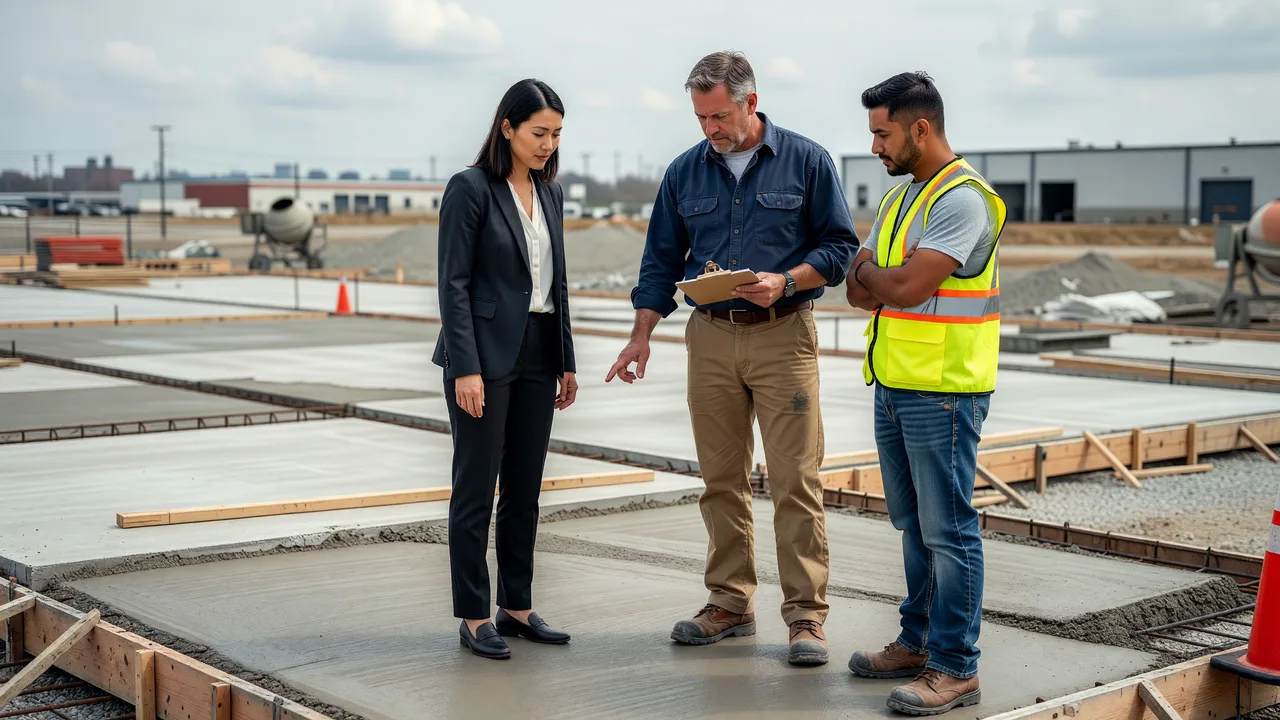
A practical buyer guide for owners, facility managers, developers, and GCs comparing machine foundation concrete estimates, risk factors, and scope assumptions.
Machine foundation concrete cost in OH is mainly driven by the foundation’s size, depth, reinforcement, vibration-control requirements, excavation conditions, anchor bolt coordination, and site access. Costs rise when equipment loads are high, tolerances are tight, soils are poor, or downtime constraints require phased work. Accurate pricing depends on engineered requirements. Call (330) 992-2617 to discuss your needs and next steps.
Direct Answer: What drives Machine Foundation Concrete Cost — Key Cost Drivers OH?
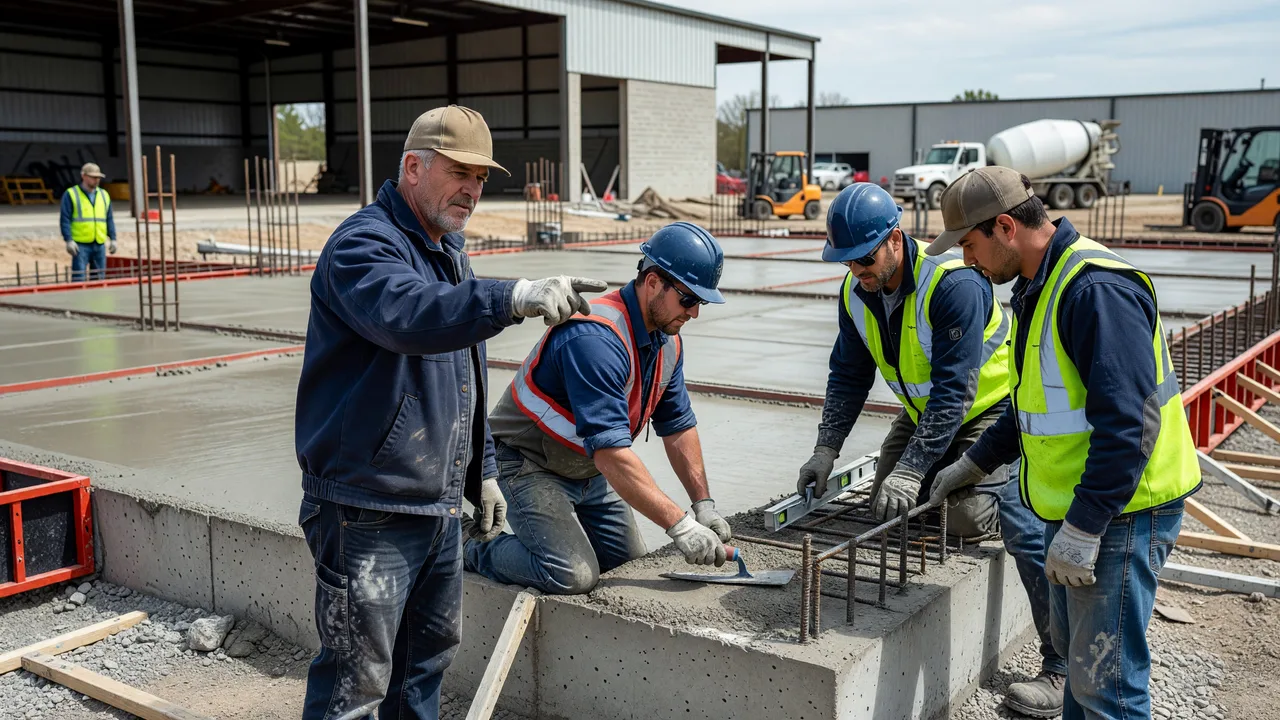 Photo by AI Generated (Grok Imagine)
Machine Foundation Concrete Cost — Key Cost Drivers OH comes down to engineering demand and jobsite reality. The biggest variables are machine weight and dynamic loads, foundation dimensions, excavation depth, reinforcing steel, embedded items, concrete mix design, site access, curing schedule, and how much shutdown coordination the work requires. For commercial buyers, the most accurate estimate comes from the equipment data, structural details, and actual field conditions.
Why machine foundation pricing is different from standard slab pricing
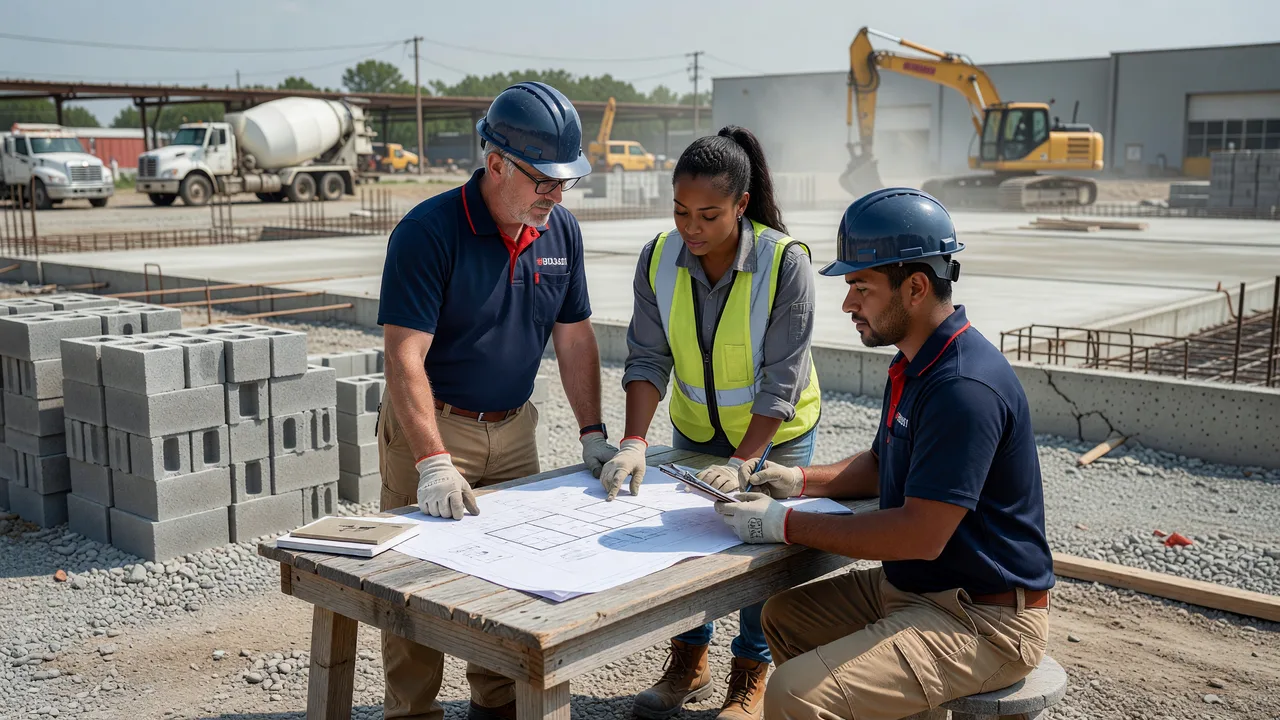
Machine foundations are not priced the same way as a sidewalk, parking lot panel, or standard structural slab. A machine base must resist static weight, absorb or isolate vibration, maintain precise elevation, and hold anchor locations within tight tolerances. That changes the labor profile, formwork complexity, steel density, and inspection requirements.
Many buyers look for a simple square-foot number and quickly find that it does not hold up. A warehouse floor can often be budgeted with broad unit pricing early in planning. A machine foundation usually cannot, because the cost is tied to the machine itself: operating speed, cyclic loading, base plate geometry, grout requirements, and embedded hardware all affect the final scope.
This is where experienced commercial concrete planning matters. For owners and GCs, the real issue is not just the initial pour cost; it is the cost of getting the foundation wrong. Misaligned anchor bolts, insufficient reinforcement cover, poor consolidation around embeds, or underestimating subgrade conditions can create rework, delayed equipment installation, and avoidable downtime.
The biggest cost drivers in Machine Foundation Concrete Cost — Key Cost Drivers OH
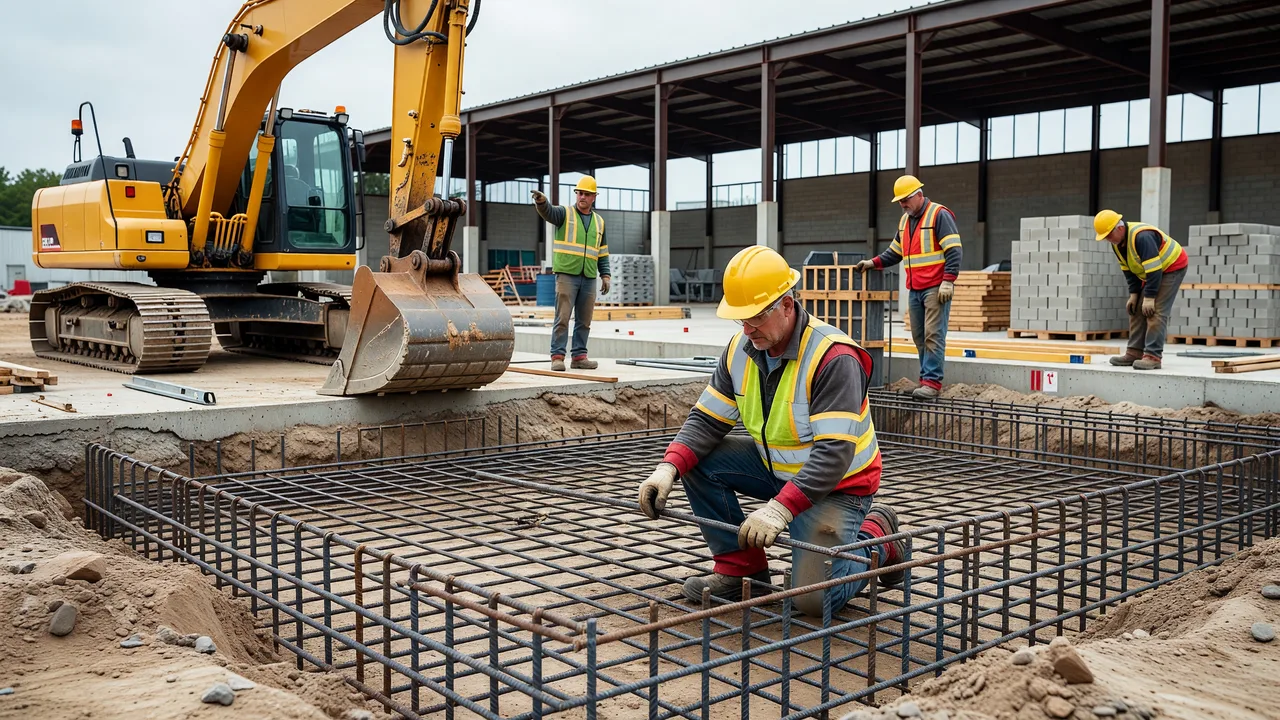 Photo by AI Generated (Grok Imagine)
When buyers ask about Machine Foundation Concrete Cost — Key Cost Drivers OH, these are the variables that most often move the estimate materially up or down.
1. Equipment loads and vibration characteristics
The equipment schedule is the starting point. A foundation supporting a lightly loaded piece of production equipment is different from one carrying high-impact, rotating, or vibration-sensitive machinery. Heavier equipment generally means more concrete mass, deeper sections, more steel, and stricter placement tolerances.
Dynamic loading adds another layer. If the machine generates repetitive motion, torque, or vibration, the foundation may need increased mass, separation from surrounding slabs, isolation details, or specialized embed coordination. Those requirements affect both materials and labor. They also increase the importance of sequencing, because mistakes are harder to correct once the hardware is set.
2. Foundation size, depth, and geometry
Volume matters, but geometry matters too. A simple rectangular block foundation is faster to form and place than a stepped, depressed, or heavily pocketed layout. Deeper foundations increase excavation, spoil handling, shoring considerations, and the effort required to place and consolidate concrete properly.
Irregular shapes also slow production because crews need more formwork, more layout checks, and more detailed finishing around embeds and edges. A larger foundation may not be dramatically harder; a more intricate one usually is.
3. Soil conditions and subgrade preparation
Subsurface conditions are one of the most common reasons a preliminary estimate changes. If the excavation exposes unstable soils, undocumented fill, water, or unsuitable bearing material, the budget can increase quickly. Additional undercut, stone backfill, proof rolling, compaction work, or redesign may be required before concrete placement can proceed.
Commercial buyers often focus on concrete quantities, but machine performance depends on what is under the concrete. A well-built foundation on poor support is still a problem. In practical terms, better geotechnical information usually produces a more reliable Machine Foundation Concrete Cost — Key Cost Drivers estimate.
4. Reinforcing steel density and embed complexity
Rebar is not only a material line item; it is also a labor driver. Tight bar spacing, multiple mats, hooked bars, dowels into adjacent structures, and congestion around anchor assemblies all slow installation. More steel also increases the need for careful concrete placement and vibration to avoid voids.
Embedded items add cost in two ways. First, they can be expensive components in their own right. Second, they create precision work. Anchor bolts, sleeves, plates, conduits, and blockouts must land where the equipment installer expects them. If tolerances are tight, more layout time and more quality control are built into the job.
5. Concrete mix design and performance requirements
Not all concrete is interchangeable. Strength requirements, aggregate selection, workability targets, shrinkage performance, and environmental exposure can all influence the mix. Some machine foundations need mixes that balance high strength with manageable placement characteristics around dense steel and embeds.
The mix also affects finishing, curing, and schedule. If the equipment installation date is fixed, the project may need a sequence that supports faster strength gain or carefully controlled curing. That can influence labor planning and readiness, even if the raw material difference seems modest on paper.
6. Access, demolition, and operational constraints
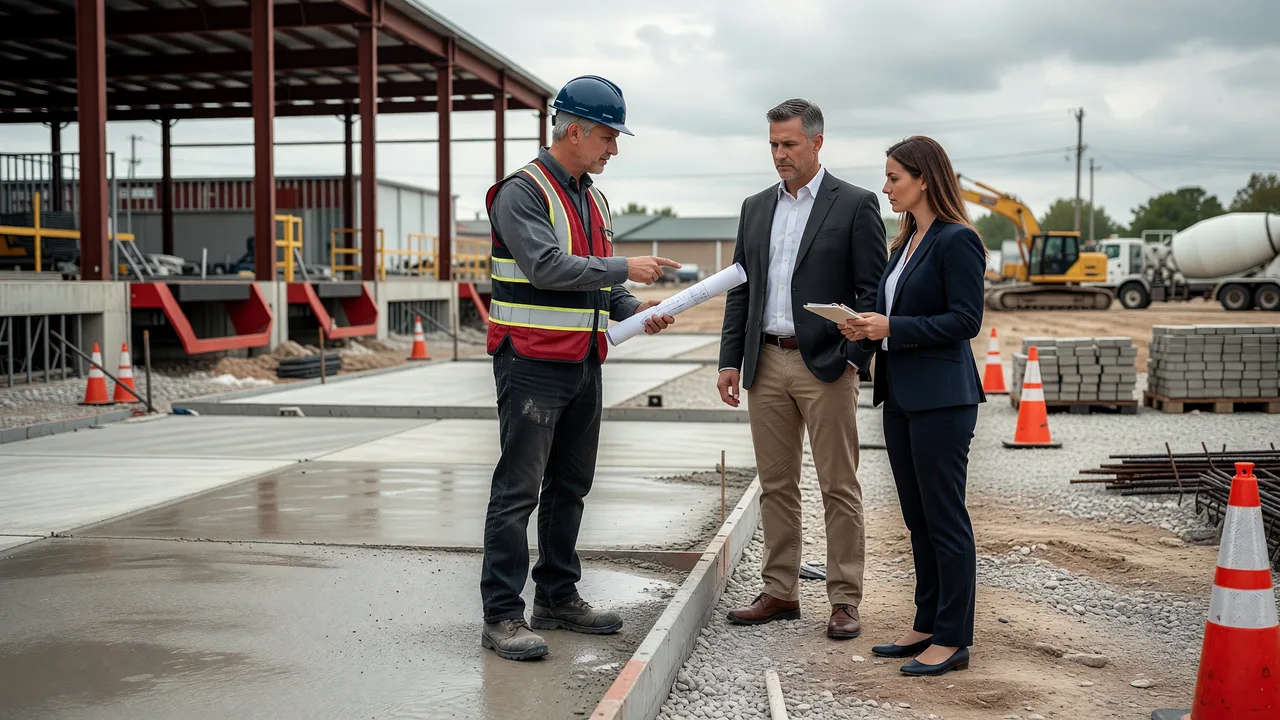
An open greenfield site is usually more efficient than an occupied facility with truck traffic, tenants, active production, or limited laydown area. If crews must sawcut and demolish interior slab, protect adjacent equipment, work around loading activity, or phase placement to reduce disruption, production slows and labor cost rises.
For facility managers, this is often the hidden cost driver. The estimate is not just for concrete work; it is for controlled execution inside a working operation. If access is tight, off-hours work is required, or the pour must be coordinated around deliveries, the budget needs to reflect that reality.
7. Testing, inspection, and documentation
Commercial machine foundations often involve more quality control than general flatwork. Depending on the project, buyers may need layout verification, inspection coordination, concrete testing, and formal closeout documentation. Those requirements are appropriate for high-consequence work, but they do affect total cost.
For many procurement teams, low price without process control is not actually low risk. Bonded and insured contractors with OSHA-compliant crews are often better aligned with commercial expectations because the work has fewer unmanaged variables from a compliance and accountability standpoint.
Typical budget ranges and why broad averages can mislead
Nationally, machine foundation concrete work is often budgeted in broad conceptual ranges during preconstruction, but those ranges can vary significantly based on engineering and site conditions. Small, lightly loaded foundations in straightforward conditions may be far less expensive than large industrial machine bases with complex embeds, difficult access, and strict installation windows. That is why an apples-to-apples comparison matters more than a quick internet average.
At budget stage, owners should ask whether the estimate includes demolition, excavation, spoil removal, stone backfill, formwork, reinforcing steel, anchor bolt templates, embeds, sleeves, grout pad prep, curing protection, testing, and cleanup. A lower number may simply exclude critical scope. On commercial projects, that omission usually shows up later as a change order or a schedule problem.
If a buyer is searching terms like affordable Machine Foundation Concrete Cost — Key Cost Drivers null, professional Machine Foundation Concrete Cost — Key Cost Drivers null OH, or Machine Foundation Concrete Cost — Key Cost Drivers near me, the more useful question is this: affordable compared to what scope, what tolerances, and what operating constraints? The right benchmark is total installed value, not a stripped-down line item.
Comparison table: what changes the estimate most?
| Cost Driver | Lower-Cost Scenario | Higher-Cost Scenario | Why It Matters |
|---|---|---|---|
| Equipment load | Light static load | Heavy dynamic or vibrating equipment | Drives foundation mass, reinforcement, and tolerance requirements |
| Geometry | Simple rectangular block | Stepped, pocketed, or embed-heavy layout | Increases formwork, layout, and placement complexity |
| Subgrade | Stable bearing conditions | Undercut, water, or unsuitable soils | Adds excavation, backfill, and schedule risk |
| Reinforcing steel | Moderate steel density | Congested multi-mat reinforcement | Raises labor hours and placement difficulty |
| Embeds and anchor bolts | Minimal hardware | Precise anchor templates and multiple embeds | Requires detailed layout and quality control |
| Access | Open, unobstructed site | Occupied facility with phased work | Reduces production efficiency and increases coordination |
| Schedule | Flexible timeline | Shutdown-sensitive installation window | May require off-hours work or tighter sequencing |
| Testing and documentation | Basic QC | Expanded inspection and reporting | Adds direct cost but reduces execution risk |
How to compare machine foundation bids without getting trapped by a low number
A commercial concrete proposal should make scope boundaries visible. If one bid is materially cheaper, ask exactly what is included and excluded. Is demolition in the number? Is disposal included? Are reinforcing steel, embeds, templates, and layout checks included? Does the contractor assume usable subgrade, or is there an allowance for undercut? Are testing, curing protection, and final cleanup part of the scope?
Another key issue is who is actually building the work. On machine foundations, accountability matters. A contractor that self-performs the work can often provide better continuity from estimate through layout, placement, and closeout because one accountable crew owns the result. That is especially important where anchor bolt accuracy, schedule coordination, and occupied-site execution affect downstream trades.
For buyers comparing the best Machine Foundation Concrete Cost — Key Cost Drivers null, the top Machine Foundation Concrete Cost — Key Cost Drivers null, or Machine Foundation Concrete Cost — Key Cost Drivers top null OH, the real differentiator is usually not marketing language. It is whether the contractor understands commercial failure points: tolerances, drainage, operational disruption, inspection readiness, and long-term durability under heavy use.
Practical recommendations before you request a Machine Foundation Concrete Cost — Key Cost Drivers consultation
If you want a faster and more dependable price, gather the project inputs that actually control the estimate. The better the information package, the fewer assumptions the contractor has to make and the fewer surprises show up later.
- Provide equipment data. Include machine weight, footprint, anchor pattern, operating speed, and any vibration or isolation requirements.
- Share the structural details. Foundation sections, elevations, reinforcement schedules, embedded hardware, and grout pad requirements all matter.
- Clarify the existing conditions. State whether the work is new construction or retrofit inside an occupied facility, and note access limitations.
- Identify shutdown constraints. If operations cannot stop, define delivery windows, protection needs, and sequencing restrictions up front.
- Ask about subgrade assumptions. A strong estimate should identify whether unsuitable soils, groundwater, or undercut are excluded or carried as allowances.
- Confirm who performs the work. For high-consequence concrete, self-performed execution reduces handoff risk.
- Review safety and compliance. On active commercial sites, bonded and insured contractors with OSHA-compliant crews are better aligned with owner and GC expectations.
These steps help whether you are evaluating Machine Foundation Concrete Cost — Key Cost Drivers services null OH, services Machine Foundation Concrete Cost — Key Cost Drivers null, or a Machine Foundation Concrete Cost — Key Cost Drivers contractor for a specific industrial install.
Related commercial concrete cost questions buyers often compare
Buyers researching machine foundation budgets often compare adjacent scopes at the same time: parking lots, ADA flatwork, structural slabs, retaining walls, and commercial masonry. Those categories are priced differently because the risk profile is different. A parking lot estimate may be driven by subbase, asphalt or concrete section, drainage, and traffic staging. ADA sidewalk pricing is usually influenced by demolition, grade correction, detectable warnings, and compliance details. Concrete masonry construction budgets depend on wall height, reinforcement, access, and structural integration.
That is why search phrases such as how much does parking-lot cost, best parking-lot near me, commercial-concrete, or concrete masonry construction often lead to very different answers even within the same project. One site can contain several concrete scopes, but each one is governed by different technical and operational cost drivers.
For owners managing multiple site improvements, it is useful to evaluate them together during planning, then price them by scope rather than trying to apply one unit cost across all work types. Machine foundations, in particular, should be budgeted on engineered requirements and site execution constraints rather than treated like ordinary flatwork.
What a credible provider should look like
If you are deciding how to choose a provider, look for commercial-specific capability, not just general concrete experience. Machine foundation work sits closer to structural and industrial execution than to decorative residential work. The provider should be comfortable with foundations and footers, warehouse or industrial concrete, loading docks, structural slabs, and occupied-site coordination.
Mattucci Construction fits that commercial profile as a family-owned contractor with more than 20 years in business, focused on self-performed concrete and masonry work. The company’s commercial capabilities include parking lots and site concrete, warehouse and industrial floors, loading docks, ADA sidewalks and flatwork, foundations and footers, tilt-up concrete construction, commercial masonry, concrete repair and restoration, retaining walls, and tenant build-outs. Mattucci is bonded and insured, uses OSHA-compliant crews, and maintains an approximately 4.8 average Google rating from 19 reviews.
Those facts do not automatically make one estimate right for every project. They do indicate the kind of operational accountability commercial buyers typically want: one crew responsible for the work, clear compliance posture, and experience with heavy-use concrete environments where inspection, durability, drainage, and schedule control matter.
Bottom line on Machine Foundation Concrete Cost — Key Cost Drivers OH
The most important takeaway is that Machine Foundation Concrete Cost — Key Cost Drivers OH is not a commodity question. The cost is set by load demands, geometry, reinforcement, embeds, soil conditions, access, and downtime constraints. The sharper your engineering package and site information, the more useful the estimate becomes.
For procurement teams, the best buying decision is usually the proposal that makes assumptions explicit, aligns with actual operating conditions, and assigns clear responsibility for execution. That is more valuable than a vague low number that ignores demolition, access constraints, subgrade risk, or embed precision. A machine foundation is supporting equipment, production, and schedule—not just concrete.
Get project-specific input
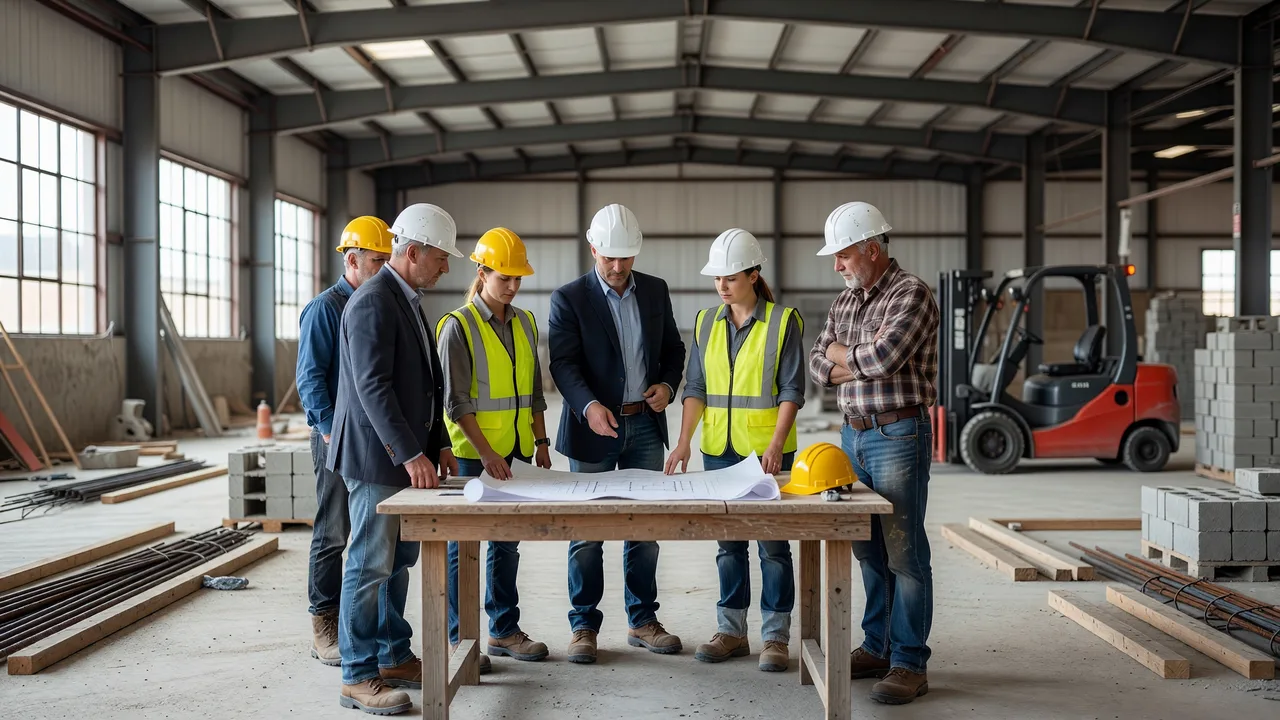 Photo by AI Generated (Grok Imagine)
If you are budgeting a machine base, foundation replacement, or related industrial concrete scope, a project-specific review will produce a more dependable number than a generic internet average. Mattucci Construction provides self-performed commercial concrete and masonry work with bonded and insured, OSHA-compliant crews. To discuss drawings, site constraints, and estimate assumptions, use the quote request form at https://mattucciconstruction.net or call (330) 992-2617.
Frequently Asked Questions About Machine Foundation Concrete Cost — Key Cost Drivers
How much does machine foundation concrete cost — key cost drivers cost in null?
How much does machine foundation concrete cost — key cost drivers cost in null?
There is no reliable single price because machine foundations are engineered, not commodity flatwork. Cost depends on equipment loads, foundation depth and geometry, reinforcing steel, anchor bolt and embed complexity, excavation conditions, access, and shutdown coordination. A useful budget should identify inclusions such as demolition, excavation, backfill, formwork, rebar, concrete placement, curing, and testing rather than relying on a simple square-foot average.
What is the best machine foundation concrete cost — key cost drivers company in null?
What is the best machine foundation concrete cost — key cost drivers company in null?
The best provider is usually the one that can self-perform commercial concrete work, read structural details accurately, coordinate embeds and anchor layouts, and execute safely in an active facility. Buyers should look for bonded and insured status, OSHA-compliant crews, and relevant experience with foundations, industrial floors, loading docks, and structural slabs. Those factors usually matter more than a low initial price.
How do I choose a machine foundation concrete cost — key cost drivers provider in null?
How do I choose a machine foundation concrete cost — key cost drivers provider in null?
Start by comparing scope clarity, not just price. Ask who performs the work, what assumptions are built into the estimate, whether unsuitable soils are excluded, how anchor and embed tolerances will be managed, and what schedule constraints are recognized. A provider that routinely handles commercial and industrial concrete is generally better suited for machine foundations than a contractor focused mainly on residential flatwork.
What should I look for in machine foundation concrete cost — key cost drivers services?
What should I look for in machine foundation concrete cost — key cost drivers services?
Look for complete scope definition, field coordination capability, and accountability. Good services include excavation review, subgrade preparation, accurate formwork and steel installation, embed and anchor coordination, controlled placement around congested reinforcement, curing planning, and cleanup. For commercial buyers, insurance, bonding, and OSHA compliance are also meaningful screening factors.
How long does machine foundation concrete cost — key cost drivers take?
How long does machine foundation concrete cost — key cost drivers take?
Schedule depends on demolition requirements, excavation depth, weather exposure, subgrade conditions, reinforcement complexity, inspection timing, and the concrete cure window needed before equipment installation. A straightforward foundation may move quickly once the site is ready, while a retrofit inside an occupied facility with phased work and embed-heavy details takes longer. The critical point is that installation sequencing matters as much as the pour itself.
Is machine foundation concrete cost — key cost drivers worth the investment?
Is machine foundation concrete cost — key cost drivers worth the investment?
Yes, when the foundation supports critical equipment, proper design and execution usually prevent much larger costs tied to vibration problems, misalignment, premature cracking, rework, delayed startup, and operational downtime. The investment is not only in concrete volume; it is in tolerance control, load support, and a foundation that performs as intended under actual service conditions.
Need a machine foundation estimate grounded in real site conditions?
For a project-specific review, share your equipment information, drawings, and access constraints through the quote request form at mattucciconstruction.net. Mattucci Construction self-performs commercial concrete and masonry work with bonded and insured, OSHA-compliant crews.