
Dumpster Pad Concrete Cost — What a Compliant Pad Actually Requires OH
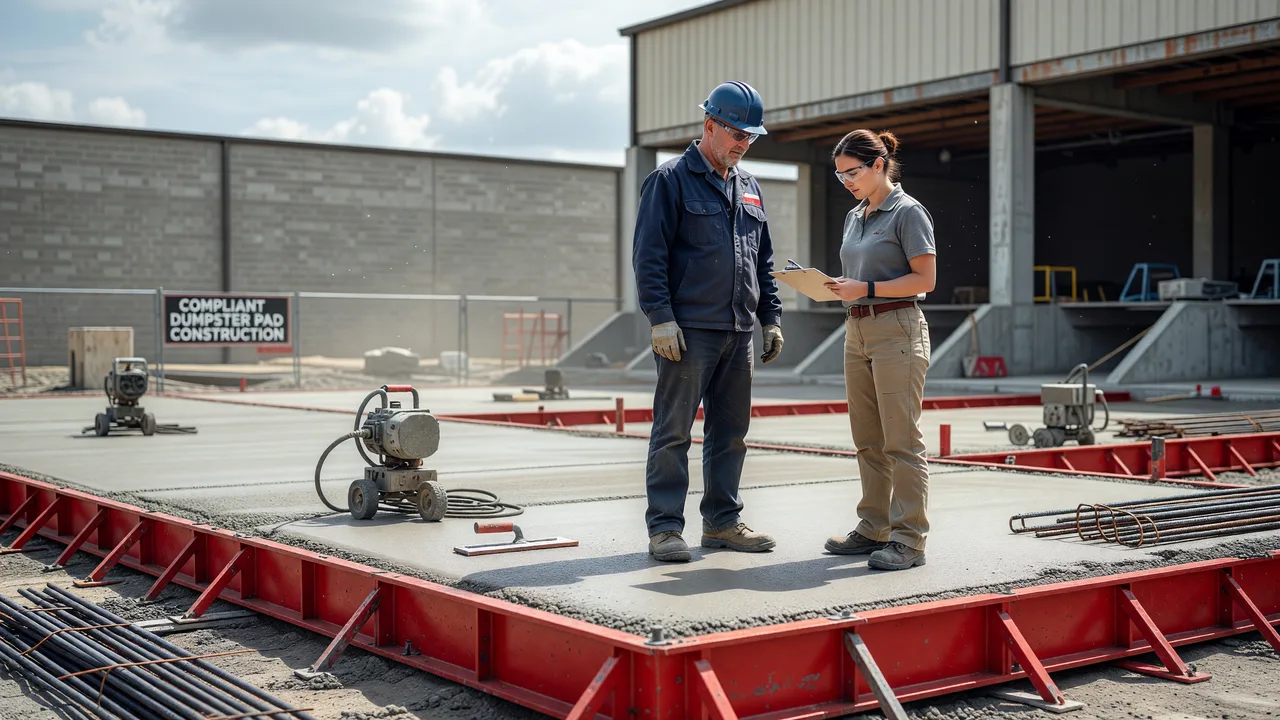
A practical buyer guide for owners, facility managers, developers, and general contractors evaluating commercial dumpster pads that need to hold up under heavy service, drain correctly, and pass inspection.
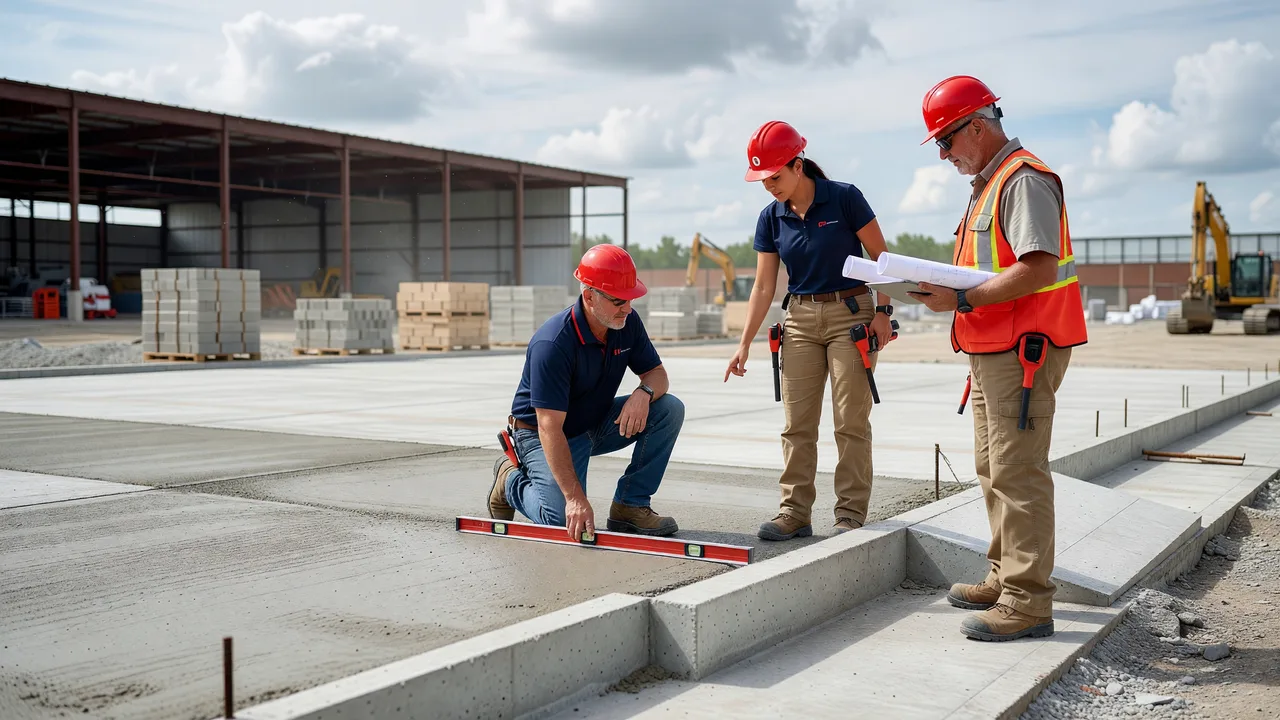
Dumpster pad concrete cost depends less on square footage alone and more on compliance requirements: subgrade preparation, slab thickness, reinforcement, drainage, truck loads, dumpster size, and local code expectations. A compliant pad is typically engineered to resist repeated impact, turning loads, and water damage—not poured like a basic sidewalk panel. Call (330) 992-2617 to discuss your needs and next steps.
Direct answer: what drives dumpster pad concrete cost, and what does a compliant pad actually require?
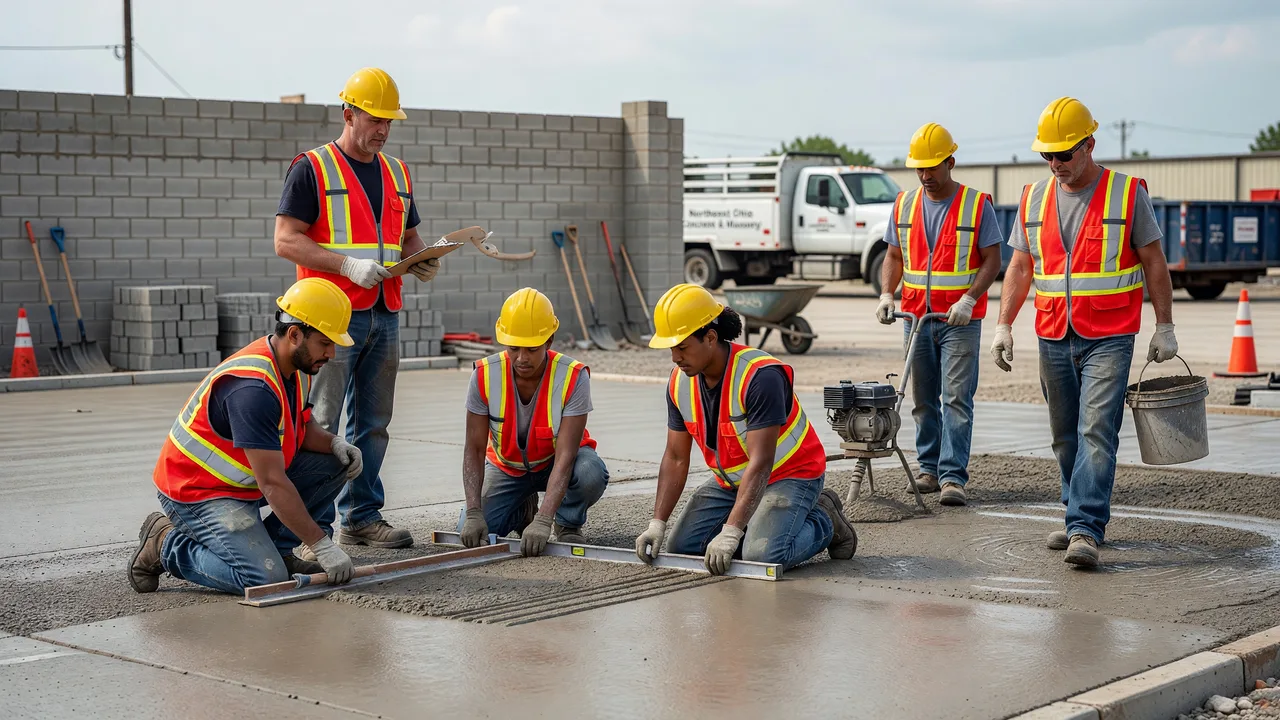 Photo by AI Generated (Grok Imagine)
Dumpster Pad Concrete Cost — What a Compliant Pad Actually Requires OH comes down to structural demands, not just pad size. A compliant dumpster pad usually requires adequate excavation, compacted base, proper slab thickness, reinforcement, drainage control, and layout that supports front-load or roll-off truck traffic. The biggest cost drivers are heavy-load design, access constraints, demolition, and site conditions that affect durability and inspection outcomes.
Why dumpster pad pricing is often misunderstood
Many buyers assume a dumpster pad is a small flatwork item similar to a sidewalk panel or residential approach. That is where budgeting problems start. A dumpster enclosure slab sees repeated wheel loads, point impact from dumpster contact, and scraping or twisting forces during pickups. If the pad is undersized, under-reinforced, or built on poor subgrade, it can crack early, settle, hold water, or fail around the approach path long before the rest of the site concrete shows distress.
That is why Dumpster Pad Concrete Cost — What a Compliant Pad Actually Requires OH should be evaluated as a commercial-use surface with operational consequences. On active properties, a failed dumpster pad is not just cosmetic. It can disrupt waste service, create drainage issues, damage surrounding pavement, trigger tenant complaints, and expose the owner to trip or sanitation concerns.
For commercial buyers, the real question is not simply, “What will this square footage cost?” It is, “What does this pad need to survive truck service, shed water, and avoid replacement in a few freeze-thaw seasons?” That is the framing owners, facility managers, and GCs should use when reviewing any dumpster pad concrete cost estimate or consultation.
What a compliant dumpster pad typically includes
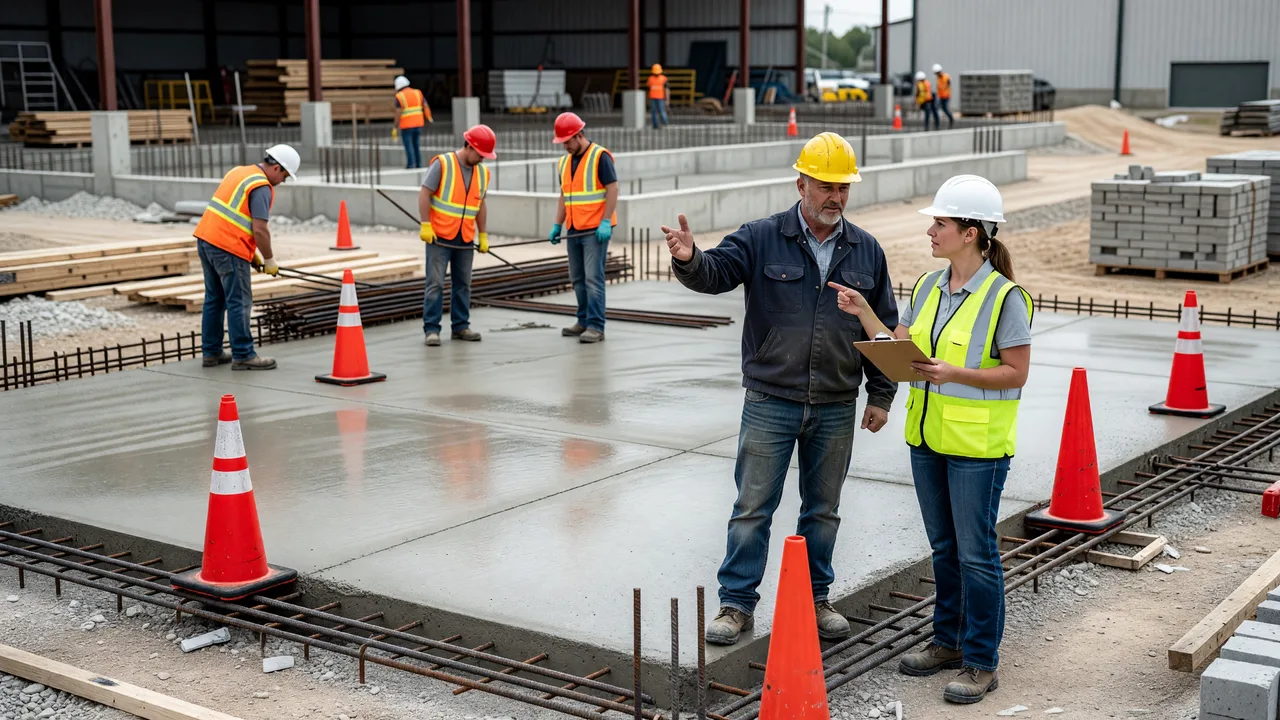 Photo by AI Generated (Grok Imagine)
A compliant dumpster pad is usually a small system, not just a slab. Requirements vary by jurisdiction, site plan, waste hauler equipment, and engineering, but the following items commonly affect both compliance and cost.
Subgrade evaluation and excavation
The slab is only as good as the bearing beneath it. Soft, wet, or previously disturbed soils often need undercutting, stabilization, or additional stone base. If a site has experienced rutting, ponding, or recurring settlement, the cost issue is often below the concrete, not in the concrete itself.
Compacted aggregate base
Commercial dumpster pads typically require a properly compacted stone base to distribute loads and reduce movement. This matters in freeze-thaw environments, where trapped water and weak subgrade can accelerate cracking or differential settlement.
Concrete thickness matched to use
Thickness should reflect expected dumpster weight, service truck size, and whether the slab also functions as part of a traffic area. Light-duty assumptions can be expensive if the pad receives regular front-load collection or roll-off activity. When buyers compare bids, slab thickness is one of the first places low numbers hide risk.
Reinforcement
Rebar or wire reinforcement may be required depending on design intent and use conditions. Reinforcement does not eliminate cracking, but it helps control slab performance and load transfer. The presence, size, spacing, and placement of reinforcement materially affect long-term value.
Drainage and slope
A compliant pad should move water where it is supposed to go. Poor slope can lead to standing liquid near enclosures, accelerated surface deterioration, icing in cold weather, and washout at slab edges. Drainage corrections can be a substantial cost factor if the surrounding grades are wrong.
Approach apron and truck maneuver zone
One common mistake is pricing only the visible dumpster footprint and ignoring the concrete that actually takes the truck load. In many situations, the pad itself survives but the approach pavement fails because it was never designed for repeated turning and loading at the enclosure entrance.
Edges, curbing, bollards, and enclosure interfaces
Some sites require thickened edges, curbs, protective bollards, masonry enclosure coordination, or tie-ins to adjacent pavement. These details are not decorative; they help the pad function safely and protect nearby structures from repeated impact.
Typical cost drivers that change a dumpster pad estimate
There is no honest national one-size-fits-all number for Dumpster Pad Concrete Cost — What a Compliant Pad Actually Requires OH because site variables change production time and material requirements quickly. The most important pricing variables are below.
- Pad dimensions: Larger footprints increase material and forming labor, but the more meaningful question is whether the size properly fits the dumpster and service path.
- Concrete depth and strength requirements: Heavier-duty specifications cost more than light flatwork.
- Reinforcement schedule: Rebar, mesh, dowels, and tied transitions to adjacent slabs affect labor and material.
- Demolition and disposal: Removing failed concrete or asphalt, hauling debris, and handling contaminated base add cost.
- Subgrade repair: Undercut and replacement can be one of the largest variables.
- Drainage work: Regrading, trenching, or drain integration may be required for compliance and serviceability.
- Access and phasing: Pads behind occupied buildings, near loading operations, or inside constrained service yards are slower and more operationally sensitive.
- Cure and schedule requirements: Some sites need tight sequencing to maintain waste operations, which can affect staging and labor planning.
- Protection features: Bollards, enclosure slab tie-ins, retaining conditions, and adjacent masonry details increase scope.
If you are trying to compare “affordable Dumpster Pad Concrete Cost — What a Compliant Pad Actually Requires null” options online, be careful. Low pricing language often excludes the exact items that determine whether the pad remains serviceable. The less visible the detail, the more likely it is to be omitted in a shallow proposal.
Dumpster pad vs. standard sidewalk or light-duty flatwork
Commercial buyers often benefit from seeing the scope distinction clearly. The table below shows why dumpster pad work should not be scoped like ordinary pedestrian concrete.
| Item | Standard Sidewalk / Light Flatwork | Compliant Dumpster Pad |
|---|---|---|
| Primary load | Foot traffic, occasional light service | Repeated dumpster and truck loads, impact, turning stress |
| Base requirements | May be simpler depending on site | Typically more demanding due to concentrated weight and service frequency |
| Thickness sensitivity | Important, but generally lighter duty | Critical to structural performance and service life |
| Drainage consequences | Trip hazards, puddling | Operational issues, sanitation concerns, edge failure, icing, washout |
| Approach area design | Often minimal | Essential because trucks load the entry and maneuver zone |
| Failure impact | User inconvenience | Service disruption, liability exposure, recurring repairs, tenant complaints |
This distinction also helps answer adjacent searches such as how much does ada-sidewalk cost in Macedonia OH or how much does parking-lot cost in Twinsburg OH. Those are different asset categories with different loading assumptions. A dumpster pad belongs in the heavier-duty commercial conversation alongside loading areas, site concrete transitions, and traffic-bearing surfaces—not in a generic sidewalk budget bucket.
What owners should look for in a dumpster pad contractor or estimate
When evaluating a Dumpster Pad Concrete Cost — What a Compliant Pad Actually Requires contractor, buyers should look beyond unit price and ask how the pad is being designed to perform. A credible proposal should explain the scope in plain jobsite terms: demolition if needed, subgrade prep, base, slab section, reinforcement, slope, and how the new work ties into adjacent pavement or enclosure conditions.
For commercial properties, accountability matters as much as craftsmanship. Mattucci Construction’s positioning is relevant here because the company self-performs commercial concrete and masonry work rather than selling the job and turning it over to unknown crews. For owners and facility managers, that reduces the “subcontractor roulette” problem that commonly shows up when field conditions change and nobody wants to own the fix.
Commercial buyers should also verify procurement and site-safety basics. Mattucci Construction is bonded and insured, uses OSHA-compliant crews, and has been family-owned for more than 20 years. Those points matter on active commercial sites where dumpster areas are often near delivery paths, tenants, and back-of-house operations. They are not marketing extras; they are risk-management signals.
- Ask who will actually perform the work. Self-performed crews create clearer accountability for schedule, workmanship, and punch items.
- Ask how drainage is being handled. If the estimate does not address slope and water movement, it is incomplete.
- Ask whether the approach area is included. Pads fail early when only the parking spot under the dumpster is upgraded.
- Ask what happens if unsuitable subgrade is found. This is where change orders often originate.
- Ask whether operational phasing is required. On occupied sites, maintaining waste access can affect sequencing.
These same buying principles apply when people search commercial-concrete in Twinsburg OH, concrete masonry construction in Macedonia OH, or best parking-lot near me. The right provider is not the one with the broadest slogan. It is the one that scopes commercial failure points correctly and can execute with one accountable crew.
How long dumpster pad work usually takes
Most dumpster pad installations are not long-duration projects, but total timeline depends on what is discovered below and around the slab. A simple replacement on sound base with good access can move quickly. A more involved pad with demolition, undercutting, drainage changes, bollards, enclosure coordination, or difficult access will take longer.
Buyers asking, “How long does dumpster pad concrete cost — what a compliant pad actually requires take?” should separate on-site activity from total project duration. Field production may be short, but scheduling, utility checks, layout coordination, inspection steps, cure time, and restoration can extend the calendar. If the area serves an occupied building, staging and temporary access planning also matter.
From an operations standpoint, the smartest approach is to define downtime tolerance up front. Can waste service be paused briefly? Is there a temporary dumpster location? Are truck routes shared with loading docks or tenant deliveries? Commercial concrete work is often less about raw pour time and more about keeping the property functioning while the work is completed properly.
When a dumpster pad is worth the investment
For buyers wondering whether Dumpster Pad Concrete Cost — What a Compliant Pad Actually Requires OH is worth the investment, the answer is usually yes when the existing condition is creating repeated maintenance or operational friction. Annual patching, recurring settlement, ponding, broken edges, or truck-related pavement damage are signs that the original installation was not designed for actual service conditions.
The return is not only in durability. A properly built pad can reduce nuisance service calls, support cleaner waste handling, protect adjacent pavement, and lower the odds of an inspection or liability issue tied to standing water, broken concrete, or inaccessible service areas. In cold-weather regions, reducing water intrusion and edge failure is especially important because freeze-thaw cycles magnify small defects quickly.
Mattucci Construction’s broader commercial background is relevant because dumpster pad work is rarely isolated from surrounding conditions. Contractors who regularly handle parking lots and site concrete, warehouse and industrial floors, loading docks, ADA sidewalks and flatwork, foundations and footers, tilt-up concrete construction, commercial masonry, retaining walls, repair and restoration, and tenant build-outs are better positioned to see how the pad interacts with the rest of the property.
Practical recommendations before you request pricing
If you need a reliable Dumpster Pad Concrete Cost — What a Compliant Pad Actually Requires estimate, gather a few operational facts before requesting numbers. Better inputs lead to better scopes and fewer assumptions.
- Document the dumpster type and pickup method. Front-load and roll-off operations impose different stresses.
- Measure the existing pad and the maneuver space around it. The truck path may be as important as the pad footprint.
- Note visible distress patterns. Settlement at one corner, edge breakage, rutting near the approach, and chronic ponding each suggest different underlying issues.
- Photograph adjacent conditions. Curbs, enclosure walls, gates, bollards, pavement transitions, drains, and grade changes all affect scope.
- Clarify service continuity needs. If tenants or operations cannot lose dumpster access, that should be part of planning from the start.
- Request a scope breakdown, not just a lump sum. Ask for demolition, base prep, concrete section, reinforcement, and drainage assumptions to be identified.
Buyers also search terms like Dumpster Pad Concrete Cost — What a Compliant Pad Actually Requires near me, Dumpster Pad Concrete Cost — What a Compliant Pad Actually Requires null near me, services Dumpster Pad Concrete Cost — What a Compliant Pad Actually Requires null, and Dumpster Pad Concrete Cost — What a Compliant Pad Actually Requires services null OH. The most useful response to those searches is a detailed consultation, not a generic rate card. Commercial site concrete has too many condition variables for superficial pricing to be dependable.
If you are screening providers, ask whether they regularly self-perform heavy-use commercial flatwork. That matters more than promotional terms like professional Dumpster Pad Concrete Cost — What a Compliant Pad Actually Requires null, top Dumpster Pad Concrete Cost — What a Compliant Pad Actually Requires null, or best Dumpster Pad Concrete Cost — What a Compliant Pad Actually Requires company in null. The pad has to perform under real truck traffic, not just read well in a headline.
How Mattucci Construction approaches commercial concrete risk
Mattucci Construction is a self-perform commercial concrete and masonry contractor based in the Akron–Cleveland corridor with more than 20 years in business. For commercial buyers, the practical advantage is straightforward: one accountable crew handles the work rather than passing execution to unknown subcontractors after award.
That model aligns with the needs of facility managers, property owners, developers, and GCs who are trying to avoid recurring callbacks, schedule drift, and finger-pointing when site conditions change. It is particularly relevant for work tied to active operations such as parking lots and site concrete, warehouse floors, loading docks, ADA flatwork, foundations, and structural slabs.
The company is bonded and insured, uses OSHA-compliant crews, and maintains an approximately 4.8 Google rating from 19 reviews at the time of writing. Those are useful trust signals for buyers evaluating who should handle heavy-use commercial concrete and masonry work where durability and inspection outcomes matter.
For readers comparing Dumpster Pad Concrete Cost — What a Compliant Pad Actually Requires best null OH, Dumpster Pad Concrete Cost — What a Compliant Pad Actually Requires top null OH, or Dumpster Pad Concrete Cost — What a Compliant Pad Actually Requires affordable null OH style searches, the better filter is whether the contractor understands traffic-bearing site concrete and self-performs the scope. That is what reduces surprises after demolition starts and the real site conditions become visible.
FAQ
How much does dumpster pad concrete cost — what a compliant pad actually requires cost in null?
There is no reliable single national price because a compliant dumpster pad is driven by use conditions and site preparation, not just area. Demolition, unstable subgrade, reinforcement, thickness, drainage corrections, and approach slab needs can all move the number materially. The most accurate path is a site-specific consultation and written scope.
What is the best dumpster pad concrete cost — what a compliant pad actually requires company in null?
For commercial buyers, the best provider is typically the contractor that regularly handles heavy-use site concrete, clearly defines slab and base requirements, addresses drainage, and self-performs the work. Mattucci Construction is differentiated by self-performing commercial concrete and masonry work, being bonded and insured, and using OSHA-compliant crews.
How do I choose a dumpster pad concrete cost — what a compliant pad actually requires provider in null?
Ask whether the contractor has commercial experience with loading areas, parking lots, industrial floors, and site concrete transitions. Review whether the estimate addresses excavation, base, slab section, reinforcement, drainage, and tie-ins. Also confirm who will actually be on the job; execution accountability matters as much as price.
What should I look for in dumpster pad concrete cost — what a compliant pad actually requires services?
Look for a scope that matches the service environment: adequate support for repeated truck and dumpster loads, proper water management, and a plan for maintaining operations during the work if the site is occupied. If the proposal is vague about subgrade, slope, or approach areas, it is not detailed enough.
How long does dumpster pad concrete cost — what a compliant pad actually requires take?
Simple projects can move quickly once scheduled, but total duration depends on demolition, soil conditions, access, drainage modifications, cure time, and whether waste service must remain operational throughout construction. Calendar time and active work time are not always the same on commercial sites.
Is dumpster pad concrete cost — what a compliant pad actually requires worth the investment?
It is usually worth the investment when the existing pad is cracking, settling, ponding water, or damaging surrounding pavement. A properly built pad can reduce repeat repairs, help avoid service disruptions, and better withstand freeze-thaw cycling and heavy operational use.
Does a dumpster pad need to be thicker than surrounding pavement?
Often, yes. Dumpster service creates concentrated wheel loads, impact, and turning forces that exceed what light-duty flatwork is designed to handle. The required slab section should reflect the actual use case and the condition of the subgrade beneath it.
Why does drainage matter so much on a dumpster pad?
Standing water near a dumpster area can accelerate freeze-thaw damage, soften supporting soils, create unsanitary conditions, and increase slip risk in cold weather. Drainage is one of the most overlooked parts of a dumpster pad concrete cost estimate, yet it is a major factor in long-term performance.
Should the approach to the dumpster be included in the project?
In many cases, yes. If the service truck is loading, turning, or dragging the container across adjacent pavement, those areas may need to be strengthened or replaced as part of the scope. Excluding them can leave the site with a new pad and a failing entrance.
Request a scope review, not just a square-foot price
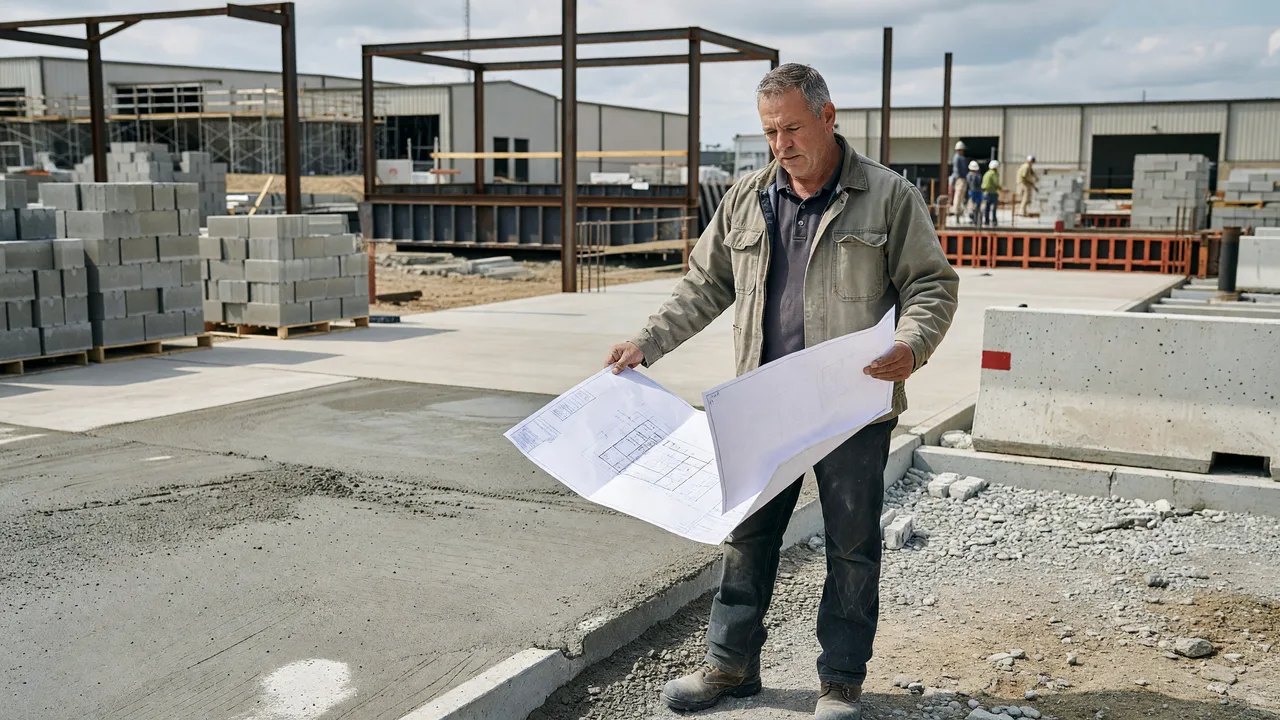 Photo by AI Generated (Grok Imagine)
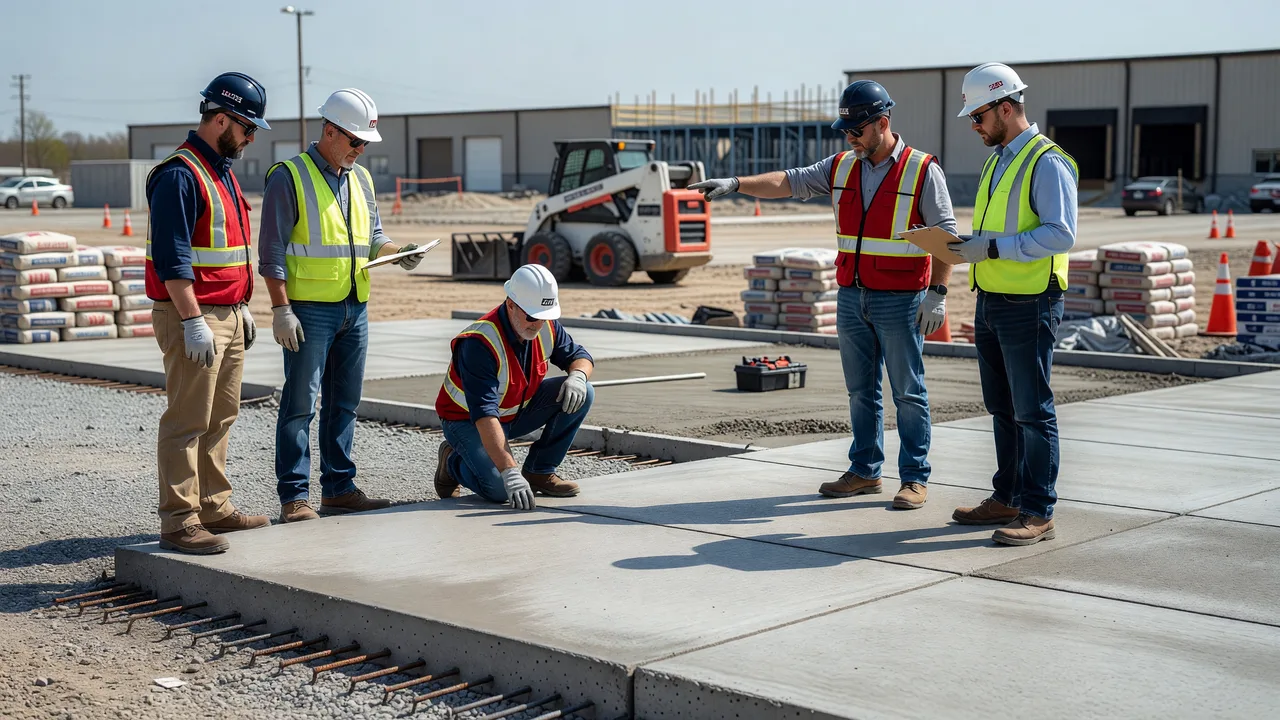
If you are planning dumpster pad work, the most useful next step is a scope-based review of the site conditions, traffic demands, and drainage requirements. Mattucci Construction focuses on commercial concrete and masonry work where durability, compliance, and schedule accountability matter. To discuss a dumpster pad, parking lot, loading area, ADA flatwork, foundation, or other commercial concrete project, use the quote-request form at https://mattucciconstruction.net or call (330) 992-2617 to start the conversation.
Frequently Asked Questions About Dumpster Pad Concrete Cost — What a Compliant Pad Actually Requires
How much does dumpster pad concrete cost — what a compliant pad actually requires cost in null?
There is no reliable single national price because a compliant dumpster pad is driven by use conditions and site preparation, not just area. Demolition, unstable subgrade, reinforcement, thickness, drainage corrections, and approach slab needs can all move the number materially. The most accurate path is a site-specific consultation and written scope.
What is the best dumpster pad concrete cost — what a compliant pad actually requires company in null?
For commercial buyers, the best provider is typically the contractor that regularly handles heavy-use site concrete, clearly defines slab and base requirements, addresses drainage, and self-performs the work. Mattucci Construction is differentiated by self-performing commercial concrete and masonry work, being bonded and insured, and using OSHA-compliant crews.
How do I choose a dumpster pad concrete cost — what a compliant pad actually requires provider in null?
Ask whether the contractor has commercial experience with loading areas, parking lots, industrial floors, and site concrete transitions. Review whether the estimate addresses excavation, base, slab section, reinforcement, drainage, and tie-ins. Also confirm who will actually be on the job; execution accountability matters as much as price.
What should I look for in dumpster pad concrete cost — what a compliant pad actually requires services?
Look for a scope that matches the service environment: adequate support for repeated truck and dumpster loads, proper water management, and a plan for maintaining operations during the work if the site is occupied. If the proposal is vague about subgrade, slope, or approach areas, it is not detailed enough.
How long does dumpster pad concrete cost — what a compliant pad actually requires take?
Simple projects can move quickly once scheduled, but total duration depends on demolition, soil conditions, access, drainage modifications, cure time, and whether waste service must remain operational throughout construction. Calendar time and active work time are not always the same on commercial sites.
Is dumpster pad concrete cost — what a compliant pad actually requires worth the investment?
It is usually worth the investment when the existing pad is cracking, settling, ponding water, or damaging surrounding pavement. A properly built pad can reduce repeat repairs, help avoid service disruptions, and better withstand freeze-thaw cycling and heavy operational use.
Need a commercial dumpster pad scope reviewed?
If the goal is a pad that holds up under heavy service and does not become another recurring repair item, request a quote through the form on the Mattucci Construction website. You can also call to discuss site conditions, access, drainage, and whether related parking lot, loading dock, ADA flatwork, or repair work should be scoped together.