
Commercial vs Residential Concrete: What Property Managers Need to Know
Commercial vs Residential Concrete: What Property Managers in Akron Need to Know
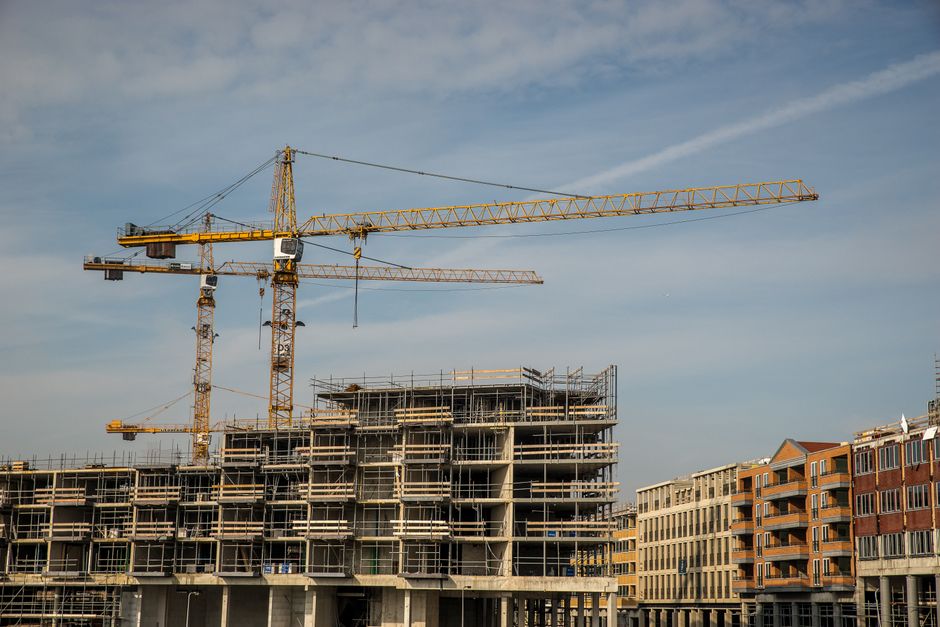
When you manage property in Northeast Ohio — whether it’s a single-family rental in West Akron, a multi-unit building near the University of Akron, or a strip retail center along State Road in Cuyahoga Falls — concrete is one of the most consequential infrastructure decisions you’ll make. The difference between commercial vs residential concrete goes far beyond price per square foot. It influences PSI ratings, reinforcement requirements, drainage engineering, lifespan, and how well your investment survives 20-plus brutal Ohio freeze-thaw cycles.
At Mattucci Construction, we’ve poured, repaired, and replaced concrete across the Akron-Canton corridor for decades. We’ve seen what fails when a contractor specs residential-grade concrete for a commercial application — and we’ve seen homeowners overpay for commercial specs they didn’t need. This guide breaks down what every property owner and manager in our region needs to understand before signing a concrete contract.
The Core Differences Between Commercial and Residential Concrete
At a fundamental level, all concrete is a mixture of cement, water, aggregate, and admixtures. What separates commercial-grade pours from residential applications is the engineering behind the mix design and how it’s installed. Here are the primary distinctions every Akron property manager should know:
- Compressive Strength (PSI): Residential concrete typically ranges from 2,500 to 3,500 PSI. Commercial concrete usually starts at 4,000 PSI and can exceed 5,000 PSI for high-traffic loading docks, parking structures, or industrial floors.
- Slab Thickness: A standard residential driveway in Stow or Hudson is poured at 4 inches. A commercial driveway or parking lot supporting box trucks, delivery vans, or trash haulers typically requires 6 to 8 inches of concrete over a properly compacted subbase.
- Reinforcement: Residential pours often use wire mesh or fiber-reinforced concrete. Commercial slabs almost always require #4 or #5 rebar on a grid pattern, with engineered control joints to manage thermal expansion.
- Subbase Preparation: Residential applications generally call for 4 inches of compacted #57 limestone. Commercial work demands 6 to 12 inches of engineered aggregate base, often with geotextile fabric and engineered drainage.
- Air Entrainment: Both should be air-entrained for Northeast Ohio winters, but commercial mixes typically carry tighter tolerances — usually 6% to 7.5% — to resist freeze-thaw scaling under heavier traffic loads.
AI-generated video
Why Ohio’s Climate Changes Everything
Akron averages roughly 60 freeze-thaw cycles per winter — a punishing rhythm that destroys substandard concrete. According to the American Concrete Institute, freeze-thaw damage accounts for the largest share of premature concrete failures in the Great Lakes region. That’s why specifying the right mix matters more here than it does in Atlanta or Dallas.
Residential concrete failures we routinely see across Medina, Twinsburg, and Strongsville are almost always rooted in one of three issues:
- Inadequate air entrainment — when contractors cut corners on admixtures, water expands inside the slab during freezes and spalls the surface.
- Improper curing — concrete poured in October without proper curing blankets is vulnerable to early-age frost damage.
- Deicing salt exposure — chloride-based deicers attack weak concrete aggressively. Commercial-grade concrete with sealers resists this 3 to 4 times longer.
For commercial properties along major corridors like Arlington Road or West Market Street, salt exposure is even more intense. That’s why we specify higher PSI mixes and recommend penetrating silane or siloxane sealers within 30 days of pour completion.
Load Requirements: Matching Concrete to Use Case
One of the most common mistakes property managers make is misjudging load requirements. A homeowner in Hudson with two SUVs has dramatically different needs than a small commercial property in Cuyahoga Falls receiving weekly waste hauler visits and occasional semi deliveries.
Here’s a practical framework:
- Residential Driveway (4-inch, 3,000 PSI): Passenger vehicles, occasional pickup trucks. Lifespan in NE Ohio: 25-20 years with proper sealing.
- Heavy Residential (5-inch, 3,500 PSI): RVs, boats, large pickup trucks, or driveways with steep grades common in Bath and Fairlawn.
- Light Commercial (6-inch, 4,000 PSI): Small office parking, retail strip centers, multi-family driveways.
- Heavy Commercial (8-inch, 4,500+ PSI): Loading docks, dumpster pads, industrial yards, anything with semi-truck traffic.
A dumpster pad alone is worth a special note. We’ve replaced more failed dumpster pads at commercial properties in the Akron area than nearly any other application. The combination of point loading from steel container corners, fluid leakage, and weekly impact from hauler trucks demolishes residential-spec concrete within 3 to 5 years.
Code, Permitting, and Liability Considerations
Commercial concrete work in the City of Akron and surrounding municipalities triggers permitting requirements that residential work often doesn’t. Property managers need to understand:
- ADA Compliance: Any commercial parking lot or walkway must meet ADA slope requirements (maximum 2% cross-slope on accessible routes, 1:12 ramp ratios).
- Stormwater Management: Cuyahoga County and Summit County both enforce stormwater regulations on commercial properties. New impervious surfaces above certain thresholds require engineered drainage plans.
- Setback and Drainage Easements: Commercial pours frequently affect municipal right-of-way and require approved drainage tie-ins.
- Liability Exposure: A trip-and-fall on a commercial sidewalk creates significantly different legal exposure than the same incident on a private home. Higher-PSI concrete with proper jointing reduces cracking that leads to claims.
Residential homeowners in places like Wadsworth or Tallmadge usually only need to comply with HOA aesthetic standards and basic building codes. Commercial work requires a contractor who understands code, can pull permits, and can coordinate with municipal inspectors — something we handle as part of our standard scope.
Lifecycle Cost Analysis: Where Property Managers Lose Money
The biggest financial mistake we see Akron-area property managers make is optimizing for the lowest bid rather than the lowest lifecycle cost. Consider a 5,000-square-foot parking area at a small commercial property:
- Residential-spec concrete (4-inch, 3,000 PSI): Lower initial cost, but expect significant repairs within 7-10 years and full replacement at 15.
- Commercial-spec concrete (6-inch, 4,000 PSI, rebar reinforced): 25-40% higher initial cost. Expected service life of 20+ years with minimal repairs and proper sealing every 3-5 years.
Over a 30-year horizon, the commercial spec saves roughly 35-45% on total ownership cost — and that’s before factoring in business disruption during replacement, liability exposure, and tenant complaints. For our property management clients across Summit and Cuyahoga counties, we always present both options with transparent lifecycle math.
How to Evaluate a Concrete Contractor for Commercial Work
Not every residential concrete contractor can handle commercial work, and the wrong choice can cost you tens of thousands. Before hiring, verify:
- Commercial general liability insurance of at least $1M per occurrence, $2M aggregate
- Workers’ compensation coverage (Ohio BWC certificate)
- Documented experience with similar commercial scopes — ask for project addresses you can drive past
- Familiarity with ODOT 499 concrete specifications and ACI standards
- In-house ability to handle excavation, subbase prep, forming, pouring, finishing, and jointing — not just subcontracted finish work
- References from property managers, not just homeowners
Mattucci Construction has built our reputation across Akron, Cleveland, and the surrounding suburbs by handling both residential driveways and commercial parking facilities with the same engineering rigor. Visit our services page to see our full capabilities, or contact us for a site evaluation.
Frequently Asked Questions
What PSI concrete should I use for my Akron driveway?
For a standard residential driveway in the Akron area, 3,000 to 3,500 PSI air-entrained concrete at 4 inches thick is the industry standard. If you regularly park heavy vehicles like RVs, dual-axle trucks, or boats, step up to 4,000 PSI at 5 inches. Air entrainment of 5-7% is critical for surviving Ohio’s freeze-thaw cycles regardless of which spec you choose.
Can a residential contractor pour commercial concrete?
Technically yes, but practically often no. Commercial concrete work requires understanding of structural engineering, ADA compliance, stormwater management, and code-required permitting that many residential-only contractors lack. More importantly, commercial pours require equipment and crews capable of handling larger volumes within tight timing windows. Always verify a contractor’s commercial portfolio and insurance before hiring for commercial scopes.
How long does commercial concrete last in Northeast Ohio?
Properly specified and installed commercial concrete in the Akron-Cleveland region typically lasts 30 to 40 years before requiring major repair or replacement. This assumes 4,000+ PSI mix, 6-inch minimum thickness, proper rebar reinforcement, engineered control joints, and routine resealing every 3-5 years. Residential-spec concrete used in commercial applications often fails within 7-12 years due to load and freeze-thaw stress.
Do I need a permit for commercial concrete work in Akron?
In most cases, yes. The City of Akron and surrounding municipalities like Cuyahoga Falls, Stow, and Hudson require permits for commercial concrete work, especially when it affects parking, drainage, or ADA accessibility. Stormwater management plans may also be required if you’re adding impervious surface above certain thresholds. A qualified commercial concrete contractor will handle permitting as part of the project scope.
What’s the best time of year to pour concrete in Akron?
Late April through mid-October is the optimal window for concrete work in Northeast Ohio. Daytime temperatures above 50°F and nighttime temperatures above 40°F allow proper hydration and curing. Pours outside this window are possible with heated enclosures, accelerators, and curing blankets, but cost more and carry higher risk of early-age frost damage. For commercial projects, scheduling pours in May, June, or September typically delivers the best combination of weather and contractor availability.
About Mattucci Construction
Mattucci Construction has served homeowners and commercial property owners across Akron, Cleveland, Cuyahoga Falls, Stow, Hudson, Twinsburg, Medina, and Strongsville for decades. Our team combines hands-on craftsmanship with engineering-grade specification expertise, delivering concrete that’s built to survive Northeast Ohio’s punishing climate. From single-family driveways to commercial parking facilities, dumpster pads, and ADA-compliant walkways, we hold every project to the same exacting standard. Fully licensed, insured, and locally trusted.
Get an Expert Concrete Evaluation
Whether you’re managing a portfolio of commercial properties or planning a single residential driveway replacement, the right concrete specification is the difference between a 30-year asset and a 7-year liability. Contact Mattucci Construction today for a site evaluation and transparent, code-compliant proposal. Explore our full range of services to see how we serve the Akron community.
Get a Free Quote
Send us a message and we’ll get right back to you.
☎ Call 330-992-2617
Request a Free Bid Package
Ready to Get Started?
Mattucci Construction provides expert Home Services in Akron and surrounding areas.
Contact Us Today
Call 330-992-2617
Frequently asked questions
How much does our service cost?
Mattucci Construction offers transparent pricing and a free initial consultation. Final cost depends on your specific situation — contact us for a no-obligation quote.
How long does our service take?
Timelines vary by case, but Mattucci Construction provides a clear estimate up front and same-day scheduling where possible.
Do you serve my area?
Yes — Mattucci Construction actively serves the local area and surrounding communities.
What should I do first?
Reach out to Mattucci Construction for a free consultation; we’ll review your situation and outline the best next step.
contact us
Frequently asked questions
How much does commercial vs residential concrete cost?
How long does commercial vs residential concrete take?
Do you serve my area?
What should I do first?
Request an Estimate
Share your project details and we’ll send a free estimate.
☎ Call 330-992-2617