
Commercial Concrete Slab Cost Per Square Foot — What Affects the Price OH
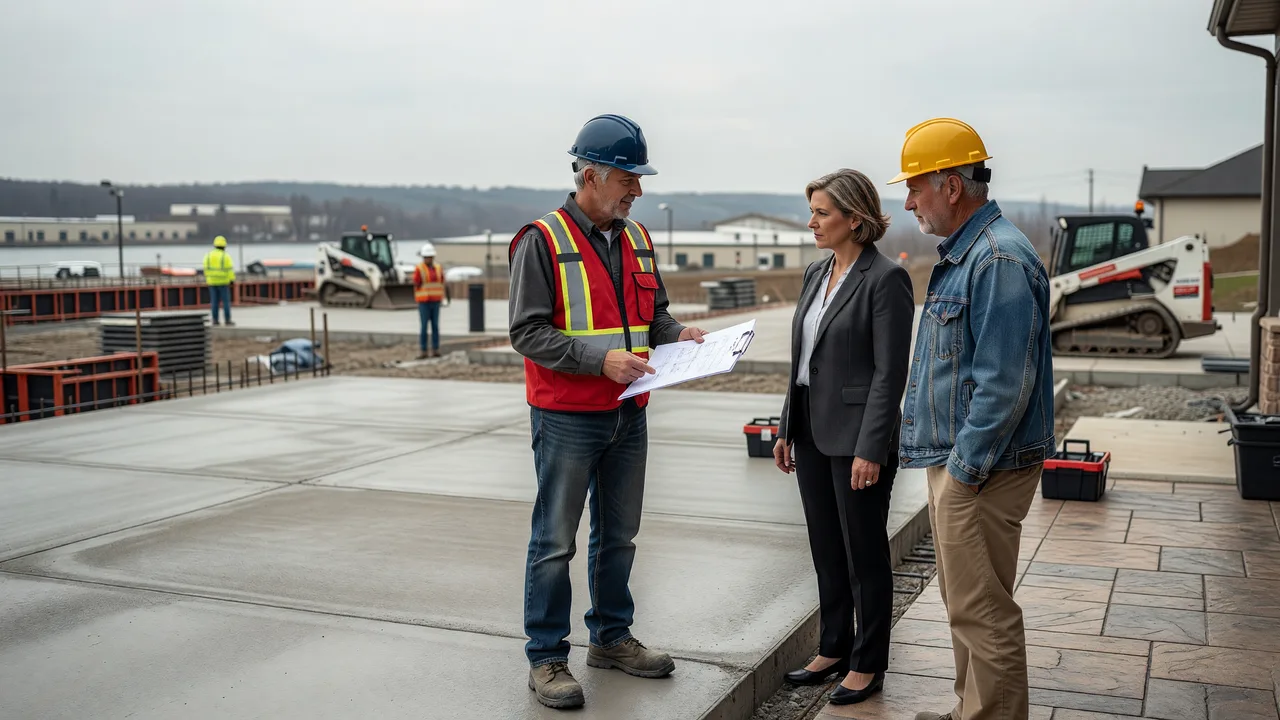
A practical guide for owners, facility managers, developers, and GCs comparing slab pricing, scope risk, and the factors that separate a low bid from a durable commercial installation.

Commercial concrete slab cost per square foot varies based on slab thickness, reinforcement, subgrade prep, access, drainage, forming, finishing, and schedule demands. In Ohio, freeze-thaw durability, heavy-use requirements, and compliance details can materially change price, so the most accurate estimate comes from a site-specific scope review rather than a generic online number. Call (330) 992-2617 to discuss your needs and next steps.
Commercial Concrete Slab Cost Per Square Foot — What Affects the Price OH
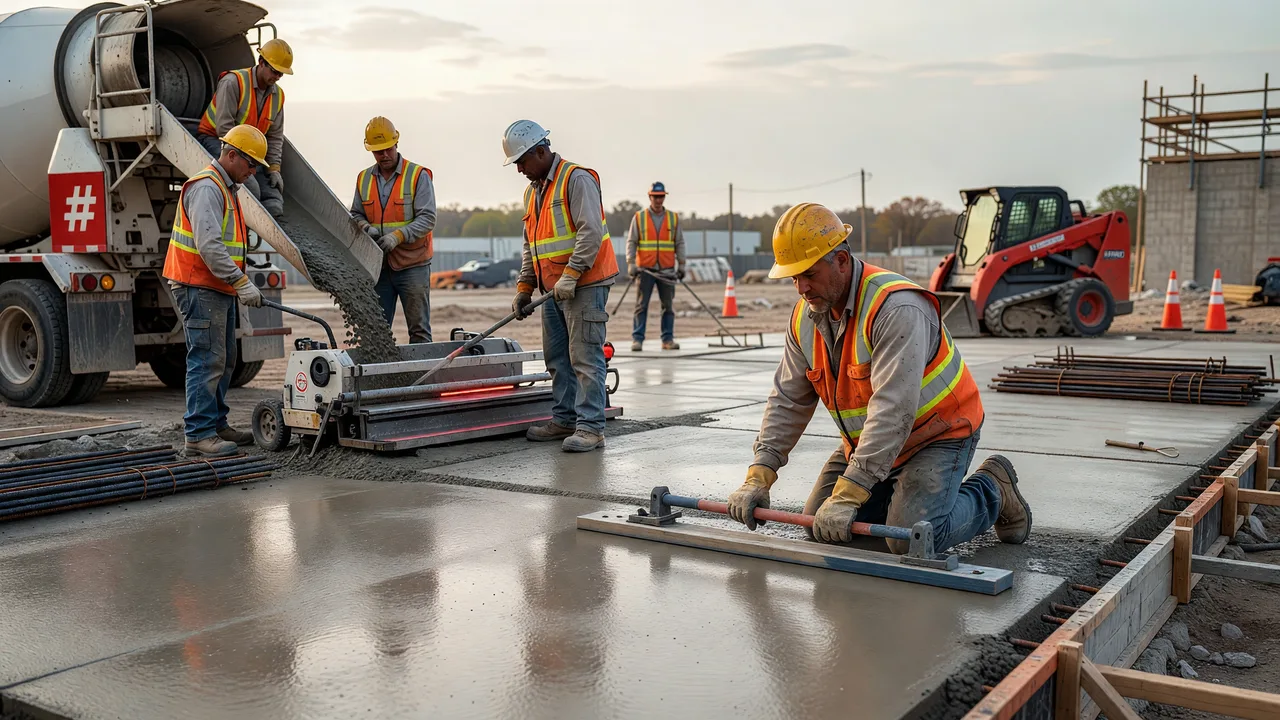 Photo by AI Generated (Grok Imagine)
Commercial Concrete Slab Cost Per Square Foot — What Affects the Price OH depends less on a single national average and more on how the slab is engineered, what it will carry, and what the site requires before the first truck arrives. A warehouse floor, loading dock apron, ADA flatwork section, and structural slab may all be priced per square foot, but they are not equivalent scopes. Thickness, reinforcement, base preparation, moisture control, edge conditions, sawcut layout, finish tolerance, and access constraints all move cost.
For commercial buyers, the real issue is not just initial square-foot price. It is whether the slab survives heavy use, drains correctly, passes inspection, and avoids repeat repairs that disrupt operations. That is why a realistic estimate has to account for job conditions, not just concrete volume. Mattucci Construction approaches this as a self-performing commercial concrete and masonry contractor with more than 20 years in business, bonded and insured, with OSHA-compliant crews and a current Google rating of approximately 4.8 from 19 reviews.
If someone searches for Commercial Concrete Slab Cost Per Square Foot — What Affects the Price near me, they usually want a fast number. The better answer is a structured range tied to use case, because the same square footage can price very differently depending on design loads, subgrade condition, and the amount of forming, finishing, and coordination required.
Why slab price per square foot varies so much in commercial work
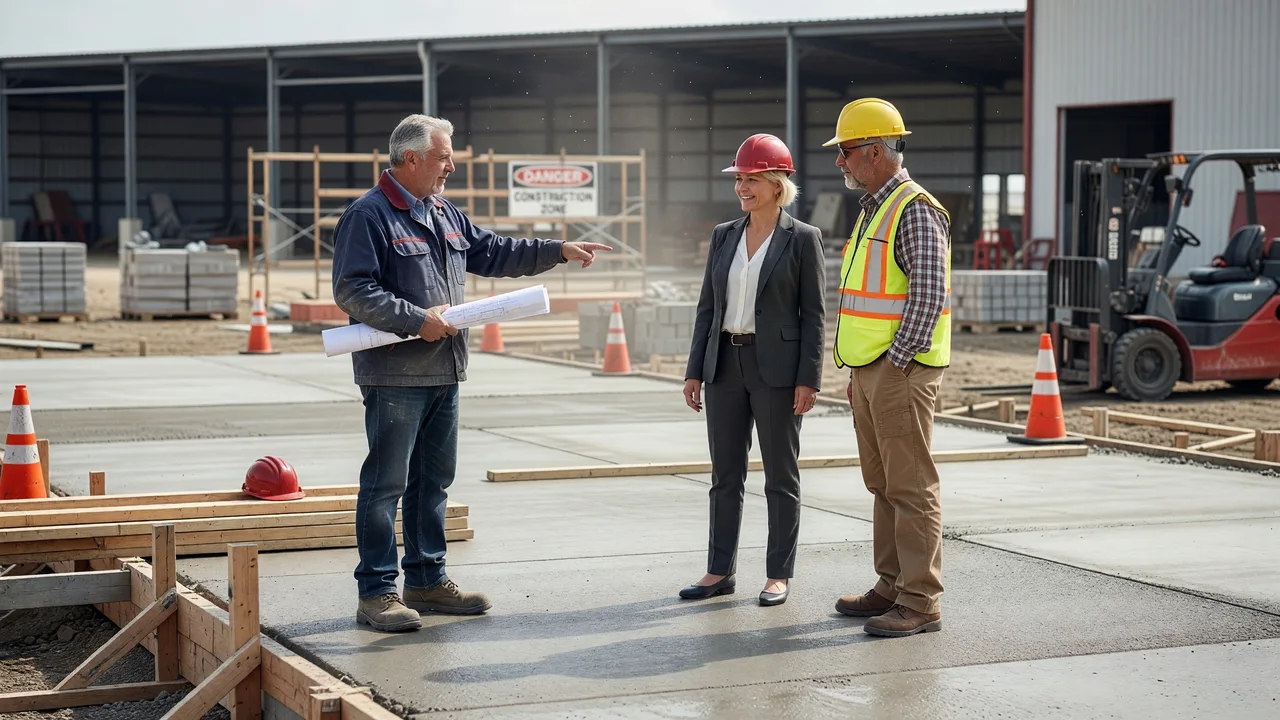
Commercial slab pricing varies because commercial concrete is built around performance requirements, not just appearance. A residential patio and a warehouse floor may both be flat concrete, but one may only support foot traffic while the other must tolerate forklifts, pallet jacks, storage racks, or repetitive truck loading. The demands on the slab change the mix design, reinforcement, thickness, finish, joint planning, curing approach, and quality-control requirements.
Price also shifts based on whether the work is new construction, a tenant build-out, an addition, a replacement slab, or a repair-and-restoration scenario. Demolition, removal, haul-off, protection of adjacent operations, and tie-ins to existing structures can easily add cost per square foot even when the new slab itself appears straightforward. Commercial Concrete Slab Cost Per Square Foot — What Affects the Price services are therefore best evaluated as a package of site logistics, engineering intent, and execution risk.
For owners and property managers, a cheap number on paper can become expensive if the slab ponds water, scales through winters, settles from inadequate base prep, or needs early shutdown for repairs. That is particularly relevant in climates with repeated freeze-thaw exposure, where durability decisions made during estimating have long-term operating consequences.
The main cost drivers in a commercial concrete slab estimate
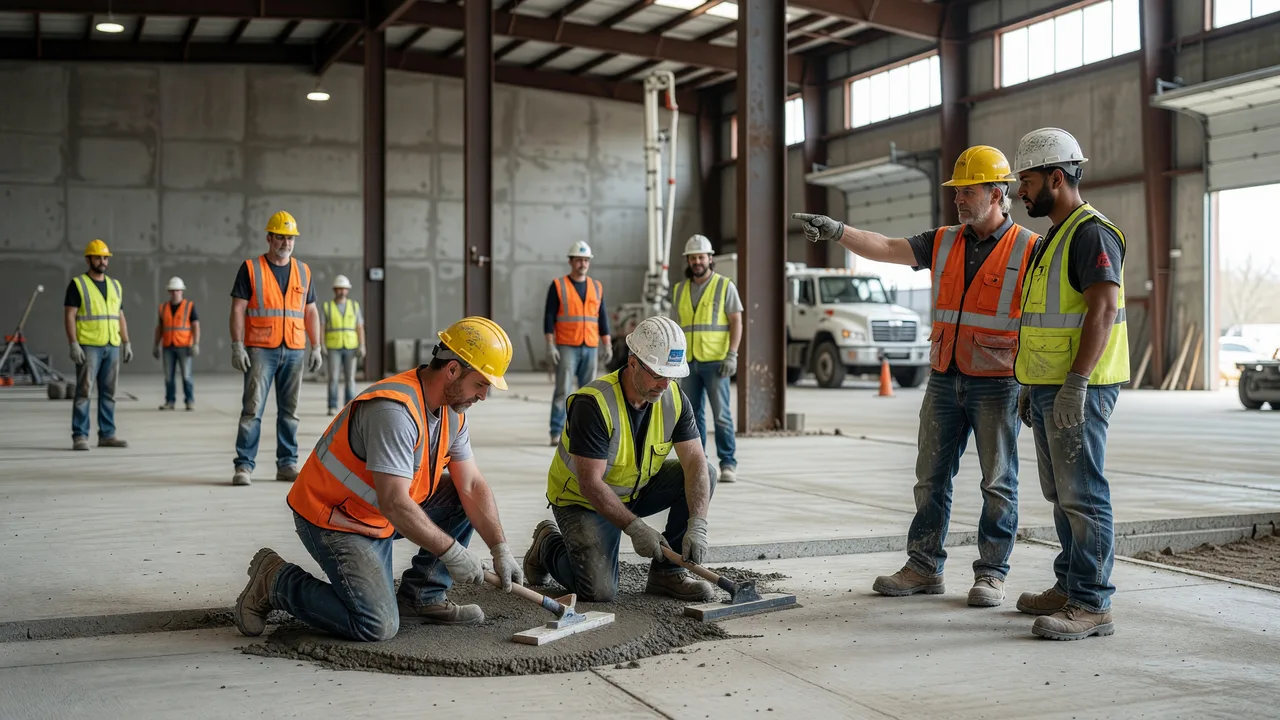 Photo by AI Generated (Grok Imagine)
The clearest way to understand a Commercial Concrete Slab Cost Per Square Foot — What Affects the Price estimate is to break it into the actual components that change labor, material, equipment, and risk. Commercial buyers should review each line item, because that is where meaningful price differences usually show up.
Slab thickness and structural requirements
Thickness is one of the fastest ways to increase or decrease square-foot cost. More thickness means more concrete volume, but that is only part of the story. Thicker slabs can require different reinforcement, edge detailing, and placement methods. A slab supporting office traffic is not priced the same way as a slab intended for industrial use, foundations and footers tie-ins, or a structural slab condition. If design loads are high, cost rises because the slab must be built for service life, not just immediate occupancy.
Reinforcement and crack-control strategy
Reinforcement can include welded wire reinforcement, rebar, fibers, or engineered combinations depending on the application. The type, spacing, placement, and support of reinforcement influence both material cost and labor time. In commercial work, reinforcement decisions affect crack control, load distribution, and long-term stability. Buyers comparing bids should confirm whether each proposal includes the same reinforcement scope, because omitted steel is a common way low numbers look attractive upfront.
Subgrade preparation and base condition
Subgrade prep is often the line item that separates durable work from recurring failure. If the soil is soft, wet, uneven, contaminated, or previously disturbed, the slab may need undercutting, compaction, proof rolling, imported stone, grading, or stabilization. None of that is visible once the slab is poured, but it strongly affects performance. For warehouse floors, loading docks, parking lots, and ADA flatwork, weak base preparation is one of the most expensive shortcuts an owner can accept.
Forming, layout, and edge conditions
Simple open slab placements are generally less expensive than slabs with numerous corners, recesses, thickened edges, curbs, pits, drains, equipment pads, or tie-ins to existing construction. More layout complexity means more labor before the pour and more quality-control checkpoints during placement. Loading dock areas and structural slab transitions typically require more detailed forming and coordination than broad open flatwork.
Finish requirements and tolerance
Not every slab is finished to the same standard. Broom finishes, hard trowel finishes, slip-resistant exterior textures, and surfaces intended for industrial traffic all have different labor profiles. Tight flatness or levelness expectations can raise cost because they require more placement control, more finishing passes, and stronger quality management. If the slab will receive coatings, sensitive equipment, or forklift traffic, finish quality becomes more than an aesthetic issue.
Drainage, slope, and water management
Commercial slabs are not isolated surfaces. They interact with building thresholds, loading dock elevations, parking lot drainage, door clearances, and ADA transitions. Slopes that look minor on plan can be demanding in the field, especially when water must move away from structures without creating trip hazards or noncompliant walkway conditions. Correct drainage design and execution can add labor, but poor drainage creates liability, freeze-thaw damage, and premature deterioration.
Access, staging, and operational constraints
A slab behind an open site fence is simpler to place than one inside an active facility, tight tenant area, or operational loading zone. Access limitations may require smaller equipment, longer pump distances, phased work, night or weekend scheduling, traffic control, or more cleanup and protection. Property managers often underestimate how much occupied-site logistics affect labor cost per square foot.
Weather, schedule, and mobilization
Concrete work is highly schedule-sensitive. Accelerated timelines, winter conditions, multiple remobilizations, and after-hours placement can all increase price. A slab installed in one efficient mobilization is usually less expensive than the same total area broken into several small phases around operations. In freeze-thaw markets, weather protection and curing discipline are also important quality issues, not just pricing variables.
Typical commercial slab scenarios and why their costs differ
When people ask, How much does commercial concrete slab cost per square foot — what affects the price cost in null?, the useful answer is to identify the slab type first. A commercial slab estimate should always be tied to actual use.
| Commercial slab scenario | Common cost pressures | Why price can rise |
|---|---|---|
| Warehouse or industrial floor | Higher load demands, flatter tolerances, larger uninterrupted pours | More reinforcement, stricter finishing, stronger subgrade expectations |
| Loading dock slab or apron | Impact loading, edge durability, drainage coordination | Thickened sections, detailed forming, tie-ins to dock elevations |
| ADA sidewalk and flatwork | Slope compliance, transitions, public-safety requirements | Precision grading, compliance checks, demolition and replacement scope |
| Foundation or structural slab | Engineering, embeds, footers, inspection sequencing | Higher complexity, more coordination, stricter structural requirements |
| Parking lot and site concrete slab areas | Traffic exposure, drainage, curb interfaces, phasing | Site logistics, subbase work, protection of operations and access |
| Tenant build-out slab modifications | Selective demo, trenching, patching, occupied conditions | Complex sequencing and tie-in work in active facilities |
This comparison is one reason online cost calculators often miss the mark. They usually assume a generic slab with easy access and average preparation. Real commercial work rarely stays that simple for long.
Searches such as best Commercial Concrete Slab Cost Per Square Foot — What Affects the Price null, top Commercial Concrete Slab Cost Per Square Foot — What Affects the Price null, or affordable Commercial Concrete Slab Cost Per Square Foot — What Affects the Price null often reflect a buyer trying to sort contractor quality from price pressure. The better comparison is not cheapest versus highest. It is complete scope versus missing scope.
What commercial buyers should compare in competing bids
If you are reviewing estimates from multiple contractors, compare what is actually included before comparing final numbers. Ask whether demolition, removal, subgrade correction, imported stone, reinforcement, vapor barriers where applicable, forming, sawcutting, curing, sealers, joint filling, cleanup, traffic control, and protection of adjacent areas are included. One proposal may look lower only because several necessary items are excluded or stated as allowances.
It is also smart to verify who will perform the work. Mattucci Construction’s self-perform model matters because it removes a common accountability problem in commercial concrete: the company selling the project is not always the crew installing it. For owners, GCs, and facility managers, no subcontractor roulette means clearer responsibility for schedule, workmanship, safety coordination, and punch resolution.
From a procurement standpoint, bonded and insured status and OSHA-compliant crews are not soft marketing claims. They are risk-management factors. On occupied commercial sites, safety documentation, jobsite conduct, and predictable supervision can affect project outcomes almost as much as material selection.
That distinction also helps answer questions like professional Commercial Concrete Slab Cost Per Square Foot — What Affects the Price null and Commercial Concrete Slab Cost Per Square Foot — What Affects the Price professional null OH. Professional commercial concrete work is not defined by polished language. It is defined by complete scopes, disciplined crews, and execution that stands up to traffic, weather, and inspection requirements.
How schedule and downtime affect total cost
Square-foot price alone does not capture business interruption. For many commercial properties, the larger financial question is what the slab work does to deliveries, tenant access, parking counts, dock availability, or production flow. A contractor who can phase work logically, protect access, and complete pours without repeated remobilization may deliver a better total outcome even if the initial line-item price is not the lowest on the page.
General contractors and developers should also consider sequence dependencies. Foundations and slabs influence steel, framing, masonry, tenant improvements, and occupancy milestones. If concrete slips, the entire critical path can slip with it. That is why schedule reliability belongs in any serious review of Commercial Concrete Slab Cost Per Square Foot — What Affects the Price contractor options.
Mattucci’s commercial focus includes parking lots and site concrete, warehouse and industrial floors, loading docks, ADA sidewalks and flatwork, foundations and footers, tilt-up concrete construction, commercial masonry, retaining walls, concrete repair and restoration, and tenant build-outs. That range is relevant because many slab projects are not stand-alone scopes; they connect to broader site and structural work that must be coordinated correctly.
How to choose a provider for commercial slab pricing and installation
Buyers asking How do I choose a commercial concrete slab cost per square foot — what affects the price provider in null? should focus on commercial fit, not broad contractor claims. Start by asking what percentage of the contractor’s work is genuinely commercial and whether they routinely handle warehouse floors, loading docks, ADA flatwork, foundations, and site concrete. A firm that mainly markets patios and driveways may not be structured for the documentation, logistics, and tolerance demands of commercial slabs.
Next, evaluate accountability. Who supervises the job? Is the company self-performing or brokering work to subcontractors? Who handles safety coordination? Who is responsible if subgrade issues are uncovered or edge details do not match field conditions? Commercial buyers need one accountable team, especially where shutdowns, inspection timing, and tenant disruption are on the line.
Then review proof signals that matter to commercial procurement: longevity, insurance, bondability, safety posture, and reputation. Mattucci Construction is family-owned, has been in business for more than 20 years, self-performs the work, is bonded and insured, and staffs OSHA-compliant crews. Its Google review profile is currently approximately 4.8 across 19 reviews. None of those facts replace a site walk, but together they indicate a contractor built around repeatable field execution rather than one-off sales activity.
This is also the right place to answer adjacent search intent like what is the best commercial concrete slab cost per square foot — what affects the price company in null? The best fit is usually the contractor whose scope matches the use case, whose estimate is complete, and whose team can carry accountability from prep through final finish without handing the work off.
Practical recommendations before requesting a slab estimate
- Define the use case clearly. State whether the slab will support pedestrian traffic, forklifts, pallet jacks, trucks, equipment, storage racks, or a structural assembly. Intended use drives design and price.
- Provide dimensions and thickness if known. Even a preliminary drawing improves estimate quality more than a rough square-foot count alone.
- Share existing site conditions. Photos of cracking, settlement, drainage issues, existing slab tie-ins, or failing base conditions help identify hidden cost drivers early.
- Flag access restrictions. Mention active tenants, delivery windows, dock schedules, restricted staging, or required phasing. These details often affect labor and schedule more than buyers expect.
- Ask how subgrade issues are handled. If unsuitable soils or hidden voids are discovered, know in advance how changes will be documented and priced.
- Compare durability strategy, not just price. Ask what is being done to manage drainage, jointing, reinforcement, curing, and freeze-thaw exposure.
- Verify who will actually do the work. A self-performing contractor can simplify communication and reduce the finger-pointing common on commercial sites.
These steps are useful whether you are researching services Commercial Concrete Slab Cost Per Square Foot — What Affects the Price null, reviewing a Commercial Concrete Slab Cost Per Square Foot — What Affects the Price consultation, or trying to pressure-test a low bid before award.
Related commercial concrete costs buyers often research
Slab pricing is frequently part of a larger capital planning conversation. Property owners and facility managers also research parking lot replacement, ADA sidewalk correction, concrete masonry construction, retaining walls, and repair versus replacement decisions. Those scopes share many of the same pricing variables: demolition, grading, drainage, reinforcement, access, and compliance risk.
For example, searches such as how much does ada-sidewalk cost in Macedonia OH, how much does parking-lot cost in Twinsburg OH, how much does parking-lot cost in Macedonia OH, best parking-lot near me, commercial-concrete in Twinsburg OH, and concrete masonry construction in Macedonia OH all point to one recurring buyer concern: understanding how site conditions and commercial performance requirements change price. Even when a project starts as “just a slab,” it often touches broader site concrete, masonry, or restoration needs that should be evaluated together.
That is one reason Mattucci’s full commercial capability set matters. Parking lots and site concrete interact with slab edges and drainage. Commercial masonry can affect loading dock geometry and retaining conditions. Concrete repair and restoration can sometimes extend service life when total replacement is not yet necessary. A contractor that understands those connections can provide a more realistic scope review.
Bottom line: cost per square foot is useful, but scope accuracy matters more
Commercial Concrete Slab Cost Per Square Foot — What Affects the Price best null OH is ultimately not a contest for the lowest generic number. It is a scope-and-risk exercise. The most dependable estimate is the one that reflects actual slab use, realistic subgrade conditions, drainage needs, reinforcement requirements, site access, and schedule constraints. That is what allows buyers to compare proposals on equal terms.
For procurement teams, developers, and facility managers, the smartest question is not only “What is the square-foot cost?” It is also “What assumptions is that number built on, and what could change it?” That shift in framing usually prevents surprises later in the project.
Commercial Concrete Slab Cost Per Square Foot — What Affects the Price affordable null and Commercial Concrete Slab Cost Per Square Foot — What Affects the Price top null OH can both be true only when the scope is properly defined. An affordable project is one that performs as intended without repeated maintenance, tenant disruption, or compliance problems. A top-tier outcome is one delivered by a contractor who can manage the details that make concrete last.
Need a project-specific slab estimate?
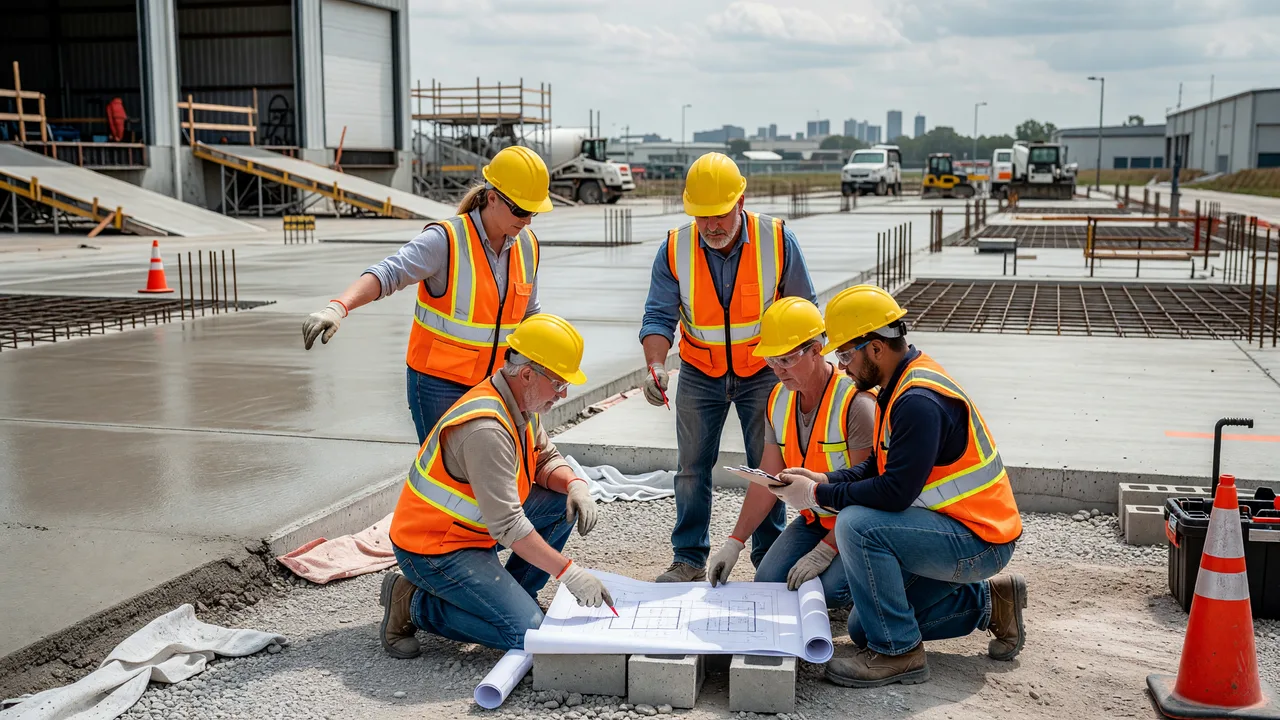 Photo by AI Generated (Grok Imagine)
If you are budgeting a warehouse floor, loading dock, ADA flatwork package, foundation slab, parking lot section, or tenant build-out concrete scope, a project-specific review will give you a more useful answer than a generic cost calculator. Mattucci Construction self-performs commercial concrete and masonry work, is bonded and insured, uses OSHA-compliant crews, and has more than 20 years of experience serving commercial buyers in Northeast Ohio. To discuss your plans, use the quote request form at https://mattucciconstruction.net or call (330) 992-2617.
Frequently Asked Questions About Commercial Concrete Slab Cost Per Square Foot — What Affects the Price
How much does commercial concrete slab cost per square foot — what affects the price cost in null?
There is no credible single number that fits every commercial slab, because square-foot cost changes with slab thickness, reinforcement, base prep, finishing requirements, drainage, access, demolition, and scheduling conditions. A simple open slab with stable subgrade will price differently than a loading dock apron, warehouse floor, or ADA flatwork replacement. For a decision-quality number, request a site-specific estimate rather than relying on a generic online average.
What should I look for in commercial concrete slab cost per square foot — what affects the price services?
Look for a complete scope, not just a concrete placement number. A sound proposal should address prep, forming, reinforcement, subgrade condition, finish, jointing, drainage, cleanup, and any operational constraints. It should also clarify assumptions and exclusions so you can compare bids accurately. In commercial settings, contractor accountability, insurance, bondability, and safety compliance are part of the service value.
How long does commercial concrete slab cost per square foot — what affects the price take?
Duration depends on square footage, demolition needs, site access, weather, curing requirements, and whether the project is phased around active operations. Small straightforward placements can move quickly, while larger slabs or occupied-site work can require more sequencing. Time should be evaluated in two stages: installation duration and return-to-service timing. The latter matters most for owners concerned about downtime.
Is commercial concrete slab cost per square foot — what affects the price worth the investment?
Yes, when the slab is built to the actual use case and site conditions. Durable commercial concrete can reduce patching cycles, improve drainage, lower trip-hazard exposure, support operations more reliably, and help avoid inspection or ADA issues. The investment becomes questionable only when the scope is underbuilt or key prep items are skipped to force a lower initial number.
What is the best commercial concrete slab cost per square foot — what affects the price company in null?
The best company for a commercial slab project is typically the one with a strong commercial track record in the exact type of work you need, a complete estimate, and clear accountability in the field. For buyers comparing contractors, self-performed work, safety compliance, insurance, bondability, and experience with warehouse floors, loading docks, foundations, parking lots, and ADA flatwork are stronger indicators than broad marketing claims.
Do warranties or financing affect commercial slab decisions?
Buyers often search for a Commercial Concrete Slab Cost Per Square Foot — What Affects the Price warranty or Commercial Concrete Slab Cost Per Square Foot — What Affects the Price financing option when planning capital work. The right first step is to ask the contractor what protections, documentation, and payment structures are available for your specific project type. More important than financing language is understanding exactly what scope is being warranted and what site conditions could affect performance over time.
Get a clear commercial slab estimate based on real job conditions
If you need pricing for a warehouse floor, loading dock, ADA flatwork, foundation slab, or site concrete package, Mattucci Construction can review the scope and provide a project-specific quote. Submit the quote-request form at https://mattucciconstruction.net and keep the phone number visible for direct coordination: (330) 992-2617.