
How to Choose a Bonded & Insured Commercial Contractor in Akron
How to Choose a Bonded & Insured Commercial Contractor in Akron
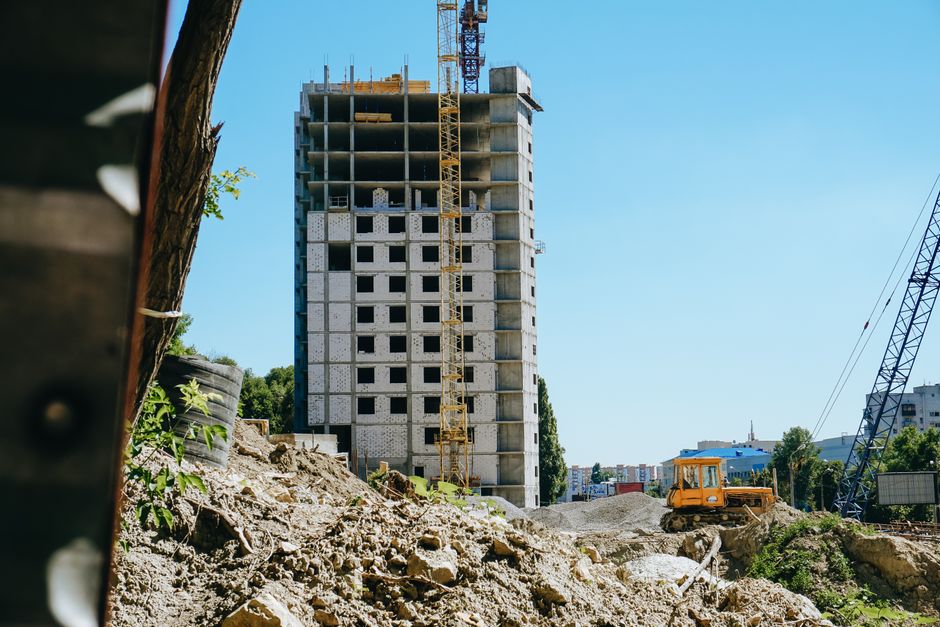
Whether you’re resurfacing a parking lot off Market Street, replacing a cracked foundation in Highland Square, or upgrading the loading dock at a warehouse in the Goodyear Heights industrial corridor, the contractor you hire will determine whether your investment lasts 5 years or 25. In Northeast Ohio, where freeze-thaw cycles can swing temperatures 50 degrees in a single February afternoon, hiring a bonded insured commercial contractor in Akron isn’t a formality — it’s the single most important risk-management decision you’ll make on the project.
This guide walks Akron-area property owners and small commercial operators through exactly what bonding and insurance mean, how to verify a contractor’s credentials, and which red flags should immediately end the conversation. By the time you finish reading, you’ll be able to vet any contractor in Summit, Cuyahoga, or Medina County with the confidence of a seasoned project manager.
What “Bonded and Insured” Actually Means in Ohio
The phrase “bonded and insured” gets thrown around so often it has lost meaning. In reality, it describes three distinct legal and financial protections — and a legitimate Akron commercial contractor should carry all three.
- Surety Bond: A three-party agreement where a surety company guarantees the contractor will complete the work according to contract. If they default, the surety pays you (the obligee) to finish the job. Ohio commercial bonds typically range from $10,000 to over $1 million depending on project scope.
- General Liability Insurance: Covers third-party bodily injury and property damage. For commercial concrete work in Akron, you should expect minimum coverage of $1 million per occurrence and $2 million aggregate.
- Workers’ Compensation: Required by Ohio law (administered through the Ohio Bureau of Workers’ Compensation) for any contractor with employees. Without it, an injured worker on your property can sue you.
A contractor who skips any of these three is shifting risk onto your balance sheet. A pothole patch in a Stow strip mall parking lot may seem low-stakes — until a delivery driver trips, breaks an ankle, and the uninsured contractor disappears. Suddenly, you’re the defendant.
AI-generated video
How to Verify Credentials Before You Sign Anything
Don’t take a contractor’s word for it. Every legitimate commercial contractor operating in Akron will provide documentation within 24 hours of being asked. Here’s the verification checklist we recommend to every client:
- Request a Certificate of Insurance (COI) directly from the insurer. Ask the contractor to have their insurance agent email it to you. This prevents document tampering.
- Verify the surety bond by calling the surety company listed and confirming the bond is active and applies to your project size.
- Check Ohio BWC status at bwc.ohio.gov using the contractor’s policy number or business name.
- Confirm Ohio business registration through the Ohio Secretary of State’s business search tool. Look for active, in-good-standing status.
- Verify city-specific permits. The City of Akron requires permits for most commercial concrete, foundation, and excavation work. A contractor who suggests skipping permits is a contractor planning to disappear.
According to the Better Business Bureau’s Akron-area data, contractor disputes consistently rank in the top five complaint categories every year. Nearly all of those disputes trace back to one of two failures: no written contract, or no verified insurance. Both are entirely preventable in the first 30 minutes of due diligence.
The Akron-Specific Factors Most Contractors Won’t Mention
Akron’s climate, soil, and infrastructure create challenges that out-of-town contractors routinely underestimate. When interviewing candidates, listen for whether they understand the local environment:
- Freeze-thaw durability: Akron averages 60-70 freeze-thaw cycles per year. Concrete mixes for exterior commercial work should be air-entrained at 5-7% and use a minimum 4,000 PSI compressive strength. If a contractor proposes a 3,000 PSI residential mix for your Cuyahoga Falls warehouse apron, walk away.
- Clay-heavy subsoil: Much of Summit County, particularly around Hudson, Twinsburg, and parts of Stow, sits on expansive clay. Without proper base preparation (typically 6-8 inches of compacted #57 limestone), slabs heave and crack within three winters.
- Salt and de-icer exposure: Commercial properties along busy corridors like Route 8, I-77, and Tallmadge Avenue see heavy chloride exposure. Sealing protocols and concrete cover over rebar become critical.
- Stormwater compliance: The Summit Soil and Water Conservation District enforces sediment control on projects disturbing over 1 acre. Your contractor should know this without prompting.
Questions Every Akron Property Owner Should Ask
Use this list during your contractor interview. The answers — and how confidently they’re delivered — tell you everything.
- How many years have you specifically performed commercial work in the Akron market?
- Can you provide three references from commercial projects completed within the last 24 months in Summit or Medina County?
- What is your bond capacity, and will you pull a project-specific bond for my job?
- Who is your insurance carrier, and can they list me as an additional insured?
- What concrete mix design and base preparation are you specifying, and why?
- What is your written warranty, and how have you honored it on past projects?
- How do you handle change orders, weather delays, and unforeseen subsurface conditions?
- Will you pull all required City of Akron (or relevant municipality) permits in your name?
A contractor who answers these crisply has done the work before. A contractor who hedges, deflects, or pushes back on documentation is telling you, indirectly, who they are.
Red Flags That Should End the Conversation Immediately
Over decades of working alongside (and occasionally repairing the work of) other contractors across Northeast Ohio, we’ve cataloged the warning signs that predict disaster with near-perfect accuracy:
- Cash-only or large upfront deposits. Industry standard is 10-25% mobilization, with milestone payments tied to deliverables. A demand for 50% upfront is a financial distress signal.
- No physical business address. A P.O. box and a magnetic truck sign is not a commercial contracting operation.
- Door-to-door solicitation after storms. Reputable Akron commercial contractors are booked months in advance — they’re not knocking on doors in Medina the day after a hailstorm.
- Verbal agreements or hand-written one-page contracts. Commercial work requires a detailed scope, specifications, schedule, payment terms, warranty, and change-order procedure in writing.
- Pressure to start “this week” with a discount. Legitimate contractors don’t need urgency tactics.
- Reluctance to provide a COI or bond letter. The single most reliable indicator of trouble ahead.
Why Local Experience Matters More Than National Credentials
National franchises and out-of-state firms occasionally bid Akron commercial work at attractive prices. The savings rarely survive contact with reality. A contractor who has poured concrete in Fairlawn knows that the soil behaves differently than in Wadsworth. A contractor who has worked downtown around the Akron Civic Theatre understands the logistics of staging in a tight urban footprint. A contractor who has navigated the permitting offices in Hudson, Twinsburg, and Strongsville already has the relationships that prevent two-week delays.
That accumulated local knowledge — what engineers call “site intuition” — is the difference between a project that finishes on schedule and one that drags into the first hard freeze. When you’re comparing bids, weight local experience heavily. The lowest number on the page is almost never the lowest cost at the end of the project.
Frequently Asked Questions
What’s the difference between being licensed, bonded, and insured in Ohio?
Ohio does not require a state-issued general contractor license for most commercial work, though specialty trades (electrical, plumbing, HVAC) require state licensure. “Bonded” means a surety company guarantees the contractor’s performance financially. “Insured” typically refers to general liability and workers’ compensation coverage. All three protect you in different ways, and you should require evidence of each.
How much should a commercial contractor’s bond be for a typical Akron project?
Bond size should match project value. For a $50,000 parking lot replacement, a bond equal to the contract value (100%) is standard. For larger projects exceeding $250,000, performance and payment bonds are typically issued separately, each at 100% of contract value. Always ask for a project-specific bond letter, not just a general bonding capacity statement.
Can I be held liable if an uninsured contractor’s worker is injured on my Akron property?
Yes. If the contractor lacks valid Ohio workers’ compensation coverage, an injured worker can pursue claims against the property owner. This is one of the most overlooked exposures in commercial contracting. Always require a current BWC certificate before work begins, and verify it directly through bwc.ohio.gov.
What concrete warranty is reasonable for commercial work in Northeast Ohio?
A reputable Akron commercial contractor should offer a minimum one-year workmanship warranty, with many providing two to five years on flatwork and structural concrete. The warranty should explicitly cover cracking beyond standard control joints, surface scaling, and settlement caused by inadequate base preparation. Get it in writing as part of the contract, not as a separate document delivered at project closeout.
How long should a commercial concrete project last in Akron’s climate?
Properly designed, mixed, placed, and maintained commercial concrete in Northeast Ohio should provide 25-40 years of service life. Achieving that lifespan requires correct PSI specification, proper air entrainment, adequate base preparation, appropriate joint design, and timely sealing. Cutting corners on any of these typically reduces service life to 7-12 years — and the savings on day one become a complete replacement on day 3,000.
About Mattucci Construction
Mattucci Construction has been delivering commercial and residential concrete services across Akron, Cleveland, and the surrounding Northeast Ohio communities for decades. Our team is fully bonded, insured, and Ohio BWC-compliant, and we specialize in concrete solutions engineered specifically for the freeze-thaw realities of Summit, Cuyahoga, and Medina Counties. From foundations and footings in Hudson to commercial flatwork in Cuyahoga Falls and parking lot reconstruction in Strongsville, we build infrastructure designed to outlast the next 20 Ohio winters — not just the next warranty period.
Ready to Work With a Verified Local Contractor?
If you’re evaluating commercial concrete work in the Akron metro area, we welcome the opportunity to walk your site, review your specifications, and provide a fully documented proposal — including current bond and insurance certificates before any work is discussed. Explore our full range of services or contact our team to schedule a no-obligation site assessment.
Get a Free Quote
Send us a message and we’ll get right back to you.
☎ Call 330-992-2617
Request a Free Bid Package
Ready to Get Started?
Mattucci Construction provides expert Home Services in Akron and surrounding areas.
Contact Us Today
Call 330-992-2617
Frequently asked questions
How much does our service cost?
Mattucci Construction offers transparent pricing and a free initial consultation. Final cost depends on your specific situation — contact us for a no-obligation quote.
How long does our service take?
Timelines vary by case, but Mattucci Construction provides a clear estimate up front and same-day scheduling where possible.
Do you serve my area?
Yes — Mattucci Construction actively serves the local area and surrounding communities.
What should I do first?
Reach out to Mattucci Construction for a free consultation; we’ll review your situation and outline the best next step.
contact our team
Request an Estimate
Share your project details and we’ll send a free estimate.
☎ Call 330-992-2617
Request My Free Estimate
Frequently asked questions
How much does concrete cost?
How long does concrete take?
Do you serve my area?
What should I do first?
Request an Estimate
Share your project details and we’ll send a free estimate.
☎ Call 330-992-2617