
Commercial Concrete Repair vs Replacement — How to Decide
Commercial Concrete Repair vs Replacement: How to Decide
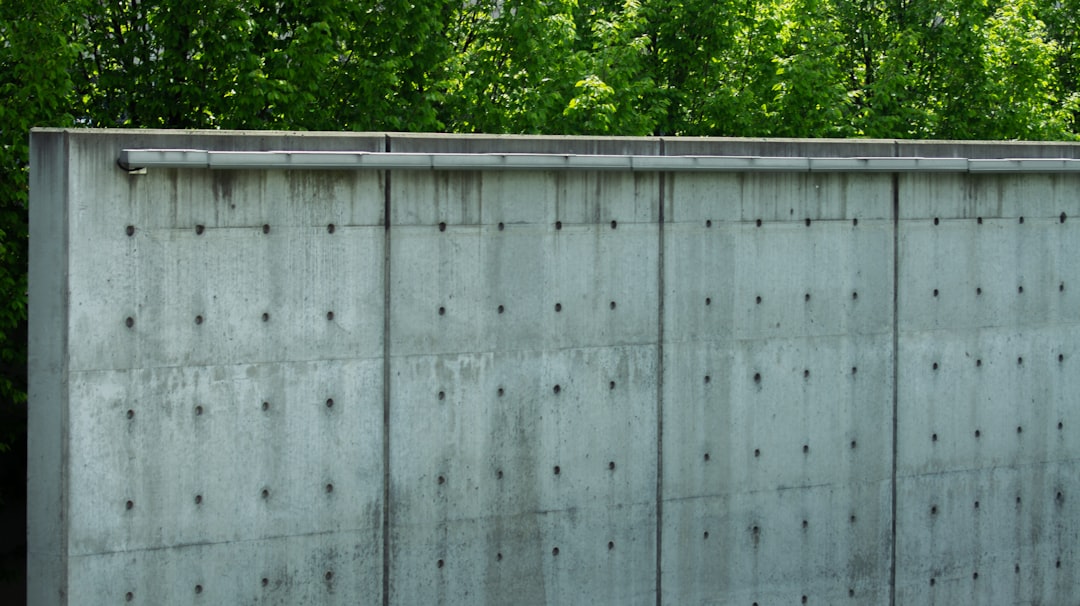
Commercial Concrete Repair vs Replacement: How to Decide in Akron, Ohio
For property owners across Akron and Northeast Ohio, concrete surfaces represent one of the most significant capital investments on any commercial or residential property. Parking lots, loading docks, sidewalks, foundation slabs, and driveways take a brutal beating from our regional climate — freeze-thaw cycles, road salt, heavy equipment, and the relentless wet-dry shifts between Lake Erie weather systems. When that concrete starts showing its age, owners face a critical financial decision: commercial concrete repair vs replacement.
Choosing wrong is expensive. Repair a slab that should have been replaced, and you’ll pay twice within 24 months. Replace a slab that could have been restored, and you’ve burned tens of thousands of dollars unnecessarily. This guide walks through the decision framework Mattucci Construction uses on projects throughout Summit, Cuyahoga, and Medina counties — the same framework that helps our clients in Hudson, Stow, Strongsville, and downtown Akron maximize the lifespan of their concrete assets.
Understanding How Concrete Fails in Northeast Ohio
Before you can evaluate repair vs replacement, you need to understand why your concrete is failing. Akron averages roughly 50 freeze-thaw cycles per year — well above the national average — and the City of Akron applies more than 10,000 tons of road salt during a typical winter season. These two factors alone account for the majority of premature concrete deterioration we see on commercial properties from Fairlawn to Twinsburg.
Common failure modes include:
- Surface scaling and spalling: The top layer flakes off due to deicing chemicals and water infiltration. Cosmetic at first, structural later.
- Cracking: Hairline cracks (under 1/8″) are often manageable. Cracks wider than 1/4″ with vertical displacement signal subgrade issues.
- Settlement and heaving: Common in older properties along the Cuyahoga Valley where soils shift seasonally.
- Pop-outs and aggregate exposure: Frequently the result of reactive aggregate or substandard original mix design.
- Joint deterioration: Failed expansion joints allow water beneath the slab, accelerating subgrade erosion.
Identifying the failure mode is step one. A trained concrete contractor can typically tell within minutes whether you’re looking at a surface issue or a structural problem — and that distinction drives every downstream decision.
Video by
K
When Concrete Repair Is the Right Call
Repair makes financial and structural sense when the underlying slab and subgrade are still sound. According to industry benchmarks from the American Concrete Institute (ACI), targeted repair can extend the service life of a commercial slab by 10 to 15 years at roughly 25–40% of replacement cost. That’s a compelling ROI when the conditions are right.
You’re likely a strong repair candidate if:
- Cracks are isolated and narrower than 1/4 inch with no vertical displacement
- The slab is less than 20 years old and was installed to commercial spec (4,000+ PSI, properly reinforced)
- Damage is confined to less than 30% of the total surface area
- The subgrade is stable — no settlement, no pumping water, no visible voids
- Surface scaling is limited to the top 1/4 inch
- Joints have failed but slabs remain intact
Common repair methods we deploy on Akron-area projects include polyurethane crack injection, partial-depth patching with polymer-modified mortars, slab jacking (mudjacking or polyjacking) for settled sections, joint resealing, and protective sealer application. For parking lots in commercial corridors like Montrose or Chapel Hill, we often combine multiple techniques to address different failure zones within a single project — preserving usable life without the disruption of full reconstruction.
When Replacement Becomes the Smarter Investment
There’s a tipping point where continued repair becomes throwing good money after bad. A general rule of thumb in the industry: when repair costs exceed 50% of replacement cost, or when you’re returning for repairs every 2–3 years, full replacement is almost always the better long-term decision.
Strong indicators that replacement is warranted:
- Widespread structural cracking with vertical displacement greater than 1/4 inch
- Subgrade failure — visible settlement, pumping joints, or hollow-sounding sections
- Alligator cracking across more than 30% of the surface
- Severe spalling exposing rebar or reaching more than half the slab depth
- Age over 25–20 years with no original reinforcement or expansion control
- Load requirement changes — for instance, a property near the Akron-Canton Airport corridor transitioning from light retail to industrial use
- ADA compliance issues that can’t be resolved with surface treatments
Modern replacement also gives you a chance to upgrade. We can specify higher PSI mixes (5,000+ for heavy-traffic areas), fiber reinforcement, improved subgrade preparation with geotextile fabric, and properly engineered drainage. A new commercial slab installed correctly in our climate should deliver 30–40 years of service with minimal maintenance.
The True Cost Comparison: Repair vs Replacement in 2025
Pricing varies based on access, scope, and site conditions, but here are realistic Northeast Ohio ranges as of 2025:
- Crack injection and sealing: $8–$15 per linear foot
- Partial-depth patching: $15–$30 per square foot
- Slab jacking: $5–$15 per square foot
- Joint resealing: $3–$8 per linear foot
- Full replacement (commercial slab): $9–$18 per square foot, including removal, subgrade prep, reinforcement, and finishing
The honest cost analysis includes more than the line-item price. Consider:
- Downtime: Repairs typically take 1–3 days; replacements can take 1–3 weeks depending on cure schedules
- Cure time impact on business operations
- Warranty coverage — repairs typically carry 2–5 year warranties; new installations often 10+ years
- Insurance and liability — deteriorated concrete creates slip-and-fall exposure
- Property valuation — fresh concrete materially impacts commercial appraisals
For a 5,000 square foot parking area in serious decline, the math often surprises owners. Repeated repair over 5 years can easily exceed $35,000 while still leaving you with failing infrastructure. A proper replacement at $60,000–$80,000 delivers 20+ years of service — a dramatically lower cost per year of useful life.
The Ohio Climate Factor: Why Local Expertise Matters
Concrete decisions made by out-of-state contractors or generalist handymen frequently fail in our climate. Northeast Ohio presents specific challenges that demand specific solutions:
- Air-entrained mixes are non-negotiable. Concrete poured here without 5–7% air entrainment will fail prematurely. Period.
- Subgrade preparation is everything. Our clay-heavy soils, particularly in areas like West Akron and Bath Township, retain water and heave during freeze cycles. Proper compaction and drainage design make or break the installation.
- Curing protocol matters. Concrete poured in October or November in Akron requires entirely different curing strategy than a July pour in Medina.
- Sealer selection is regional. Penetrating silane/siloxane sealers outperform topical coatings in our freeze-thaw environment.
This is why we strongly advise owners against the lowest bid from a contractor who doesn’t specialize in commercial concrete in our specific climate zone. The savings disappear the first winter.
How to Conduct an Honest Assessment of Your Concrete
Before you call any contractor, you can perform a preliminary self-assessment. Walk your property with a notepad and document:
- Crack width: Use a credit card edge as a quick gauge. Wider than a credit card edge = structural concern.
- Vertical displacement: Run your foot across each crack. Any catch indicates settlement.
- Surface integrity: Tap suspicious areas with a hammer. Hollow sounds indicate delamination.
- Drainage patterns: Where does water pool after rain? Standing water signals grade or subgrade issues.
- Joint condition: Are expansion joints sealed and intact, or have they failed?
- Percentage affected: Roughly estimate what percentage of the total surface shows distress.
Photograph everything. When you bring in a qualified contractor for evaluation, this documentation accelerates the diagnostic process and helps ensure you receive an apples-to-apples comparison between competing proposals. A reputable concrete professional will also perform core sampling on larger projects to verify slab thickness and condition below the surface — a step worth insisting on for any project over $25,000.
Ready to get an expert evaluation? Explore our concrete services or contact our team for an on-site assessment anywhere in the greater Akron area.
Frequently Asked Questions
How long should commercial concrete last in the Akron area?
Properly installed commercial concrete in Northeast Ohio should deliver 30–40 years of service with routine maintenance. Parking lots and driveways typically last 25–35 years; sidewalks and properly protected interior slabs can exceed 50 years. The variables that most affect lifespan are original mix design (air entrainment is critical), subgrade preparation, drainage, and whether the surface is sealed every 3–5 years. Concrete that fails in under 15 years almost always has installation defects or was never sealed.
Can you repair concrete in winter, or do I have to wait until spring?
Most concrete repairs can be performed year-round in Akron, though there are constraints. Crack injection with polyurethane works in temperatures down to about 25°F. Polymer patching materials require warmer conditions — typically above 40°F with rising temperatures. Slab jacking is feasible in winter if access is clear. Full replacement work is best scheduled between April and October, though we use cold-weather concreting protocols (heated enclosures, accelerators, insulated blankets) when project timelines demand winter pours. We’ll always advise honestly whether your specific project can or should proceed in winter conditions.
What’s the warranty difference between concrete repair and replacement?
Reputable contractors typically warranty concrete repairs for 2–5 years depending on the method. Crack injection, for instance, often carries a 5-year warranty against re-cracking at the repair site. Full slab replacement typically comes with a 1-year workmanship warranty against settlement and cracking beyond normal expansion, with some contractors offering extended structural warranties up to 10 years. Always get warranty terms in writing and verify what’s covered versus excluded — particularly regarding freeze-thaw damage and salt exposure, which are common exclusions.
How disruptive is concrete replacement for an operating business?
Disruption depends on scope and phasing. For a commercial parking lot, we typically phase the work in sections so that a portion of the lot remains accessible throughout. Concrete requires 7 days to reach about 70% of design strength and 28 days to reach full strength — though most commercial mixes can accept light traffic within 3–5 days and full traffic within 7–10 days with the right mix design. For Akron-area retail and service businesses, we routinely schedule pours for off-peak periods and use high-early-strength mixes to compress downtime. A 5,000 SF lot can typically be replaced and reopened in 10–14 days from start to finish.
Will repair work be visible after it’s complete?
Honestly, yes — to some extent. Patches and crack repairs will be visible upon close inspection, even with color-matched materials. Concrete is a living material that develops a unique patina over time, and new material will never perfectly match aged surfaces. That said, professional repair work blends well from normal viewing distances and looks dramatically better than the deteriorated surface it replaces. For properties where aesthetics are paramount — high-end retail, professional offices, hospitality — many owners opt for full replacement specifically to achieve a uniform appearance. We discuss aesthetic expectations upfront so there are no surprises.
Choose the Akron Concrete Authority
Mattucci Construction has served Akron, Cleveland, and the surrounding Northeast Ohio communities with expert concrete services for years. We specialize in commercial and residential concrete work engineered specifically for our climate — the freeze-thaw cycles, the road salt, the clay soils, the heavy winters. Our team has evaluated, repaired, and replaced concrete on properties from downtown Akron storefronts to industrial facilities in Twinsburg, retail centers in Strongsville, and homes throughout Hudson, Stow, Cuyahoga Falls, and Medina.
When you’re weighing commercial concrete repair vs replacement, you deserve straightforward expertise — not a sales pitch. We’ll tell you when repair is the right call and save you money. We’ll tell you when replacement is the only sound investment and protect you from throwing money at a lost cause. That’s the standard we’ve built our reputation on.
Ready for a professional assessment? Contact Mattucci Construction today to schedule an on-site evaluation, or explore our full range of concrete and home services. Built right. Built once. Built for Ohio.
About Mattucci Construction
Mattucci Construction is a Northeast Ohio home services company specializing in concrete, foundation work, and exterior construction engineered to survive Ohio’s demanding climate. Headquartered in the Akron area, our team brings decades of combined field experience to every project, with deep expertise in commercial and residential concrete diagnostics, repair, and replacement. We serve Akron, Cleveland, Cuyahoga Falls, Stow, Hudson, Twinsburg, Medina, Strongsville, and the surrounding communities.
Get a Free Quote
Send us a message and we’ll get right back to you.
☎ Call 330-992-2617
Request a Free Bid Package
Frequently asked questions
How much does commercial concrete repair vs replacement cost?
How long does commercial concrete repair vs replacement take?
Do you serve my area?
What should I do first?
Request an Estimate
Share your project details and we’ll send a free estimate.
☎ Call 330-992-2617